
- Home
- About
- Services
- Specialists
- Research
- Achivements
- gallery
- contact




- Home
- About Us
- Orthopedics
- Know Your Alignment
- Sports Medicine
- Knee
- Arthroscopic ACI Cartilage Transplant
- Arthroscopic ACL Avulsion Fixation
- Arthroscopic ACL Primary Repair
- Arthroscopic ACL Reconstruction – All Inside Technique
- Arthroscopic ACL Rehab
- Arthroscopic ACL Revision Surgery
- Arthroscopic ACL Single Bundle Reconstruction
- Arthroscopic assisted MPFL Reconstruction
- Arthroscopic assisted Multiple Ligament Tear – SURGERY
- Arthroscopic Medial Meniscal Repair
- Arthroscopic OATS Chondroplasty
- Arthroscopic OCD Fixation
- Arthroscopic Paediatric ACL Reconstruction
- Arthroscopic PCL Avulsion Fixation
- Arthroscopic PCL Reconstruction
- Arthroscopy Assisted STEM Cell Cartilage Transplant
- PCL Rehabilitation
- Total Knee Replacement
- Shoulder
- Arthroscopic Rotator Cuff Repair
- Arthroscopic Bankart Repair
- Arthroscopy Assisted Latarjet Surgery
- AC Joint Fixation
- Arthroscopic Capsular Release
- Arthroscopic Sub – Acromial Decompression (SAD)
- Arthroscopic Calcific Tendinitis Excision
- Arthroscopic Biceps Tenodesis
- Arthroscopic SLAP Repair
- Arthroscopic Revision Cuff Repair
- Arthroscopic Revision Bankart Repair
- Shoulder Rehab
- Elbow
- Wrist
- Hip
- Ankle
- Our Specialities
- Cardiology
- Gastroenterology
- Radiology
- Internal Medicine & Diabetology
- Anesthesiology & Intensive Care Unit
- Neurology
- Nephrology
- Urology
- Oncology
- Rheumatology
- Endocrinology
- General Surgery
- Laparoscopic Surgery
- Podiatric / Diabetic Foot Clinic
- Obstetrics & Gynecology
- ENT
- Plastic & Cosmetic Surgery
- Paediatrics
- Pulmonology
- Psychiatry
- Vascular Surgery
- Dermatology
- Oral and Maxillofacial Surgery
- Our Services
- Resource
- Enquiry
- Home
- About Us
- Orthopedics
- Know Your Alignment
- Sports Medicine
- Knee
- Arthroscopic ACI Cartilage Transplant
- Arthroscopic ACL Avulsion Fixation
- Arthroscopic ACL Primary Repair
- Arthroscopic ACL Reconstruction – All Inside Technique
- Arthroscopic ACL Rehab
- Arthroscopic ACL Revision Surgery
- Arthroscopic ACL Single Bundle Reconstruction
- Arthroscopic assisted MPFL Reconstruction
- Arthroscopic assisted Multiple Ligament Tear – SURGERY
- Arthroscopic Medial Meniscal Repair
- Arthroscopic OATS Chondroplasty
- Arthroscopic OCD Fixation
- Arthroscopic Paediatric ACL Reconstruction
- Arthroscopic PCL Avulsion Fixation
- Arthroscopic PCL Reconstruction
- Arthroscopy Assisted STEM Cell Cartilage Transplant
- PCL Rehabilitation
- Total Knee Replacement
- Shoulder
- Arthroscopic Rotator Cuff Repair
- Arthroscopic Bankart Repair
- Arthroscopy Assisted Latarjet Surgery
- AC Joint Fixation
- Arthroscopic Capsular Release
- Arthroscopic Sub – Acromial Decompression (SAD)
- Arthroscopic Calcific Tendinitis Excision
- Arthroscopic Biceps Tenodesis
- Arthroscopic SLAP Repair
- Arthroscopic Revision Cuff Repair
- Arthroscopic Revision Bankart Repair
- Shoulder Rehab
- Elbow
- Wrist
- Hip
- Ankle
- Our Specialities
- Cardiology
- Gastroenterology
- Radiology
- Internal Medicine & Diabetology
- Anesthesiology & Intensive Care Unit
- Neurology
- Nephrology
- Urology
- Oncology
- Rheumatology
- Endocrinology
- General Surgery
- Laparoscopic Surgery
- Podiatric / Diabetic Foot Clinic
- Obstetrics & Gynecology
- ENT
- Plastic & Cosmetic Surgery
- Paediatrics
- Pulmonology
- Psychiatry
- Vascular Surgery
- Dermatology
- Oral and Maxillofacial Surgery
- Our Services
- Resource
- Enquiry


- Home
- About Us
- Orthopedics
- Know Your Alignment
- Sports Medicine
- Knee
- Arthroscopic ACI Cartilage Transplant
- Arthroscopic ACL Avulsion Fixation
- Arthroscopic ACL Primary Repair
- Arthroscopic ACL Reconstruction – All Inside Technique
- Arthroscopic ACL Rehab
- Arthroscopic ACL Revision Surgery
- Arthroscopic ACL Single Bundle Reconstruction
- Arthroscopic assisted MPFL Reconstruction
- Arthroscopic assisted Multiple Ligament Tear – SURGERY
- Arthroscopic Medial Meniscal Repair
- Arthroscopic OATS Chondroplasty
- Arthroscopic OCD Fixation
- Arthroscopic Paediatric ACL Reconstruction
- Arthroscopic PCL Avulsion Fixation
- Arthroscopic PCL Reconstruction
- Arthroscopy Assisted STEM Cell Cartilage Transplant
- PCL Rehabilitation
- Total Knee Replacement
- Shoulder
- Arthroscopic Rotator Cuff Repair
- Arthroscopic Bankart Repair
- Arthroscopy Assisted Latarjet Surgery
- AC Joint Fixation
- Arthroscopic Capsular Release
- Arthroscopic Sub – Acromial Decompression (SAD)
- Arthroscopic Calcific Tendinitis Excision
- Arthroscopic Biceps Tenodesis
- Arthroscopic SLAP Repair
- Arthroscopic Revision Cuff Repair
- Arthroscopic Revision Bankart Repair
- Shoulder Rehab
- Elbow
- Wrist
- Hip
- Ankle
- Our Specialities
- Cardiology
- Gastroenterology
- Radiology
- Internal Medicine & Diabetology
- Anesthesiology & Intensive Care Unit
- Neurology
- Nephrology
- Urology
- Oncology
- Rheumatology
- Endocrinology
- General Surgery
- Laparoscopic Surgery
- Podiatric / Diabetic Foot Clinic
- Obstetrics & Gynecology
- ENT
- Plastic & Cosmetic Surgery
- Paediatrics
- Pulmonology
- Psychiatry
- Vascular Surgery
- Dermatology
- Oral and Maxillofacial Surgery
- Our Services
- Resource
- Enquiry
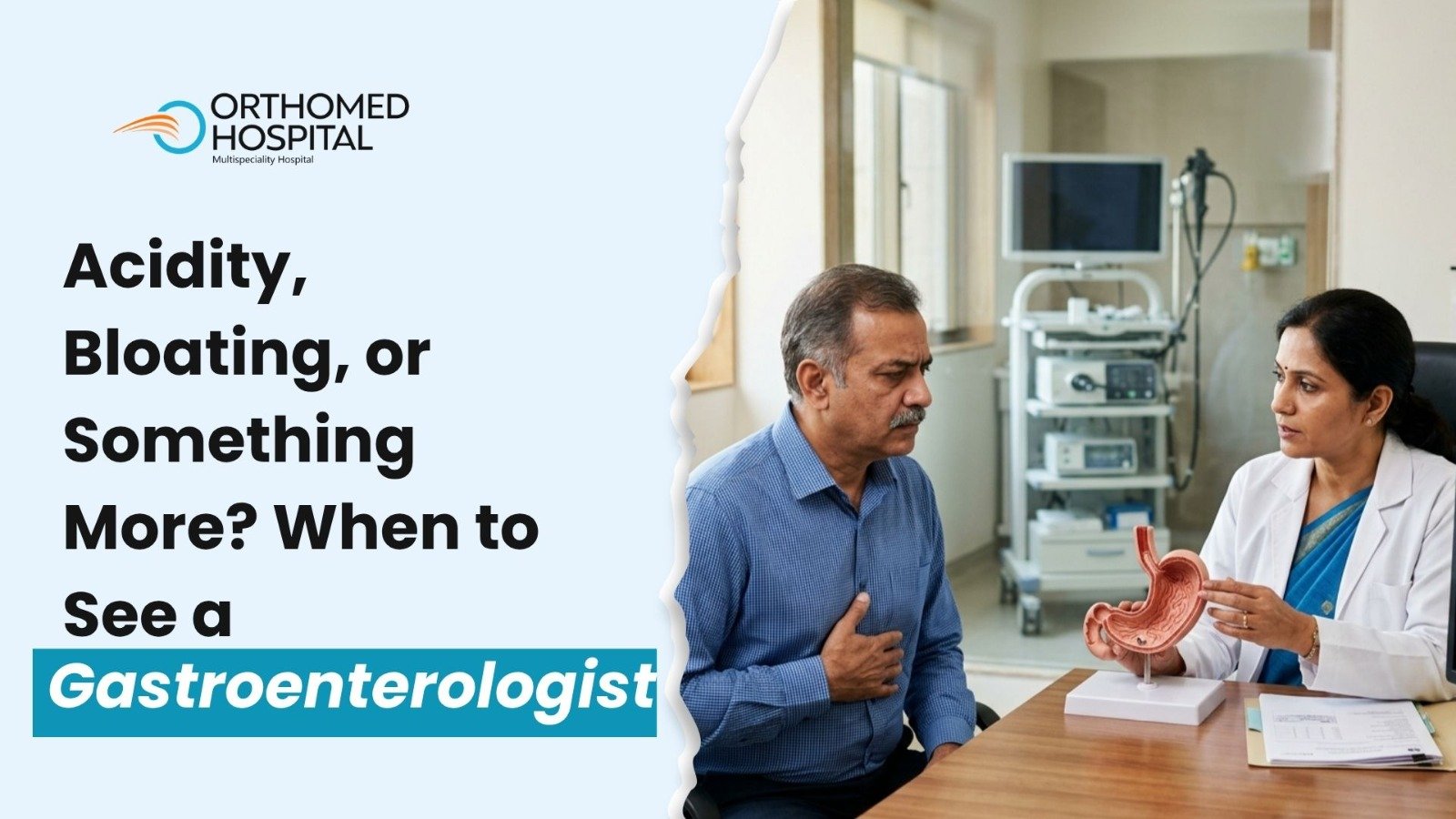
Acidity, Bloating, or Something More? When to See a Gastroenterologist
We have all been there. You finish a delicious, spicy meal at your favorite restaurant in Chennai, and within an hour, your chest is on fire. Or maybe you wake up feeling completely fine, but by the evening, your stomach is so tight and swollen that your jeans refuse to button up.
Acidity and bloating are two of the most common digestive issues people face today. Because they happen so often, it is easy to brush them off. We reach for a quick antacid, drink a glass of cold milk, or pop a home remedy pill and hope for the best. Most of the time, the discomfort fades, and we go about our day.
But what happens when the burning does not stop? What if that heavy, bloated feeling becomes your daily reality, no matter what you eat?
It is easy to self-diagnose in the age of the internet, but ignoring persistent gut issues can be risky. Sometimes, what feels like simple indigestion is actually an early warning sign of a condition that needs expert care. Knowing the line between everyday digestive trouble and something more serious can save you months of discomfort. Let us break down how your digestive system works, what causes these symptoms, and when it is time to consult a leading gastroenterologist in Chennai.
Understanding Everyday Stomach Troubles
To know when something is wrong, we first need to look at what happens during normal digestion. Your digestive tract is a long, muscular tube that runs from your mouth all the way down. When you eat, your stomach produces strong acid to break down the food so your body can absorb the nutrients.
Acidity and Acid Reflux
Your stomach is built to handle highly acidic fluids, thanks to a thick, protective lining. However, your esophagus, which is the food pipe connecting your mouth to your stomach, is not. At the bottom of the food pipe, there is a circular muscle that acts like a one way valve. It opens to let food pass into the stomach and closes tightly to keep the stomach contents from moving back up.
When this valve relaxes at the wrong time or weakens, stomach acid leaks upward into the food pipe. This backflow is what doctors call acid reflux. Because the lining of the food pipe is highly sensitive, the acid irritates it, causing that familiar, uncomfortable burning sensation behind your breastbone, known as heartburn.
Bloating
Bloating is that uncomfortable feeling of fullness, tightness, or swelling in your abdomen. It often goes hand in hand with excess gas. When your digestive system breaks down food, gas is naturally produced as a byproduct. If food moves too slowly through your intestines, or if you swallow too much air while eating quickly, gas builds up. This trapped gas stretches the stomach walls, making you feel like a balloon that has been inflated too much.
While both acidity and bloating are uncomfortable, experiencing them once in a while after a heavy festive meal or a late night dinner is usually nothing to worry about. The real concern begins when these issues become a permanent fixture in your daily life.
Bloating Causes: Why Your Stomach Feels Full and Swollen
If you are dealing with frequent swelling in your belly, it helps to look at the common bloating causes. While it is easy to blame a single meal, regular bloating is usually driven by a combination of dietary choices, lifestyle habits, or underlying medical conditions.
1. Dietary Choices and Eating Habits
The way you eat can be just as important as what you eat. Here are a few common daily habits that trigger gas and bloating:
- Eating too fast: When you gulp down your food or drink quickly, you swallow a significant amount of air. This air travels straight to your stomach and gets trapped in your digestive tract.
- Carbonated beverages: Fizzy drinks, sodas, and sparkling water release carbon dioxide gas directly into your stomach, leading to instant expansion.
- High fiber foods: While fiber is incredibly healthy for your gut, introducing large amounts of it too quickly can overwhelm your digestive system. Foods like beans, lentils, broccoli, cabbage, and whole grains require extra effort from gut bacteria to break down, which creates gas.
- Artificial sweeteners: Sorbitol, mannitol, and xylitol, which are often found in sugar free candies and gums, are difficult for the small intestine to absorb. When they reach the large intestine, bacteria ferment them, producing gas and bloating.
2. Food Intolerances and Sensitivities
Many people live with mild food intolerances without even realizing it. The two most common culprits are:
- Lactose Intolerance: This happens when your body does not produce enough lactase, the enzyme needed to break down the sugar found in milk and dairy products. Instead of being digested, the lactose sits in your gut and ferments, causing severe bloating, gas, and cramps.
- Gluten Sensitivity: For some individuals, eating gluten, a protein found in wheat, barley, and rye, irritates the digestive lining, leading to chronic swelling and sluggish digestion.
3. Sluggish Gut Motility
Gut motility refers to the speed at which your digestive muscles move food through your system. If your digestion is slow, food sits in your stomach and intestines for much longer than it should. This delay gives gut bacteria more time to ferment the food particles, resulting in continuous gas production. Chronic constipation is one of the biggest drivers of slow gut motility and long term bloating.
Acid Reflux Home Remedies vs Medical Treatment
When a burning sensation hits your chest, the first instinct is often to look inside the kitchen cabinet. There are dozens of traditional remedies passed down through generations. But how do acid reflux home remedies vs medical treatment compare, and where should you draw the line?
Common Home Remedies and Lifestyle Tweaks
For mild, occasional heartburn, simple adjustments can provide rapid relief:
- Cold Milk: A glass of cold, skim milk can temporarily buffer stomach acid and soothe the irritated lining of the food pipe. However, full fat milk can actually worsen reflux later on because fat takes longer to digest, keeping the stomach full.
- Jeera Water or Fennel Seeds: Chewing on fennel seeds (saunf) or drinking water boiled with cumin seeds (jeera) can help calm the stomach muscles and reduce gas production.
- Elevating the Head of Your Bed: If you suffer from nighttime reflux, raising the head of your bed by six inches uses gravity to keep stomach acid where it belongs, preventing it from creeping up into your throat while you sleep.
- Eating Smaller, Frequent Meals: Large meals stretch the stomach and put intense pressure on the lower esophageal valve. Shifting to smaller portions reduces this pressure significantly.
Home Remedies & Lifestyle | Medical Treatment |
Drink cold skim milk for temporary relief | Prescription H2 blockers to lower acid production |
Chew fennel seeds (saunf) after meals | Proton Pump Inhibitors (PPIs) for tissue healing |
Eat smaller portions slowly throughout the day | Advanced diagnostic tests (like an upper GI Endoscopy) |
Elevate the head of your bed at night | Targeted long-term therapies for chronic symptoms |
The Limitations of Home Remedies
While these methods are great for temporary comfort, they do not cure the root cause of frequent acid reflux. Relying solely on home remedies when you have severe inflammation can mask the problem while the tissue damage continues to progress silently.
When Medical Treatment is Required
If you find yourself using antacids or home remedies more than twice a week, it is time to shift to professional medical care. Chronic acidity treatment involves specific classes of medications that do much more than just neutralize acid for an hour.
Gastroenterologists often prescribe medications like H2 blockers or Proton Pump Inhibitors (PPIs). Instead of just coating the stomach, these medications actively reduce the amount of acid your stomach glands produce. This reduction gives the raw, inflamed lining of your food pipe the time it needs to heal completely. A specialist can also check if your acidity is caused by a bacterial infection like H. pylori, which requires a targeted course of antibiotics to cure permanently.
Chronic Acidity Treatment: Why Over the Counter Solutions Aren’t Enough
It is incredibly convenient to walk into a local pharmacy in Chennai and buy over the counter antacid syrups or chewable tablets. They provide almost instant relief, making you feel like the problem is solved. However, using these fast fixes as a daily strategy for weeks or months can lead to hidden complications.
The Antacid Rebound Effect
Your stomach is designed to be an acidic environment to kill harmful bacteria and digest protein. When you constantly flood your stomach with over the counter antacids, you artificially alter its pH balance. In response, your body tries to compensate by producing even more acid to bring the stomach back to its natural state. This creates a vicious cycle: you take an antacid, the acid drops, the effect wears off, and your stomach floods itself with an even higher surge of acid, leaving you dependent on the medication.
Masking Deeper Issues
Continuous self medication covers up the symptoms without addressing the underlying damage. Chronic, unchecked acid exposure can lead to several serious conditions over time:
- Esophagitis: Severe inflammation and painful irritation of the food pipe lining.
- Esophageal Strictures: Constant acid exposure causes scar tissue to form. Over time, this scar tissue narrows the food pipe, making it difficult or painful to swallow solid food.
- Barrett’s Esophagus: In prolonged cases of untreated reflux, the cells lining the food pipe change their structure to mimic the cells of the stomach lining to protect themselves. This condition requires regular monitoring by a specialist as it carries a small but significant risk of developing into esophageal cancer.
Professional chronic acidity treatment starts with a proper medical diagnosis to determine exactly why the valve is failing or why the acid production is abnormally high, ensuring you get a safe, effective solution.
IBS Symptoms and Treatment: Is Your Gut Hyper Sensitive?
If your stomach troubles involve alternating bouts of diarrhea and constipation alongside painful bloating, you might be dealing with Irritable Bowel Syndrome (IBS). IBS is a common, long term disorder that affects the large intestine. Unlike more severe inflammatory diseases, IBS does not structurally damage your digestive tissues, but it alters how your gut functions, making it highly sensitive to everyday triggers.
Common IBS Symptoms
IBS symptoms vary from person to person, but the most characteristic signs include:
- Abdominal Pain and Cramping: This pain is usually located in the lower belly and is frequently linked to bowel movements. Many people notice that the cramping improves significantly after passing stool.
- Altered Bowel Patterns: Some individuals suffer predominantly from IBS-D (where diarrhea is the primary issue), others experience IBS-C (characterized by stubborn constipation), while many deal with an alternating pattern of both.
- Unpredictable Bloating: People with IBS often experience sudden swelling in the abdomen that changes throughout the day, frequently worsened by stress or specific meals.
- Mucus in the Stool: Passing a clear or white liquid coating along with stool is another common indicator of an irritable colon.
Modern IBS Treatment Strategies
Because IBS is a functional disorder, there is no single magic pill to cure it. Effective IBS symptoms and treatment require a comprehensive approach that targets diet, lifestyle, and stress:
- The Low-FODMAP Diet: This clinical dietary approach involves temporarily eliminating fermentable short chain carbohydrates. These sugars are notoriously poorly absorbed by the small intestine and quickly ferment in the colon, triggering severe gas and spasms. Step by step reintroduction helps identify your exact trigger foods.
- Stress Management: The brain and the gut are deeply connected through a massive network of nerves known as the gut-brain axis. Psychological stress, anxiety, and lack of sleep can cause the muscles in your colon to spasm violently. Incorporating regular exercise, yoga, and mindfulness can drastically reduce the frequency of IBS flare ups.
- Targeted Medications: Depending on your dominant symptoms, a specialist may prescribe antispasmodic medications to calm painful abdominal cramps, laxatives to manage chronic constipation, or specific probiotics to rebalance your gut microbiome.
Red Flag Symptoms: When “Just Acidity” is Something More
It is vital to understand that digestive issues are not always benign. While mild bloating or occasional heartburn can be managed with lifestyle shifts, there are specific symptoms that serve as urgent warning signs from your body. If you experience any of the following red flag symptoms, you should schedule a consultation with a gastroenterologist immediately.
1. Difficulty or Pain When Swallowing
Known medically as dysphagia, feeling like food is getting stuck in your chest or throat is never normal. This symptom can indicate a physical narrowing of the food pipe due to severe acid scarring, an ulcer, or the growth of a tumor.
2. Unexplained, Rapid Weight Loss
If you are losing weight steadily without changing your diet, increasing your workouts, or trying to slim down, it is a major warning sign. Unexpected weight loss can point to malabsorption issues, chronic inflammatory conditions, or malignancies within the digestive tract.
3. Persistent Vomiting or Blood in Vomit
Occasional nausea can happen with bad indigestion, but constant vomiting means your stomach cannot retain nutrition. If you see blood in your vomit, or if it looks like dark coffee grounds, it indicates active bleeding in your stomach or esophagus that requires emergency medical evaluation.
4. Chronic, Severe Abdominal Pain
Pain that wakes you up in the middle of the night, progresses steadily in intensity, or leaves you doubled over should never be ignored. This could indicate a deep stomach ulcer, gallstones, or acute inflammation of the pancreas.
5. Black, Tarry Stools or Rectal Bleeding
Seeing bright red blood in your stool or noticing that your bowel movements have become completely black and sticky indicates bleeding somewhere along the digestive tract. This can be caused by bleeding ulcers, inflammatory bowel diseases, or colorectal polyps.
The Role of an Endoscopy: What to Expect
When routine medications fail to clear up your symptoms, a specialist will often recommend a diagnostic procedure called an upper GI endoscopy. It is common to feel a little anxious when a doctor suggests a medical procedure, but understanding what it entails can ease your mind.
What is an Endoscopy?
An endoscopy is a safe, outpatient procedure that allows a doctor to look inside your upper digestive tract in real time. The physician uses a thin, highly flexible tube fitted with a high definition camera and a bright light at the tip, called an endoscope. The tube is gently guided through your mouth, down your food pipe, and into your stomach and the first part of your small intestine.
Why is it Done?
An endoscopy gives doctors a clear, direct view of your internal tissue, which an X-ray or ultrasound cannot provide. It allows the specialist to:
- Look for signs of severe inflammation or redness in the food pipe.
- Detect open sores, known as ulcers, in the stomach lining.
- Identify any abnormal tissue growths, tumors, or narrow sections.
- Take a tiny, painless tissue sample, called a biopsy, to test for hidden infections like pylori or check for cellular changes.
Finding the Right Care: What to Look For in a Gastroenterology Facility
Your digestive health forms the core of your overall well being. When you decide to look past quick home remedies and seek professional medical guidance, choosing the right hospital can make a world of difference in your recovery journey.
If you are looking for advanced diagnostic care and comprehensive treatment plans, Orthomed Hospital in Chennai provides a dedicated approach to digestive health.
When searching for the right facility for your evaluation, keep these essential criteria in mind:
Qualified Medical Experts
The key to a successful recovery is the experience of the medical team. Look for a facility staffed by board certified gastroenterologists who have extensive training in handling both common functional disorders like IBS and complex conditions like chronic ulcers or liver diseases.
Modern Diagnostic Technology
A hospital equipped with advanced diagnostic tools can pinpoint the exact cause of your symptoms much faster. Look for centers that feature modern, high definition endoscopy suites, advanced colonoscopy equipment, and high resolution ultrasound scanners to ensure complete accuracy in your test results.
Patient First Approach
The best medical care looks at the whole person, not just a list of symptoms. Choose a hospital that combines precise medical prescriptions with personalized dietary guidance, lifestyle counseling, and dedicated long term follow up support. This comprehensive care model helps you make the sustainable changes necessary to keep your gut healthy for life.
Simple Lifestyle Adjustments for a Happier Gut
While medical treatments are indispensable for curing specific digestive diseases, your everyday choices play a massive role in maintaining long term gut comfort. Incorporating these simple habits into your routine can prevent common symptoms from flaring up:
Stay Adequately Hydrated
Drinking enough water throughout the day keeps the contents of your digestive tract moving smoothly. Water softens your stool, prevents painful constipation, and helps your stomach maintain a healthy fluid balance for digestion. Aim for at least two to three liters of water daily, especially if you live in a warm climate like Chennai.
Prioritize Restful Sleep
Your digestive system needs time to repair and rest. When you are sleep deprived, your body produces higher levels of cortisol, a stress hormone that can irritate the gut lining, slow down digestion, and increase your sensitivity to abdominal pain. Try to secure seven to eight hours of regular sleep every night.
Exercise Regularly
Physical activity stimulates the natural contractions of your intestinal muscles, helping move food and trapped gas through your system efficiently. A simple, brisk thirty minute walk after a meal can drastically reduce post dinner bloating and improve your overall metabolic health.
Conclusion: Take Control of Your Digestive Health Today
Acidity and bloating are common, but they should never dictate how you live your life. You do not have to accept constant chest burning, unpredictable stomach pain, or severe daily swelling as a normal part of getting older or dealing with work stress.
Most minor digestive troubles can be resolved by making mindful adjustments to what you eat, staying active, managing daily stress, and drinking plenty of water. But when your body sends out clear warning signs, like symptoms that refuse to go away, painful swallowing, or unexpected weight loss, trying to fix the problem on your own with over the counter antacids is not the answer.
Taking early action is the best way to protect your long term health. Consulting a trusted gastroenterologist Chennai allows you to stop guessing and uncover the true root cause of your discomfort. Whether you need a simple dietary adjustment, a professional chronic acidity treatment plan, or a routine diagnostic endoscopy, getting expert care will put you on the fastest path to lasting relief.
Listen to your gut, take those early warning signs seriously, and reach out to a professional medical team to get your digestive health back on track today.
Comments are closed