
- Home
- About
- Services
- Specialists
- Research
- Achivements
- gallery
- contact




- Home
- About Us
- Orthopedics
- Know Your Alignment
- Sports Medicine
- Knee
- Arthroscopic ACI Cartilage Transplant
- Arthroscopic ACL Avulsion Fixation
- Arthroscopic ACL Primary Repair
- Arthroscopic ACL Reconstruction – All Inside Technique
- Arthroscopic ACL Rehab
- Arthroscopic ACL Revision Surgery
- Arthroscopic ACL Single Bundle Reconstruction
- Arthroscopic assisted MPFL Reconstruction
- Arthroscopic assisted Multiple Ligament Tear – SURGERY
- Arthroscopic Medial Meniscal Repair
- Arthroscopic OATS Chondroplasty
- Arthroscopic OCD Fixation
- Arthroscopic Paediatric ACL Reconstruction
- Arthroscopic PCL Avulsion Fixation
- Arthroscopic PCL Reconstruction
- Arthroscopy Assisted STEM Cell Cartilage Transplant
- PCL Rehabilitation
- Total Knee Replacement
- Shoulder
- Arthroscopic Rotator Cuff Repair
- Arthroscopic Bankart Repair
- Arthroscopy Assisted Latarjet Surgery
- AC Joint Fixation
- Arthroscopic Capsular Release
- Arthroscopic Sub – Acromial Decompression (SAD)
- Arthroscopic Calcific Tendinitis Excision
- Arthroscopic Biceps Tenodesis
- Arthroscopic SLAP Repair
- Arthroscopic Revision Cuff Repair
- Arthroscopic Revision Bankart Repair
- Shoulder Rehab
- Elbow
- Wrist
- Hip
- Ankle
- Our Specialities
- Cardiology
- Gastroenterology
- Radiology
- Internal Medicine & Diabetology
- Anesthesiology & Intensive Care Unit
- Neurology
- Nephrology
- Urology
- Oncology
- Rheumatology
- Endocrinology
- General Surgery
- Laparoscopic Surgery
- Podiatric / Diabetic Foot Clinic
- Obstetrics & Gynecology
- ENT
- Plastic & Cosmetic Surgery
- Paediatrics
- Pulmonology
- Psychiatry
- Vascular Surgery
- Dermatology
- Oral and Maxillofacial Surgery
- Our Services
- Resource
- Enquiry
- Home
- About Us
- Orthopedics
- Know Your Alignment
- Sports Medicine
- Knee
- Arthroscopic ACI Cartilage Transplant
- Arthroscopic ACL Avulsion Fixation
- Arthroscopic ACL Primary Repair
- Arthroscopic ACL Reconstruction – All Inside Technique
- Arthroscopic ACL Rehab
- Arthroscopic ACL Revision Surgery
- Arthroscopic ACL Single Bundle Reconstruction
- Arthroscopic assisted MPFL Reconstruction
- Arthroscopic assisted Multiple Ligament Tear – SURGERY
- Arthroscopic Medial Meniscal Repair
- Arthroscopic OATS Chondroplasty
- Arthroscopic OCD Fixation
- Arthroscopic Paediatric ACL Reconstruction
- Arthroscopic PCL Avulsion Fixation
- Arthroscopic PCL Reconstruction
- Arthroscopy Assisted STEM Cell Cartilage Transplant
- PCL Rehabilitation
- Total Knee Replacement
- Shoulder
- Arthroscopic Rotator Cuff Repair
- Arthroscopic Bankart Repair
- Arthroscopy Assisted Latarjet Surgery
- AC Joint Fixation
- Arthroscopic Capsular Release
- Arthroscopic Sub – Acromial Decompression (SAD)
- Arthroscopic Calcific Tendinitis Excision
- Arthroscopic Biceps Tenodesis
- Arthroscopic SLAP Repair
- Arthroscopic Revision Cuff Repair
- Arthroscopic Revision Bankart Repair
- Shoulder Rehab
- Elbow
- Wrist
- Hip
- Ankle
- Our Specialities
- Cardiology
- Gastroenterology
- Radiology
- Internal Medicine & Diabetology
- Anesthesiology & Intensive Care Unit
- Neurology
- Nephrology
- Urology
- Oncology
- Rheumatology
- Endocrinology
- General Surgery
- Laparoscopic Surgery
- Podiatric / Diabetic Foot Clinic
- Obstetrics & Gynecology
- ENT
- Plastic & Cosmetic Surgery
- Paediatrics
- Pulmonology
- Psychiatry
- Vascular Surgery
- Dermatology
- Oral and Maxillofacial Surgery
- Our Services
- Resource
- Enquiry


- Home
- About Us
- Orthopedics
- Know Your Alignment
- Sports Medicine
- Knee
- Arthroscopic ACI Cartilage Transplant
- Arthroscopic ACL Avulsion Fixation
- Arthroscopic ACL Primary Repair
- Arthroscopic ACL Reconstruction – All Inside Technique
- Arthroscopic ACL Rehab
- Arthroscopic ACL Revision Surgery
- Arthroscopic ACL Single Bundle Reconstruction
- Arthroscopic assisted MPFL Reconstruction
- Arthroscopic assisted Multiple Ligament Tear – SURGERY
- Arthroscopic Medial Meniscal Repair
- Arthroscopic OATS Chondroplasty
- Arthroscopic OCD Fixation
- Arthroscopic Paediatric ACL Reconstruction
- Arthroscopic PCL Avulsion Fixation
- Arthroscopic PCL Reconstruction
- Arthroscopy Assisted STEM Cell Cartilage Transplant
- PCL Rehabilitation
- Total Knee Replacement
- Shoulder
- Arthroscopic Rotator Cuff Repair
- Arthroscopic Bankart Repair
- Arthroscopy Assisted Latarjet Surgery
- AC Joint Fixation
- Arthroscopic Capsular Release
- Arthroscopic Sub – Acromial Decompression (SAD)
- Arthroscopic Calcific Tendinitis Excision
- Arthroscopic Biceps Tenodesis
- Arthroscopic SLAP Repair
- Arthroscopic Revision Cuff Repair
- Arthroscopic Revision Bankart Repair
- Shoulder Rehab
- Elbow
- Wrist
- Hip
- Ankle
- Our Specialities
- Cardiology
- Gastroenterology
- Radiology
- Internal Medicine & Diabetology
- Anesthesiology & Intensive Care Unit
- Neurology
- Nephrology
- Urology
- Oncology
- Rheumatology
- Endocrinology
- General Surgery
- Laparoscopic Surgery
- Podiatric / Diabetic Foot Clinic
- Obstetrics & Gynecology
- ENT
- Plastic & Cosmetic Surgery
- Paediatrics
- Pulmonology
- Psychiatry
- Vascular Surgery
- Dermatology
- Oral and Maxillofacial Surgery
- Our Services
- Resource
- Enquiry
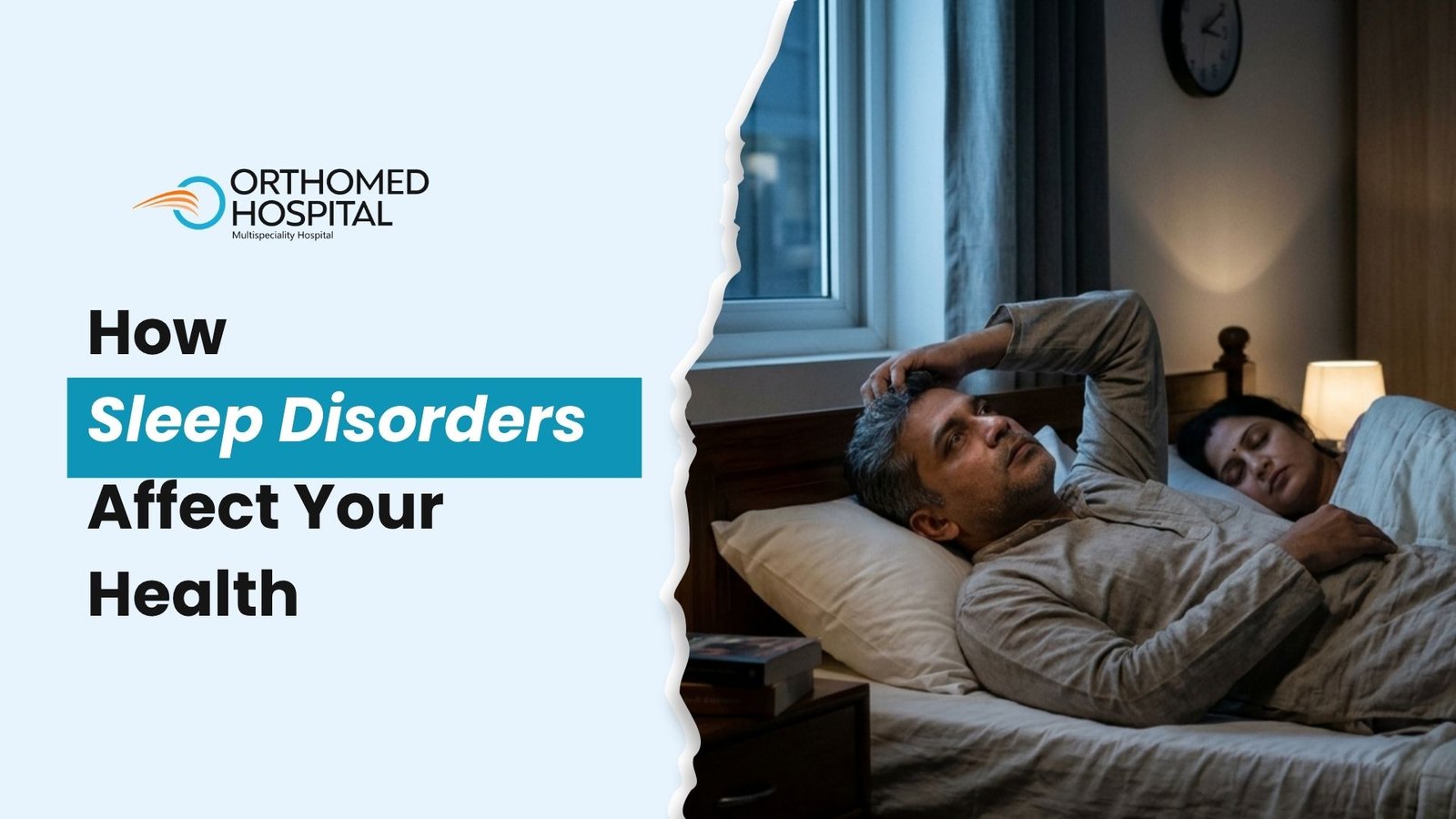
How Sleep Disorders Affect Your Health
We have all experienced nights where sleep just refuses to come. You stare at the ceiling, flip your pillow to the cool side, watch the digital clock tick past 2:00 AM, and calculate how many hours of rest you have left before the morning alarm rings. For most people, a poor night of sleep happens once in a while after a stressful day, an extra cup of evening filter coffee, or a late night out with friends.
However, when sleeplessness becomes your regular nightly routine, or when you wake up feeling completely exhausted despite spending eight hours in bed, the issue goes much deeper.
Sleep is not merely a passive state of rest where your body turns off. It is an active, essential biological process during which your brain cleans out waste products, your muscles repair torn fibers, your immune system recharges, and your hormones balance themselves. When this vital cycle is constantly broken, your physical health, emotional stability, and overall quality of life begin to deteriorate.
Across urban hubs like Chennai, sleep disorders have quietly reached epidemic levels. Long working hours in IT parks, shift-based jobs, extended screen time, and high daily stress have led thousands of young professionals and older adults to accept broken sleep as a normal part of life.
Understanding how sleep disorders impact your m
ind and body, recognizing the warning signs early, and seeking timely medical intervention can protect your long-term health and restore your daily vitality.
What Happens to Your Body During Normal Sleep?
To see how sleep disorders cause harm, it helps to understand what a healthy night of rest looks like. Normal sleep is divided into multiple cycles, each lasting around 90 to 110 minutes, alternating between two main states:
- Non-Rapid Eye Movement (NREM) Sleep: This stage progresses from light sleep into deep, slow-wave sleep. During deep NREM sleep, your blood pressure drops, breathing slows down, blood supply to muscles increases, and tissue growth and repair occur. Growth hormone is released, rebuilding bones and muscles.
- Rapid Eye Movement (REM) Sleep: This is the dreaming stage where brain activity increases dramatically. REM sleep is critical for memory consolidation, learning, mood regulation, and processing emotional experiences from the day.
THE HEALTHY SLEEP CYCLE
1. Light NREM Sleep: Body temperature drops, heart rate slows down
2. Deep NREM Sleep: Blood pressure drops, physical repair and tissue recovery
3. REM Sleep: Active dreaming, memory consolidation, emotional balance
4. Cycle Repeats: 4 to 6 times per night for complete restoration
When sleep disorders disrupt these cycles, your body is deprived of both deep physical repair and vital mental recovery.
Common Types of Sleep Disorders
Sleep issues come in many forms. While some people struggle to fall asleep, others cannot stay asleep, or experience physical blockages that interrupt their breathing through the night.
Sleep Disorder | Primary Characteristic | Common Symptoms |
Insomnia | Difficulty falling or staying asleep | Lying awake for hours, waking up too early, unrefreshing sleep |
Obstructive Sleep Apnea (OSA) | Airway collapses repeatedly during sleep | Loud snoring, choking/gasping sounds, severe morning fatigue |
Restless Legs Syndrome (RLS) | Irresistible urge to move legs at rest | Creepy-crawly sensations in legs during the evening, leg kicking |
Circadian Rhythm Disorders | Misalignment between body clock and day/night | Inability to sleep at standard times, common in shift workers |
Narcolepsy | Inability to regulate sleep-wake cycles | Sudden, uncontrollable sleep attacks during daytime activities |
The Physical Health Toll of Chronic Sleep Deprivation
Losing sleep does far more than just give you dark under-eye circles or make you yawn through morning meetings. Long-term sleep deprivation acts as a silent destructive force across your entire physical body.
Cardiovascular Breakdown
During deep sleep, your cardiovascular system takes a well-deserved break. Your heart rate slows, and your blood pressure dips naturally. When you live with chronic sleep disorders like insomnia or sleep apnea:
- Your body stays in a constant state of high alert, triggering the sympathetic nervous system.
- Stress hormones like cortisol and adrenaline remain elevated around the clock.
- Blood vessels stay constricted, leading to chronic hypertension (high blood pressure).
- Over time, untreated sleep apnea and chronic insomnia increase the risk of heart attacks, irregular heart rhythms (arrhythmias), and strokes by over 40%.
Metabolic Damage, Weight Gain, and Diabetes
Have you ever noticed that after a terrible night of sleep, you crave sweets, pastries, and fried snacks? That is not a lack of willpower; it is basic biology.
Sleep regulates two critical appetite hormones:
- Ghrelin: The hunger hormone that tells your brain when to eat.
- Leptin: The fullness hormone that signals your brain when you have had enough food.
When you are sleep deprived, your body produces excess ghrelin and suppresses leptin. You feel hungrier throughout the day and crave quick, high-carbohydrate energy sources. Furthermore, poor sleep reduces your cells’ sensitivity to insulin, driving up blood sugar levels and significantly raising the risk of developing Type 2 diabetes.
Weakened Immune Function
While you sleep, your immune cells produce cytokines, which are protective proteins that target infections and systemic inflammation. Chronic sleep disruption reduces cytokine production, leaving your immune system vulnerable. You become far more likely to catch common viral infections, and your body takes much longer to recover from illnesses or heal from physical injuries.
Chronic Pain and Musculoskeletal Strain
Sleep and physical pain share a bidirectional relationship. Poor sleep lowers your pain tolerance and amplifies nerve sensitivity. For individuals dealing with joint pain, neck stiffness, or back problems, lack of restorative sleep prevents muscles from relaxing, worsening musculoskeletal aches day after day.
Sleep Disorders and Mental Health: A Dangerous Two-Way Street
The connection between your brain and your sleep patterns is intimate and powerful. Sleep disruption is both a leading symptom and a major contributor to psychological and emotional struggles.
Anxiety and Panic
The amygdala is the emotional fear center of your brain. In well-rested individuals, the rational prefrontal cortex keeps the amygdala in check. When you are sleep deprived, the communication between these brain regions breaks down. The amygdala becomes overreactive, making you feel anxious, easily overwhelmed, irritable, and vulnerable to panic attacks over minor daily challenges.
Depression and Emotional Burnout
Chronic insomnia is one of the strongest clinical predictors of depression. Living with persistent exhaustion drains your motivation, dulls feelings of pleasure, and creates a sense of hopelessness. Addressing sleep issues early is often one of the most effective steps in restoring emotional well-being.
Cognitive Decline and Memory Impairment
During deep sleep, your brain activates the glymphatic system, a specialized waste clearance network that flushes out toxic proteins, including beta-amyloid, which is linked to Alzheimer’s disease. Chronic lack of deep sleep allows these metabolic wastes to accumulate, leading to brain fog, poor concentration, memory lapses, and accelerated cognitive decline as you age.
Obstructive Sleep Apnea: The Silent Nighttime Threat
Among all sleep disorders, Obstructive Sleep Apnea (OSA) is one of the most dangerous and underdiagnosed conditions, especially in India.
How It Works
When you fall asleep, the muscles in your throat relax. In people with OSA, the soft tissues in the back of the throat collapse entirely, physically blocking the airway. Breathing stops for ten, twenty, or even thirty seconds at a time.
When your blood oxygen levels drop sharply, your brain panics and briefly jolts you awake with a loud snort, gasp, or choke to reopen the airway. This can happen 20 to 60 times every single hour throughout the night.
Warning Signs of Sleep Apnea
- Loud, chronic snoring that disturbs family members.
- Waking up gasping or choking for air in the middle of the night.
- Waking up with a dry mouth, sore throat, or morning headache.
- Severe daytime drowsiness, such as dozing off while sitting at a desk, watching television, or waiting at traffic signals.
OSA puts massive pressure on the heart and lungs. If left untreated, it drastically increases the risk of heart failure, stroke, and motor vehicle accidents caused by microsleep episodes.
Insomnia Treatment: Moving Beyond Sleeping Pills
Many people who struggle with sleeplessness turn to over-the-counter sleeping tablets or sedatives. While medication can provide temporary relief during acute crises, relying on sleep pills long-term does not solve the root cause. Sleeping pills often create physical dependency, lose effectiveness over time, and disrupt natural deep sleep architecture.
Modern, evidence-based insomnia treatment focuses on sustainable, non-medication approaches alongside targeted medical therapies.
Cognitive Behavioral Therapy for Insomnia (CBT-I)
CBT-I is recognized by medical professionals worldwide as the gold standard first-line treatment for chronic insomnia. It is a structured psychological program that helps you identify and replace thoughts and behaviors that cause or worsen sleep problems with habits that promote sound sleep.
- Stimulus Control: Re-associating the bed strictly with sleep rather than work, television, or phone scrolling.
- Sleep Restriction: Temporarily limiting time in bed to match actual sleep time, building strong biological sleep drive.
- Cognitive Restructuring: Reframing nighttime anxiety, catastrophizing, and the fear of not sleeping.
Targeted Medical Management
When underlying physical conditions like thyroid imbalances, chronic acid reflux, joint pain, or clinical depression trigger insomnia, a medical doctor will prescribe targeted treatments to resolve the primary health condition, allowing natural sleep to return.
Practical Sleep Hygiene Habits for Restful Nights
Improving your sleep health starts with your daily routine and sleeping environment. Small, consistent changes can dramatically improve your ability to fall asleep and stay asleep.
Aspect of Sleep Hygiene | Practical Guideline | Why It Works |
Consistent Schedule | Wake up and sleep at the exact same time daily, even on weekends | Locks in your body’s natural circadian rhythm |
Morning Sunlight | Get 15 to 20 minutes of bright natural sunlight before 9:00 AM | Shuts off melatonin and resets your internal clock |
Digital Curfew | Put away smartphones, tablets, and laptops 60 minutes before bed | Eliminates blue light that tricks your brain into thinking it is daytime |
Cool Bedroom Temperature | Keep your bedroom well-ventilated and cool (around 20 to 22 degrees Celsius) | Mimics the natural core body temperature drop needed for sleep onset |
Caffeine Cutoff | Avoid tea, coffee, energy drinks, and cola after 2:00 PM | Caffeine has a half-life of 5 to 7 hours and blocks sleep-inducing adenosine |
Bedtime Wind-Down | Read a physical book, practice slow breathing, or take a warm shower | Signals your nervous system to shift from active mode to rest mode |
When to Consult a Doctor for Sleep Disorders
You should not wait until your work performance collapses or your physical health breaks down before getting professional help. Schedule a comprehensive medical consultation if you experience any of the following:
- Difficulty falling or staying asleep lasting more than three nights a week for over a month.
- Chronic, loud snoring accompanied by choking sounds or witnessed breathing pauses.
- Persistent daytime exhaustion that interferes with driving, working, or daily tasks.
- Uncomfortable sensations in your legs that keep you awake at night.
- Relying on sleeping pills, alcohol, or sedatives to fall asleep regularly.
Finding the Right Care: Comprehensive Medical and Mental Health Support in Chennai
Sleep is deeply tied to both your physical body and your psychological state. When addressing chronic sleep disorders, choosing a multidisciplinary healthcare facility ensures that all aspects of your health are evaluated together.
For individuals seeking specialized guidance for chronic sleeplessness, stress, and anxiety, accessing dedicated Mental health care in chennai provides the clinical expertise needed to address the root causes of insomnia.
Residents in Chennai looking for advanced, compassionate medical care can turn to Orthomed Hospital. Conveniently located in central Chennai, the hospital features modern diagnostic facilities, experienced medical specialists, and integrated outpatient care designed to evaluate complex physical conditions, joint pain, and lifestyle-related disorders.
When selecting a healthcare center for sleep and overall health evaluation, look for these essential qualities:
Multidisciplinary Medical Experts
Sleep problems often involve multiple specialties. A hospital that houses experienced general physicians, orthopedic experts, ENT specialists, and mental health professionals ensures you get a comprehensive assessment under one roof.
Modern Diagnostic Infrastructure
Accurate diagnosis is key to effective recovery. Choose a facility equipped with modern laboratory testing, imaging technology, and access to diagnostic sleep studies (polysomnography) to test for airway blockages, oxygen drops, and sleep cycle disruption.
Patient-First Treatment Plans
The best medical facilities create personalized care plans that balance non-invasive behavioral therapies, lifestyle counseling, physical rehabilitation, and safe medical management tailored to your specific daily routine.
Take Charge of Your Sleep and Health Today
Sleep is not a luxury or a reward you earn after finishing all your work. It is an absolute biological necessity, as essential to your survival and health as clean water, nutritious food, and oxygen.
Living with chronic sleep disorders drains your energy, damages your heart, compromises your mental focus, and strains your emotional relationships. But you do not have to live your life in a state of permanent exhaustion.
By establishing healthy sleep habits, optimizing your sleeping environment, and reaching out for professional medical guidance when problems persist, you can break the cycle of sleepless nights.
Prioritize your rest, listen to your body, and take the first step toward reclaiming deep, restorative sleep and vibrant daytime health today.
Comments are closed