
- Home
- About
- Services
- Specialists
- Research
- Achivements
- gallery
- contact




- Home
- About Us
- Orthopedics
- Know Your Alignment
- Sports Medicine
- Knee
- Arthroscopic ACI Cartilage Transplant
- Arthroscopic ACL Avulsion Fixation
- Arthroscopic ACL Primary Repair
- Arthroscopic ACL Reconstruction – All Inside Technique
- Arthroscopic ACL Rehab
- Arthroscopic ACL Revision Surgery
- Arthroscopic ACL Single Bundle Reconstruction
- Arthroscopic assisted MPFL Reconstruction
- Arthroscopic assisted Multiple Ligament Tear – SURGERY
- Arthroscopic Medial Meniscal Repair
- Arthroscopic OATS Chondroplasty
- Arthroscopic OCD Fixation
- Arthroscopic Paediatric ACL Reconstruction
- Arthroscopic PCL Avulsion Fixation
- Arthroscopic PCL Reconstruction
- Arthroscopy Assisted STEM Cell Cartilage Transplant
- PCL Rehabilitation
- Total Knee Replacement
- Shoulder
- Arthroscopic Rotator Cuff Repair
- Arthroscopic Bankart Repair
- Arthroscopy Assisted Latarjet Surgery
- AC Joint Fixation
- Arthroscopic Capsular Release
- Arthroscopic Sub – Acromial Decompression (SAD)
- Arthroscopic Calcific Tendinitis Excision
- Arthroscopic Biceps Tenodesis
- Arthroscopic SLAP Repair
- Arthroscopic Revision Cuff Repair
- Arthroscopic Revision Bankart Repair
- Shoulder Rehab
- Elbow
- Wrist
- Hip
- Ankle
- Our Specialities
- Cardiology
- Gastroenterology
- Radiology
- Internal Medicine & Diabetology
- Anesthesiology & Intensive Care Unit
- Neurology
- Nephrology
- Urology
- Oncology
- Rheumatology
- Endocrinology
- General Surgery
- Laparoscopic Surgery
- Podiatric / Diabetic Foot Clinic
- Obstetrics & Gynecology
- ENT
- Plastic & Cosmetic Surgery
- Paediatrics
- Pulmonology
- Psychiatry
- Vascular Surgery
- Dermatology
- Oral and Maxillofacial Surgery
- Our Services
- Resource
- Enquiry
- Home
- About Us
- Orthopedics
- Know Your Alignment
- Sports Medicine
- Knee
- Arthroscopic ACI Cartilage Transplant
- Arthroscopic ACL Avulsion Fixation
- Arthroscopic ACL Primary Repair
- Arthroscopic ACL Reconstruction – All Inside Technique
- Arthroscopic ACL Rehab
- Arthroscopic ACL Revision Surgery
- Arthroscopic ACL Single Bundle Reconstruction
- Arthroscopic assisted MPFL Reconstruction
- Arthroscopic assisted Multiple Ligament Tear – SURGERY
- Arthroscopic Medial Meniscal Repair
- Arthroscopic OATS Chondroplasty
- Arthroscopic OCD Fixation
- Arthroscopic Paediatric ACL Reconstruction
- Arthroscopic PCL Avulsion Fixation
- Arthroscopic PCL Reconstruction
- Arthroscopy Assisted STEM Cell Cartilage Transplant
- PCL Rehabilitation
- Total Knee Replacement
- Shoulder
- Arthroscopic Rotator Cuff Repair
- Arthroscopic Bankart Repair
- Arthroscopy Assisted Latarjet Surgery
- AC Joint Fixation
- Arthroscopic Capsular Release
- Arthroscopic Sub – Acromial Decompression (SAD)
- Arthroscopic Calcific Tendinitis Excision
- Arthroscopic Biceps Tenodesis
- Arthroscopic SLAP Repair
- Arthroscopic Revision Cuff Repair
- Arthroscopic Revision Bankart Repair
- Shoulder Rehab
- Elbow
- Wrist
- Hip
- Ankle
- Our Specialities
- Cardiology
- Gastroenterology
- Radiology
- Internal Medicine & Diabetology
- Anesthesiology & Intensive Care Unit
- Neurology
- Nephrology
- Urology
- Oncology
- Rheumatology
- Endocrinology
- General Surgery
- Laparoscopic Surgery
- Podiatric / Diabetic Foot Clinic
- Obstetrics & Gynecology
- ENT
- Plastic & Cosmetic Surgery
- Paediatrics
- Pulmonology
- Psychiatry
- Vascular Surgery
- Dermatology
- Oral and Maxillofacial Surgery
- Our Services
- Resource
- Enquiry


- Home
- About Us
- Orthopedics
- Know Your Alignment
- Sports Medicine
- Knee
- Arthroscopic ACI Cartilage Transplant
- Arthroscopic ACL Avulsion Fixation
- Arthroscopic ACL Primary Repair
- Arthroscopic ACL Reconstruction – All Inside Technique
- Arthroscopic ACL Rehab
- Arthroscopic ACL Revision Surgery
- Arthroscopic ACL Single Bundle Reconstruction
- Arthroscopic assisted MPFL Reconstruction
- Arthroscopic assisted Multiple Ligament Tear – SURGERY
- Arthroscopic Medial Meniscal Repair
- Arthroscopic OATS Chondroplasty
- Arthroscopic OCD Fixation
- Arthroscopic Paediatric ACL Reconstruction
- Arthroscopic PCL Avulsion Fixation
- Arthroscopic PCL Reconstruction
- Arthroscopy Assisted STEM Cell Cartilage Transplant
- PCL Rehabilitation
- Total Knee Replacement
- Shoulder
- Arthroscopic Rotator Cuff Repair
- Arthroscopic Bankart Repair
- Arthroscopy Assisted Latarjet Surgery
- AC Joint Fixation
- Arthroscopic Capsular Release
- Arthroscopic Sub – Acromial Decompression (SAD)
- Arthroscopic Calcific Tendinitis Excision
- Arthroscopic Biceps Tenodesis
- Arthroscopic SLAP Repair
- Arthroscopic Revision Cuff Repair
- Arthroscopic Revision Bankart Repair
- Shoulder Rehab
- Elbow
- Wrist
- Hip
- Ankle
- Our Specialities
- Cardiology
- Gastroenterology
- Radiology
- Internal Medicine & Diabetology
- Anesthesiology & Intensive Care Unit
- Neurology
- Nephrology
- Urology
- Oncology
- Rheumatology
- Endocrinology
- General Surgery
- Laparoscopic Surgery
- Podiatric / Diabetic Foot Clinic
- Obstetrics & Gynecology
- ENT
- Plastic & Cosmetic Surgery
- Paediatrics
- Pulmonology
- Psychiatry
- Vascular Surgery
- Dermatology
- Oral and Maxillofacial Surgery
- Our Services
- Resource
- Enquiry
Acne in Your 30s: Why Adult Acne Happens and How to Treat It
There was a time when knee pain was considered a sign of getting older. We used to associate joint stiffness with our grandparents, who would carefully hold the handrail while climbing stairs or complain about aching knees when the weather turned cold.
Today, the story has changed completely.
Walk into any modern orthopedics clinic in major tech hubs like Chennai, and you will notice something unexpected. The waiting rooms are no longer filled only with senior citizens. Instead, you will see 24 year old software developers, 31 year old corporate managers, and 28 year old remote workers. All of them are rubbing their kneecaps, stretching their legs nervously, and complaining about a dull, constant ache that just will not go away.
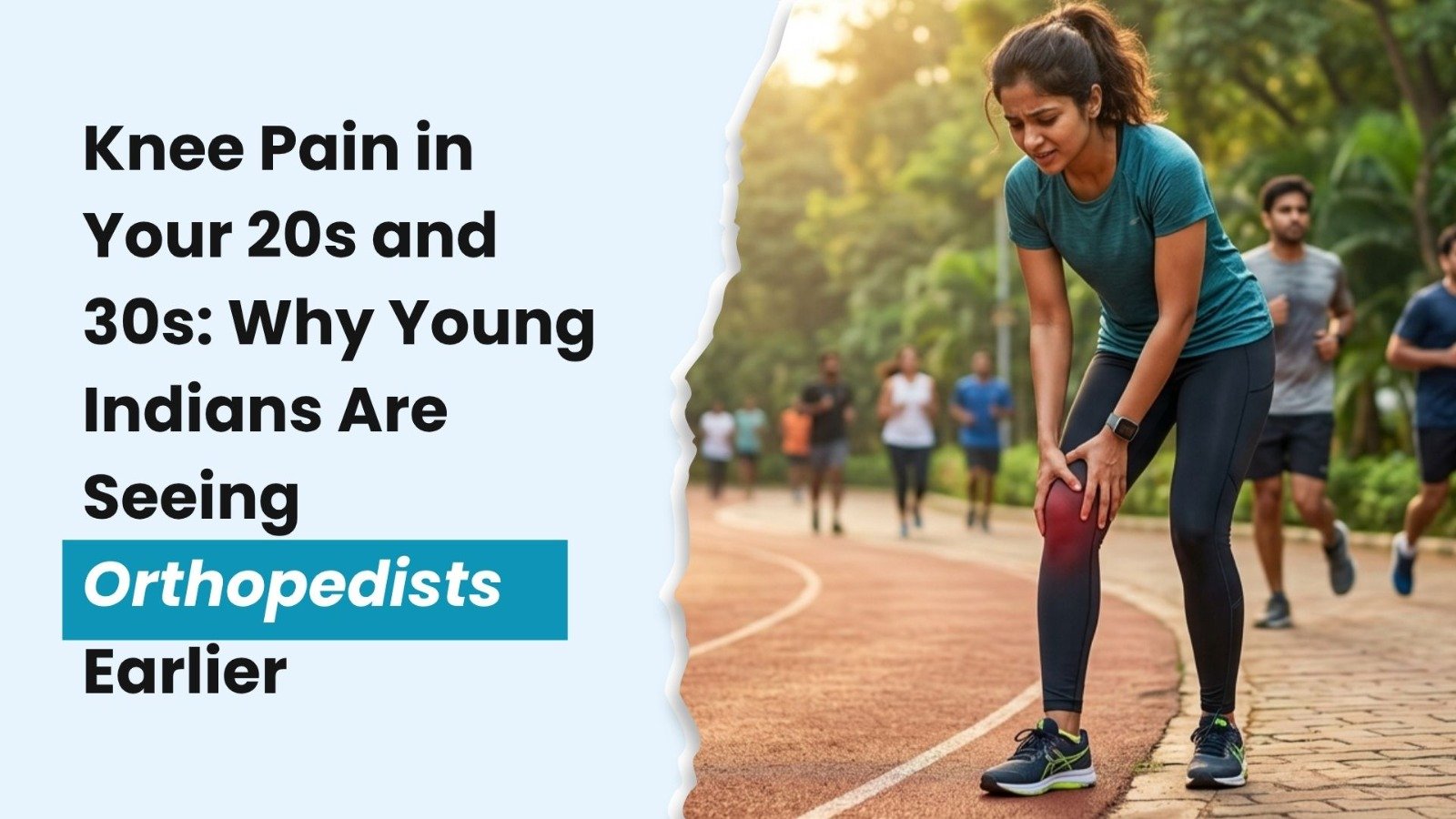
Knee pain in young adults has become a silent epidemic across urban India. What was once a age related condition is now affecting young professionals right in the middle of their most productive years.
Why is this happening so early in life? How did our generation, with access to fitness apps, modern gyms, and ergonomics, end up with joints that feel decades older than we are? Let us take a deep dive into why young Indians are facing joint troubles so early and what you can do to protect your knees for the long run.
The Modern Lifestyle Trap: Desk Jobs and Long Hours
To understand why knee pain in young adults is skyrocketing, we have to look closely at our daily work routines. The modern corporate environment has changed how we move, or rather, how we do not move.
The 9 to 9 Sitting Culture
If you work in corporate offices, technology parks, or customer support centers across cities like Chennai, your day probably revolves around sitting. You sit in your vehicle or cab during a long commute, sit at your desk for nine to ten hours, sit while eating lunch, and then sit on the couch to watch television or scroll through your phone.
When you sit with your knees bent at a ninety degree angle for hours on end, you put continuous pressure on the patellofemoral joint. This is the area where your kneecap meets your thigh bone. Over time, this constant compression reduces the circulation of lubricating joint fluid (synovial fluid) and creates a dull, deep ache right behind the kneecap. Doctors often refer to this specific discomfort as moviegoer’s knee or theater sign because it flares up whenever you sit still for long periods.
IT Professional Joint Pain
Among corporate workers, IT professional joint pain has emerged as one of the most widespread health issues. Software engineers, data analysts, and digital specialists frequently work under tight project deadlines, leading to eight or ten hours of unbroken screen time.
When you are deeply focused on fixing a bug or finishing a report, physical posture is usually the first thing forgotten. Many workers cross their legs tightly, tuck their feet under their chairs, or sit on one leg. These habits place uneven stress on the knee ligaments and pull the kneecap out of its natural alignment, laying the groundwork for chronic joint irritation.
Posture Related Knee Pain: How Poor Alignment Damages Joints
Most people assume that posture only affects the spine, neck, and shoulders. However, your body functions as a single continuous kinetic chain. When your posture breaks down at the top or middle, your lower joints pay the price.
Posture related knee pain rarely starts inside the knee joint itself. Instead, it usually begins with weak gluteal (buttock) muscles and tight hip flexors caused by prolonged sitting.
Prolonged Sitting: Spending long hours seated leads to weak glutes and tight hip flexors.
Altered Walking Mechanics: Unbalanced hips cause your thigh bones to roll inward when you walk or stand.
Patellar Misalignment: This inward tilt pulls your kneecap out of its natural tracking groove.
Cartilage Wear: The resulting friction wears down protective joint cartilage, triggering inflammation and deep knee pain.
When your buttock muscles become inactive from sitting all day, they stop supporting your pelvis correctly when you stand or walk. To keep you upright, your body compensates by rolling your thigh bones inward. This inner tilt causes your kneecap to slide unevenly inside its natural groove instead of gliding smoothly up and down.
This friction wears down the smooth protective cartilage underneath the kneecap, leading to condition called chondromalacia patellae. Left unchecked, this friction leads to clicking sounds, sharp pinches when taking stairs, and chronic swelling.
Common Causes of Knee Pain in Young Adults
While desk jobs play a huge role, they are not the only reason young Indians are visiting orthopedic specialists earlier than previous generations. A combination of lifestyle choices and physical habits contributes to early joint breakdown.
Common Cause | Primary Trigger | Impact on the Knee Joint |
Patellofemoral Pain Syndrome | Prolonged sitting, weak quads | Dull ache behind kneecap, aggravated by stairs |
Weekend Warrior Injuries | Sudden intense weekend sports | Ligament sprains (ACL/MCL), meniscus tears |
Vitamin D & B12 Deficiency | Lack of sunlight, poor dietary intake | Weak bone density, muscle fatigue, slow repair |
Improper Gym Technique | Heavy squats with bad alignment | Excessive compression on joint cartilage |
Unsuitable Footwear | High heels, flat shoes without arch support | Uneven weight distribution across inner knee |
The Weekend Warrior Syndrome
Many young professionals spend Monday through Friday sitting completely still at their desks. Then, on Saturday morning, they try to compensate by playing intense football, cricket, or jumping into high intensity gym workouts.
Going from zero activity to maximum physical exertion without proper conditioning is a recipe for disaster. The muscles supporting your joints are cold and unconditioned, leaving your tendons and cartilage vulnerable to sudden tears, sprains, and inflammation.
Gym Mistakes and Poor Form
Working out is fantastic for overall health, but doing heavy squats, leg presses, or lunges with improper technique does more harm than good. When your knees cave inward during a heavy squat, you place immense torsional force on your meniscus and ligaments. Without guidance from a qualified trainer, heavy weightlifting can accelerate joint wear instead of building supportive muscle.
Silent Nutritional Deficiencies
Despite living in sun drenched regions like Tamil Nadu, a surprising number of young urban Indians suffer from severe Vitamin D3 deficiencies. Spending all day inside air conditioned offices and using heavy sunscreens prevents our skin from synthesizing natural Vitamin D. Vitamin D is essential for calcium absorption and bone strength. When combined with low Vitamin B12 levels, muscles become fatigued quickly, leaving the knee joint without adequate structural support.
Early Joint Care: Why Waiting It Out Is a Mistake
One of the biggest mistakes young adults make is ignoring early joint discomfort. When you are twenty five, it is easy to assume that a little knee stiffness will clear up on its own after a good night’s sleep. You might swallow a quick painkiller, apply a topical gel, or wrap an elastic bandage around your leg and carry on.
While temporary fixes reduce pain for a few hours, they do nothing to correct the underlying structural problem.
The Problem with Delaying Treatment
Ignoring warning signs allows minor, easily treatable issues to turn into long term joint problems:
- Cartilage Loss: Unlike skin or muscle, joint cartilage has no direct blood supply. Once it wears down severely, it heals very slowly. Catching cartilage irritation early stops further breakdown.
- Compensatory Pain: When your right knee hurts, you naturally shift your weight to your left leg while walking. Over time, this imbalance causes left knee pain, hip misalignment, and lower back strain.
- Chronic Inflammation: Continuous friction inside the joint creates lingering fluid buildup, making the knee feel stiff, heavy, and unstable.
Early joint care focuses on fixing mechanics, strengthening supportive muscles, and making small daily adjustments before permanent structural damage takes place.
Simple Posture and Workspace Fixes for Desk Workers
If you work a desk job, you do not need to quit your career to save your knees. Making a few smart adjustments to your daily routine and workspace can dramatically reduce desk job knee pain.
Set Up an Ergonomic Workstation
Take thirty minutes today to evaluate how you sit at your desk:
- Adjust Chair Height: Set your seat so your feet rest completely flat on the floor with your knees bent at a comfortable ninety to one hundred degree angle.
- Use a Footrest: If your feet dangle or do not reach the ground comfortably, use a firm footrest to relieve pressure off the back of your thighs.
- Keep Knees Uncrossed: Avoid crossing your legs at the knees or ankles for extended periods. Keep both feet flat and parallel to maintain balanced hip alignment.
Adopt the 30-Minute Movement Rule
Set a silent timer on your phone or computer for every thirty minutes. When the timer goes off, simply stand up for sixty seconds. Extend your legs fully, squeeze your thigh muscles, and take a quick walk to get water. This simple break resets your joint fluid and prevents your muscles from locking up.
Here is the daily knee protection checklist formatted into a clear, checkable list:
- Feet Flat: Keep your feet flat on the floor or supported by a firm footrest.
- Movement Breaks: Stand up and stretch your legs every 30 minutes throughout the workday.
- Quick Exercises: Perform 10 straight leg raises during work breaks to keep your quad muscles active.
- Hydration: Drink 2.5 to 3 liters of water daily to maintain proper cartilage hydration.
- Proper Footwear: Wear supportive shoes with good arch support instead of completely flat soles or high heels.
When to See an Orthopedic Doctor
Self care and lifestyle fixes are great for mild stiffness, but it is crucial to recognize when home remedies are no longer enough. Knowing when to see an orthopedic doctor can save you from severe joint complications down the road.
If you experience any of the following symptoms, schedule a professional medical evaluation right away:
1. Pain That Lasts More Than Two Weeks
If you have been resting your leg, avoiding heavy activity, and applying cold ice packs, but your knee still aches after fourteen days, your joint needs expert evaluation.
2. Catching, Locking, or Clicking Sounds
A gentle popping sound without pain is usually harmless gas bubbles releasing from joint fluid. However, if your knee catches, physically locks in place, or makes a sharp, grinding noise accompanied by pain, it often points to a meniscus tear or loose cartilage fragment.
3. Visible Swelling or Redness
If your kneecap looks visibly larger than the other, feels warm to the touch, or looks red, it indicates active inflammation or fluid accumulation inside the joint capsule.
4. Feeling of Instability or Giving Way
If your knee suddenly feels weak, wobbles, or gives way under your weight while walking down stairs or stepping off a curb, it indicates potential ligament weakness or structural instability.
5. Nighttime Pain That Disrupts Sleep
Knee pain that wakes you up from a deep sleep or prevents you from finding a comfortable sleeping position is a clear sign of significant tissue irritation that requires medical attention.
What to Expect During an Orthopedic Evaluation
Many young people avoid seeing a doctor because they fear being told they need surgery or must stop working out entirely. In reality, modern orthopedic care for young adults focuses heavily on non-surgical, restorative treatments.
Thorough Physical Examination
When you visit a specialist, the doctor will evaluate your joint alignment, check your range of motion, test ligament stability, and press gently around the kneecap to locate the exact source of pain.
Advanced Diagnostic Imaging
If the physical exam indicates underlying tissue issues, the specialist may order diagnostic tests:
- Digital X-Rays: To check bone spacing, patellar tracking, and rule out structural alignment anomalies.
- High-Resolution MRI: To get a clear, detailed look at soft tissues like cartilage, ligaments, tendons, and the meniscus.
Non-Surgical Rehabilitation Plans
For the vast majority of young adults, treatment involves conservative management:
- Targeted Physical Therapy: Customized exercise programs designed to strengthen weak quadriceps, glutes, and hamstrings while stretching tight IT bands and calves.
- Medical Management: Short courses of anti-inflammatory medications to calm acute swelling and pain.
- Lifestyle and Ergonomic Coaching: Practical advice on workplace adjustments, shoe inserts (orthotics), and safe return-to-sport protocols.
Finding the Right Care: Choosing a Specialist in Chennai
When dealing with joint issues in your 20s and 30s, you need care that understands your active lifestyle. You want specialists who aim to get you back to running, playing sports, and working comfortably without pain.
For young professionals in Chennai seeking advanced bone and joint care, Orthomed Hospital offers comprehensive orthopedic evaluations and personalized rehabilitation plans tailored to young adults.
When choosing a medical facility for your joint health, keep these important criteria in mind:
Experienced Orthopedic Specialists
Look for board certified orthopedic surgeons and sports medicine experts who specialize in joint preservation techniques. Specialists who focus on keeping your natural joints healthy for as long as possible are ideal for younger patients.
Modern Diagnostic Infrastructure
A facility equipped with modern digital X-rays, high resolution MRI machines, and advanced gait analysis tools can pinpoint subtle alignment problems quickly and accurately.
Integrated Physiotherapy and Rehabilitation
Joint recovery relies heavily on proper physical therapy. Choose a hospital that features a fully equipped physiotherapy center staffed by experienced physical therapists who work directly alongside the orthopedic doctors to monitor your progress.
Simple Exercises to Protect Your Knees at Home
Building strong, flexible muscles around your knee joint is the single best defense against early wear and tear. You can do these three gentle exercises right at home or during quick work breaks.
1. Straight Leg Raises (Quadriceps Strengthening)
- Lie flat on your back or sit upright in a firm chair with one leg extended straight out in front of you.
- Slowly lift your straight leg eight to ten inches off the floor, keeping your thigh muscle tight.
- Hold the position for five seconds, then lower your leg down smoothly.
- Repeat ten to twelve times on each leg.
2. Wall Sits (Joint Stability)
- Stand with your back flat against a smooth wall and feet shoulder width apart, placed about two feet out from the wall.
- Slowly slide down the wall until your knees are bent at a comfortable angle (do not go lower than ninety degrees).
- Ensure your knees stay directly above your ankles and do not cave inward.
- Hold the position for twenty to thirty seconds, then slide back up. Repeat three times.
3. Hamstring and Calf Stretches (Flexibility)
- Sit on the edge of a chair, extend one leg straight forward with your heel resting on the floor and toes pointing upward.
- Keep your back straight and gently lean forward from your hips until you feel a comfortable stretch along the back of your thigh and calf.
- Hold for twenty seconds, breathing deeply, then switch legs.
Take Action to Preserve Your Joints Today
Knee pain in your 20s and 30s is a clear signal from your body that something in your daily routine needs to change. It is not something you have to accept as a normal part of working a corporate job or living a busy city life.
By setting up an ergonomic workstation, taking regular movement breaks throughout the workday, staying active with low impact exercises, and getting proper nutrition, you can protect your knees from premature aging.
Most importantly, do not ignore persistent joint discomfort. Taking early action by consulting an orthopedic specialist allows you to address alignment issues, rebuild joint strength, and stay active without pain for decades to come.
Listen to your body, protect your knees today, and take the first step toward long term joint health.
Comments are closed