
- Home
- About
- Services
- Specialists
- Research
- Achivements
- gallery
- contact




- Home
- About Us
- Orthopedics
- Know Your Alignment
- Sports Medicine
- Knee
- Arthroscopic ACI Cartilage Transplant
- Arthroscopic ACL Avulsion Fixation
- Arthroscopic ACL Primary Repair
- Arthroscopic ACL Reconstruction – All Inside Technique
- Arthroscopic ACL Rehab
- Arthroscopic ACL Revision Surgery
- Arthroscopic ACL Single Bundle Reconstruction
- Arthroscopic assisted MPFL Reconstruction
- Arthroscopic assisted Multiple Ligament Tear – SURGERY
- Arthroscopic Medial Meniscal Repair
- Arthroscopic OATS Chondroplasty
- Arthroscopic OCD Fixation
- Arthroscopic Paediatric ACL Reconstruction
- Arthroscopic PCL Avulsion Fixation
- Arthroscopic PCL Reconstruction
- Arthroscopy Assisted STEM Cell Cartilage Transplant
- PCL Rehabilitation
- Total Knee Replacement
- Shoulder
- Arthroscopic Rotator Cuff Repair
- Arthroscopic Bankart Repair
- Arthroscopy Assisted Latarjet Surgery
- AC Joint Fixation
- Arthroscopic Capsular Release
- Arthroscopic Sub – Acromial Decompression (SAD)
- Arthroscopic Calcific Tendinitis Excision
- Arthroscopic Biceps Tenodesis
- Arthroscopic SLAP Repair
- Arthroscopic Revision Cuff Repair
- Arthroscopic Revision Bankart Repair
- Shoulder Rehab
- Elbow
- Wrist
- Hip
- Ankle
- Our Specialities
- Cardiology
- Gastroenterology
- Radiology
- Internal Medicine & Diabetology
- Anesthesiology & Intensive Care Unit
- Neurology
- Nephrology
- Urology
- Oncology
- Rheumatology
- Endocrinology
- General Surgery
- Laparoscopic Surgery
- Podiatric / Diabetic Foot Clinic
- Obstetrics & Gynecology
- ENT
- Plastic & Cosmetic Surgery
- Paediatrics
- Pulmonology
- Psychiatry
- Vascular Surgery
- Dermatology
- Oral and Maxillofacial Surgery
- Our Services
- Resource
- Enquiry
- Home
- About Us
- Orthopedics
- Know Your Alignment
- Sports Medicine
- Knee
- Arthroscopic ACI Cartilage Transplant
- Arthroscopic ACL Avulsion Fixation
- Arthroscopic ACL Primary Repair
- Arthroscopic ACL Reconstruction – All Inside Technique
- Arthroscopic ACL Rehab
- Arthroscopic ACL Revision Surgery
- Arthroscopic ACL Single Bundle Reconstruction
- Arthroscopic assisted MPFL Reconstruction
- Arthroscopic assisted Multiple Ligament Tear – SURGERY
- Arthroscopic Medial Meniscal Repair
- Arthroscopic OATS Chondroplasty
- Arthroscopic OCD Fixation
- Arthroscopic Paediatric ACL Reconstruction
- Arthroscopic PCL Avulsion Fixation
- Arthroscopic PCL Reconstruction
- Arthroscopy Assisted STEM Cell Cartilage Transplant
- PCL Rehabilitation
- Total Knee Replacement
- Shoulder
- Arthroscopic Rotator Cuff Repair
- Arthroscopic Bankart Repair
- Arthroscopy Assisted Latarjet Surgery
- AC Joint Fixation
- Arthroscopic Capsular Release
- Arthroscopic Sub – Acromial Decompression (SAD)
- Arthroscopic Calcific Tendinitis Excision
- Arthroscopic Biceps Tenodesis
- Arthroscopic SLAP Repair
- Arthroscopic Revision Cuff Repair
- Arthroscopic Revision Bankart Repair
- Shoulder Rehab
- Elbow
- Wrist
- Hip
- Ankle
- Our Specialities
- Cardiology
- Gastroenterology
- Radiology
- Internal Medicine & Diabetology
- Anesthesiology & Intensive Care Unit
- Neurology
- Nephrology
- Urology
- Oncology
- Rheumatology
- Endocrinology
- General Surgery
- Laparoscopic Surgery
- Podiatric / Diabetic Foot Clinic
- Obstetrics & Gynecology
- ENT
- Plastic & Cosmetic Surgery
- Paediatrics
- Pulmonology
- Psychiatry
- Vascular Surgery
- Dermatology
- Oral and Maxillofacial Surgery
- Our Services
- Resource
- Enquiry


- Home
- About Us
- Orthopedics
- Know Your Alignment
- Sports Medicine
- Knee
- Arthroscopic ACI Cartilage Transplant
- Arthroscopic ACL Avulsion Fixation
- Arthroscopic ACL Primary Repair
- Arthroscopic ACL Reconstruction – All Inside Technique
- Arthroscopic ACL Rehab
- Arthroscopic ACL Revision Surgery
- Arthroscopic ACL Single Bundle Reconstruction
- Arthroscopic assisted MPFL Reconstruction
- Arthroscopic assisted Multiple Ligament Tear – SURGERY
- Arthroscopic Medial Meniscal Repair
- Arthroscopic OATS Chondroplasty
- Arthroscopic OCD Fixation
- Arthroscopic Paediatric ACL Reconstruction
- Arthroscopic PCL Avulsion Fixation
- Arthroscopic PCL Reconstruction
- Arthroscopy Assisted STEM Cell Cartilage Transplant
- PCL Rehabilitation
- Total Knee Replacement
- Shoulder
- Arthroscopic Rotator Cuff Repair
- Arthroscopic Bankart Repair
- Arthroscopy Assisted Latarjet Surgery
- AC Joint Fixation
- Arthroscopic Capsular Release
- Arthroscopic Sub – Acromial Decompression (SAD)
- Arthroscopic Calcific Tendinitis Excision
- Arthroscopic Biceps Tenodesis
- Arthroscopic SLAP Repair
- Arthroscopic Revision Cuff Repair
- Arthroscopic Revision Bankart Repair
- Shoulder Rehab
- Elbow
- Wrist
- Hip
- Ankle
- Our Specialities
- Cardiology
- Gastroenterology
- Radiology
- Internal Medicine & Diabetology
- Anesthesiology & Intensive Care Unit
- Neurology
- Nephrology
- Urology
- Oncology
- Rheumatology
- Endocrinology
- General Surgery
- Laparoscopic Surgery
- Podiatric / Diabetic Foot Clinic
- Obstetrics & Gynecology
- ENT
- Plastic & Cosmetic Surgery
- Paediatrics
- Pulmonology
- Psychiatry
- Vascular Surgery
- Dermatology
- Oral and Maxillofacial Surgery
- Our Services
- Resource
- Enquiry
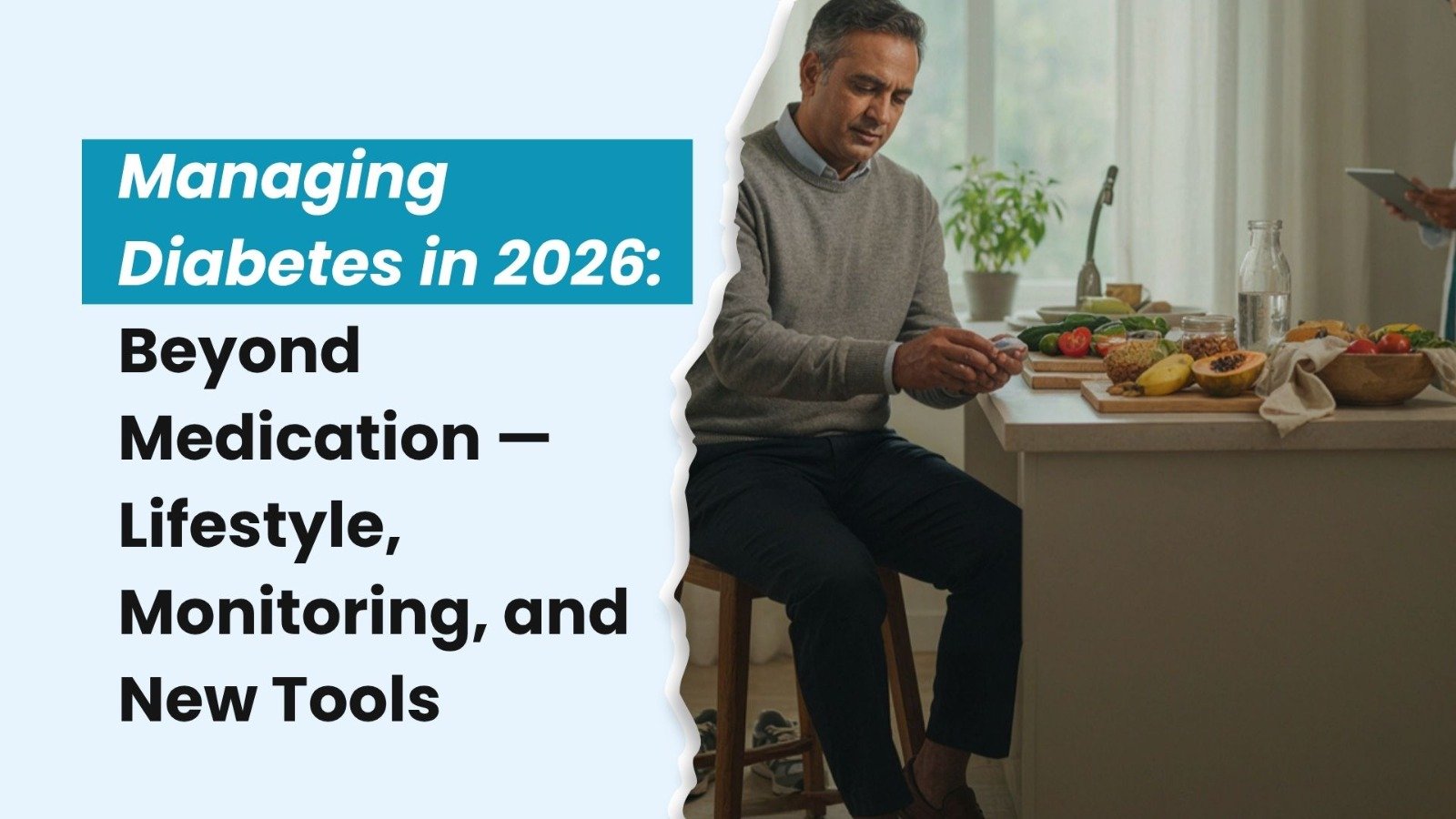
Managing Diabetes in 2026: Beyond Medication — Lifestyle, Monitoring, and New Tools
For decades, receiving a diabetes diagnosis felt like a lifetime sentence of rigid restrictions and constant anxiety. The routine was familiar: swallow your morning tablets, avoid sweets, prick your fingertip occasionally, and hope your numbers stay somewhat reasonable. If your sugar spiked, the usual answer was simply to increase the dosage or add another medication to your daily pill organizer.
In 2026, the entire landscape of diabetes care has changed.
We no longer view Type 2 diabetes as a one-way downhill street. Today, endocrinologists and metabolic experts recognize that medication is just one piece of a much larger puzzle. With modern medical tools, continuous digital tracking, personalized nutrition, and targeted movement strategies, managing diabetes is no longer about restriction. It is about understanding your unique metabolism and taking proactive control. In many early cases, achieving long-term remission is now a realistic clinical goal.
In vibrant urban centers like Chennai, where rich culinary traditions often meet demanding corporate schedules, managing diabetes requires a smart, modern approach. Let us explore what comprehensive diabetes management Chennai looks like today, how digital monitoring tools work, what test numbers really mean, and how you can protect your health for decades to come.
Why the Old Approach to Diabetes Care Fell Short
To understand why modern diabetes management looks so different today, it helps to examine why traditional treatment often left people frustrated.
For years, the standard approach focused almost entirely on treating blood sugar as an isolated problem. When blood glucose rose, medications forced the pancreas to produce more insulin or helped the kidneys flush out extra sugar. While these medications are lifesavers, relying only on pills without addressing the root cause missed the underlying issue: insulin resistance.
Understanding Insulin Resistance
When you eat carbohydrates, your digestive system breaks them down into glucose, which enters your bloodstream. Your pancreas responds by releasing insulin, a hormone that acts like a key opening cell doors so glucose can enter and be used for energy.
In Type 2 diabetes, your cells become resistant to that insulin key. The doors refuse to open easily. The pancreas compensates by pumping out more and more insulin to force the sugar into your cells. Over time, high levels of circulating insulin and elevated blood sugar damage delicate blood vessels, irritate internal organs, and cause ongoing fatigue.
Treating diabetes in 2026 targets this root mechanism. By improving insulin sensitivity through muscle activation, targeted nutrition, stress balance, and modern technology, you lower the amount of medication your body needs to stay healthy.
Understanding Your Tests: What Does Your HbA1c Really Mean?
If you have diabetes or prediabetes, you have had an HbA1c blood test. But many people look at the percentage on the lab report without fully understanding what it tells their doctor.
Decoding the HbA1c Test Meaning
A standard fasting blood sugar test or post-meal prick gives you a snapshot of your glucose level at that exact moment. It can be influenced by what you ate for dinner the night before, your stress level during morning traffic, or even poor sleep.
The HbA1c test measures glycated hemoglobin. Red blood cells live in your body for about 8 to 12 weeks. When glucose circulates in your blood, some of it naturally sticks to the hemoglobin protein inside these red blood cells. The higher your blood glucose levels have been over the past two to three months, the more glucose attaches to your hemoglobin.
THE GLUCOSE SPECTRUM: UNDERSTANDING YOUR NUMBERS
NORMAL RANGE
* Fasting Blood Sugar : Under 100 mg/dL
* Post-Meal (2 Hours) : Under 140 mg/dL
* HbA1c Level : Below 5.7%
PREDIABETES (THE CRITICAL WINDOW)
* Fasting Blood Sugar : 100 to 125 mg/dL
* Post-Meal (2 Hours) : 140 to 199 mg/dL
* HbA1c Level : 5.7% to 6.4%
DIABETES RANGE
* Fasting Blood Sugar : 126 mg/dL or higher
* Post-Meal (2 Hours) : 200 mg/dL or higher
* HbA1c Level : 6.5% or higher
An HbA1c test gives you and your physician an honest, three-month average of your blood sugar control. It shows the real trajectory of your metabolic health, cutting through temporary daily fluctuations.
The Technology Revolution: Continuous Glucose Monitoring (CGM)
One of the biggest breakthroughs in everyday diabetes care is the widespread availability of continuous glucose monitoring systems.
For years, testing your sugar meant stopping what you were doing, finding a clean space, lancing your finger, and putting a drop of blood onto a test strip. Because it caused mild discomfort, most people checked their levels only once or twice a week, missing the real-time spikes caused by specific meals or stressful events.
How CGM Systems Work
A continuous glucose monitor is a tiny, water-resistant sensor applied to the back of your upper arm or abdomen. A flexible, microscopic filament sits comfortably just beneath the skin in the interstitial fluid (the fluid between your cells).
The sensor automatically measures glucose levels every few minutes, 24 hours a day, and beams the data straight to your smartphone via Bluetooth.
Traditional Fingerstick Testing | Continuous Glucose Monitoring (CGM) |
Single snapshot in time | Real-time continuous trend line 24/7 |
Requires painful finger pricks | Painless sensor applied once every 14 days |
Misses nighttime dips and post-meal spikes | Alerts you immediately if sugar spikes or crashes |
Shows where your sugar is right now | Shows where your sugar is, where it is heading, and how fast |
Requires manual record keeping | Generates automated digital graphs for your physician |
The Power of Real-Time Biofeedback
The real magic of a CGM is the personal insight it provides. You quickly discover that your body’s response to food is unique:
- You might find that two idlis cause a massive glucose spike, while a plate of scrambled eggs with vegetables keeps your line completely flat.
- You can see how a 15-minute walk immediately after dinner pulls your sugar curve back down.
- You see the clear spike in blood sugar that happens during a stressful office meeting, even when you have not eaten anything.
This instant feedback eliminates guesswork. Instead of following generic diet sheets, you can adjust your personal habits based on direct data from your own body.
Nutrition in 2026: Exploring the Diabetes Reversal Diet
In recent years, the phrase diabetes reversal diet has become a major topic of interest. But what does reversal actually mean in clinical medicine?
Doctors generally refer to reversal as diabetes remission. This means maintaining an HbA1c below 6.5% for at least three months without relying on glucose-lowering medications. While this may not be possible for everyone, especially those with advanced pancreatic beta-cell exhaustion, achieving significant remission is very possible for individuals diagnosed within the past five to ten years.
The Mechanism of Remission
Clinical studies show that Type 2 diabetes is often driven by excess ectopic fat. When extra fat deposits settle inside the liver and pancreas, it impairs the organs’ ability to produce and process insulin. When you lose 10% to 15% of your total body weight through structured nutrition, visceral fat leaves the liver and pancreas first, allowing them to resume normal insulin production.
Rethinking the South Indian Plate
In regions like Tamil Nadu, traditional daily diets rely heavily on refined carbohydrates: polished white rice, dosas, idlis, and maida-based snacks. These foods digest quickly, releasing surges of glucose into the bloodstream.
You do not need to give up your regional food culture to achieve great metabolic health. Making mindful structural adjustments to your plate delivers dramatic results:
- Adopt the Half-Plate Rule: Fill half your plate with non-starchy vegetables (greens, cabbage, ridge gourd, beans, cucumber), one quarter with quality protein, and the remaining quarter with complex carbohydrates.
- Prioritize Protein First: Protein slows down stomach emptying and stimulates the release of satiety hormones. Start your meals with paneer, eggs, chicken, fish, tofu, or lentils before touching your carbohydrates.
- Switch to Traditional Unpolished Grains: Replace polished white rice with traditional options like brown rice, foxtail millet (thinai), finger millet (ragi), or whole legumes. These contain intact fibers that slow carbohydrate absorption.
- Eat Food in the Right Order: Eating vegetables and fiber first, protein second, and carbohydrates last can reduce post-meal glucose spikes by up to 50%.
Movement as Medicine: Why Muscle Is Your Metabolic Shield
When people think about managing blood sugar through exercise, they usually think of long, exhausting cardio sessions on a treadmill. While cardiovascular exercise is great for your heart, your skeletal muscles are actually your primary defense against diabetes.
Muscles as Glucose Sponges
Your muscles are the largest storage site for glucose in your body, soaking up about 80% of circulating blood sugar after a meal.
When you contract your muscles during movement or resistance training, your body activates a pathway called GLUT4. This mechanism pulls glucose directly out of your bloodstream and into your muscle cells without needing insulin. This means every time you lift a weight, climb stairs, or take a brisk walk, you lower your blood sugar naturally, giving your overworked pancreas a break.
Practical Movement Strategies
- The 15-Minute Post-Meal Walk: Instead of sitting on the sofa after lunch or dinner, take a gentle 15-minute walk. Using your leg muscles immediately after eating blunts the sharp glucose spike that usually follows meals.
- Resistance Training Twice a Week: Incorporate bodyweight squats, wall push-ups, resistance band routines, or light dumbbell training two to three times weekly. Building lean muscle mass creates a larger storage tank for daily glucose.
- Break Up Sitting Time: Sitting continuously for hours makes your leg muscles metabolically inactive. Stand up, stretch, or do ten calf raises every 45 minutes during your workday.
Diabetes Complications Prevention: Protecting Your Vital Organs
Managing blood sugar is about much more than reaching a number on a lab report. The real goal of comprehensive diabetes care is long-term diabetes complications prevention.
When blood sugar levels stay elevated for years, glucose molecules bond with proteins in blood vessel walls, causing chronic inflammation and stiffening. Over time, this damage affects the tiny micro-vessels in your eyes, nerves, and kidneys, as well as the major arteries supplying your heart and brain.
Organ System | Potential Complication | Essential Preventive Action |
Eyes (Retina) | Diabetic Retinopathy (vision damage) | Annual dilated fundus eye examination |
Kidneys (Renal) | Diabetic Nephropathy (kidney strain) | Annual Urine Microalbumin & Serum Creatinine tests |
Feet & Nerves | Diabetic Neuropathy (loss of sensation) | Daily self-inspection, annual podiatric nerve check |
Cardiovascular | Coronary Artery Disease & stroke | Blood pressure checks, regular lipid panels |
Joints & Bones | Frozen shoulder, joint stiffness | Regular physical therapy, daily range-of-motion drills |
Early screening catches tiny microscopic changes in your retina or kidneys years before you notice any physical symptoms, allowing your medical team to protect your organs with simple treatments.
Finding Expert Care: Choosing the Right Medical Facility
Because diabetes affects multiple body systems, effective care requires more than a quick prescription refill. It requires a dedicated healthcare team that monitors your heart, kidneys, feet, eyes, and daily nutrition as a connected whole.
If you are looking for specialized guidance, searching for a qualified diabetologist near me is an important first step toward getting your numbers under control.
For individuals and families across Chennai, Orthomed Hospital provides comprehensive metabolic evaluations, advanced outpatient consultations, and integrated diabetes management Chennai programs. Conveniently located in central Chennai, the facility offers access to modern diagnostic laboratories, experienced endocrinology and internal medicine specialists, and on-site physiotherapy support.
When evaluating a medical center for your ongoing diabetes care, keep these important criteria in mind:
Qualified Endocrinology and Internal Medicine Specialists
Choose experienced physicians who look beyond medications, taking the time to review your CGM trend lines, dietary preferences, sleep patterns, and daily work routine.
Integrated Multispecialty Support
Diabetes touches almost every specialty. A hospital that provides seamless access to cardiologists, nephrologists, ophthalmologists, podiatrists, and dietitians under one roof ensures you receive comprehensive, coordinated care.
Modern Laboratory Infrastructure
Accurate, dependable lab testing is essential for monitoring your health. Look for centers equipped with automated clinical laboratories that provide fast, precise HbA1c measurements, lipid panels, and kidney function tests.
Simple Daily Rules for Thriving with Diabetes in 2026
Achieving stable metabolic health does not require complicated routines. Focusing on a few core habits every day delivers lasting results:
- Hydrate Consistently: Drink at least two to three liters of plain water daily. When you are dehydrated, the concentration of sugar in your bloodstream naturally rises.
- Prioritize Restful Sleep: Aim for seven to eight hours of uninterrupted sleep every night. A single night of poor sleep increases cortisol, triggering insulin resistance the following morning.
- Inspect Your Feet Daily: Check your feet every evening for minor cuts, blisters, cracks, or redness. Because diabetes can reduce pain sensation in the feet, catching small sores early prevents serious infections.
- Manage Daily Stress: Dedicate ten minutes each day to deep breathing exercises, gentle yoga, or quiet meditation. Lowering stress hormone levels directly helps stabilize blood sugar.
Take Charge of Your Metabolic Health Today
Living with diabetes in 2026 is no longer about accepting a slow decline in your vitality. With real-time glucose tracking, balanced nutrition, muscle-focused exercise, and modern medical support, you have all the tools needed to live a healthy, energetic, and fulfilling life.
Whether you have been newly diagnosed with prediabetes, have lived with Type 2 diabetes for years, or simply want to optimize your metabolic health, you do not have to navigate this journey on your own.
Take the first step today. Schedule a consultation with an experienced diabetes specialist, review your HbA1c numbers, explore modern monitoring tools, and build a personalized plan to take charge of your health for life.
Comments are closed