
- Home
- About
- Services
- Specialists
- Research
- Achivements
- gallery
- contact




- Home
- About Us
- Orthopedics
- Know Your Alignment
- Sports Medicine
- Knee
- Arthroscopic ACI Cartilage Transplant
- Arthroscopic ACL Avulsion Fixation
- Arthroscopic ACL Primary Repair
- Arthroscopic ACL Reconstruction – All Inside Technique
- Arthroscopic ACL Rehab
- Arthroscopic ACL Revision Surgery
- Arthroscopic ACL Single Bundle Reconstruction
- Arthroscopic assisted MPFL Reconstruction
- Arthroscopic assisted Multiple Ligament Tear – SURGERY
- Arthroscopic Medial Meniscal Repair
- Arthroscopic OATS Chondroplasty
- Arthroscopic OCD Fixation
- Arthroscopic Paediatric ACL Reconstruction
- Arthroscopic PCL Avulsion Fixation
- Arthroscopic PCL Reconstruction
- Arthroscopy Assisted STEM Cell Cartilage Transplant
- PCL Rehabilitation
- Total Knee Replacement
- Shoulder
- Arthroscopic Rotator Cuff Repair
- Arthroscopic Bankart Repair
- Arthroscopy Assisted Latarjet Surgery
- AC Joint Fixation
- Arthroscopic Capsular Release
- Arthroscopic Sub – Acromial Decompression (SAD)
- Arthroscopic Calcific Tendinitis Excision
- Arthroscopic Biceps Tenodesis
- Arthroscopic SLAP Repair
- Arthroscopic Revision Cuff Repair
- Arthroscopic Revision Bankart Repair
- Shoulder Rehab
- Elbow
- Wrist
- Hip
- Ankle
- Our Specialities
- Cardiology
- Gastroenterology
- Radiology
- Internal Medicine & Diabetology
- Anesthesiology & Intensive Care Unit
- Neurology
- Nephrology
- Urology
- Oncology
- Rheumatology
- Endocrinology
- General Surgery
- Laparoscopic Surgery
- Podiatric / Diabetic Foot Clinic
- Obstetrics & Gynecology
- ENT
- Plastic & Cosmetic Surgery
- Paediatrics
- Pulmonology
- Psychiatry
- Vascular Surgery
- Dermatology
- Oral and Maxillofacial Surgery
- Our Services
- Resource
- Enquiry
- Home
- About Us
- Orthopedics
- Know Your Alignment
- Sports Medicine
- Knee
- Arthroscopic ACI Cartilage Transplant
- Arthroscopic ACL Avulsion Fixation
- Arthroscopic ACL Primary Repair
- Arthroscopic ACL Reconstruction – All Inside Technique
- Arthroscopic ACL Rehab
- Arthroscopic ACL Revision Surgery
- Arthroscopic ACL Single Bundle Reconstruction
- Arthroscopic assisted MPFL Reconstruction
- Arthroscopic assisted Multiple Ligament Tear – SURGERY
- Arthroscopic Medial Meniscal Repair
- Arthroscopic OATS Chondroplasty
- Arthroscopic OCD Fixation
- Arthroscopic Paediatric ACL Reconstruction
- Arthroscopic PCL Avulsion Fixation
- Arthroscopic PCL Reconstruction
- Arthroscopy Assisted STEM Cell Cartilage Transplant
- PCL Rehabilitation
- Total Knee Replacement
- Shoulder
- Arthroscopic Rotator Cuff Repair
- Arthroscopic Bankart Repair
- Arthroscopy Assisted Latarjet Surgery
- AC Joint Fixation
- Arthroscopic Capsular Release
- Arthroscopic Sub – Acromial Decompression (SAD)
- Arthroscopic Calcific Tendinitis Excision
- Arthroscopic Biceps Tenodesis
- Arthroscopic SLAP Repair
- Arthroscopic Revision Cuff Repair
- Arthroscopic Revision Bankart Repair
- Shoulder Rehab
- Elbow
- Wrist
- Hip
- Ankle
- Our Specialities
- Cardiology
- Gastroenterology
- Radiology
- Internal Medicine & Diabetology
- Anesthesiology & Intensive Care Unit
- Neurology
- Nephrology
- Urology
- Oncology
- Rheumatology
- Endocrinology
- General Surgery
- Laparoscopic Surgery
- Podiatric / Diabetic Foot Clinic
- Obstetrics & Gynecology
- ENT
- Plastic & Cosmetic Surgery
- Paediatrics
- Pulmonology
- Psychiatry
- Vascular Surgery
- Dermatology
- Oral and Maxillofacial Surgery
- Our Services
- Resource
- Enquiry


- Home
- About Us
- Orthopedics
- Know Your Alignment
- Sports Medicine
- Knee
- Arthroscopic ACI Cartilage Transplant
- Arthroscopic ACL Avulsion Fixation
- Arthroscopic ACL Primary Repair
- Arthroscopic ACL Reconstruction – All Inside Technique
- Arthroscopic ACL Rehab
- Arthroscopic ACL Revision Surgery
- Arthroscopic ACL Single Bundle Reconstruction
- Arthroscopic assisted MPFL Reconstruction
- Arthroscopic assisted Multiple Ligament Tear – SURGERY
- Arthroscopic Medial Meniscal Repair
- Arthroscopic OATS Chondroplasty
- Arthroscopic OCD Fixation
- Arthroscopic Paediatric ACL Reconstruction
- Arthroscopic PCL Avulsion Fixation
- Arthroscopic PCL Reconstruction
- Arthroscopy Assisted STEM Cell Cartilage Transplant
- PCL Rehabilitation
- Total Knee Replacement
- Shoulder
- Arthroscopic Rotator Cuff Repair
- Arthroscopic Bankart Repair
- Arthroscopy Assisted Latarjet Surgery
- AC Joint Fixation
- Arthroscopic Capsular Release
- Arthroscopic Sub – Acromial Decompression (SAD)
- Arthroscopic Calcific Tendinitis Excision
- Arthroscopic Biceps Tenodesis
- Arthroscopic SLAP Repair
- Arthroscopic Revision Cuff Repair
- Arthroscopic Revision Bankart Repair
- Shoulder Rehab
- Elbow
- Wrist
- Hip
- Ankle
- Our Specialities
- Cardiology
- Gastroenterology
- Radiology
- Internal Medicine & Diabetology
- Anesthesiology & Intensive Care Unit
- Neurology
- Nephrology
- Urology
- Oncology
- Rheumatology
- Endocrinology
- General Surgery
- Laparoscopic Surgery
- Podiatric / Diabetic Foot Clinic
- Obstetrics & Gynecology
- ENT
- Plastic & Cosmetic Surgery
- Paediatrics
- Pulmonology
- Psychiatry
- Vascular Surgery
- Dermatology
- Oral and Maxillofacial Surgery
- Our Services
- Resource
- Enquiry
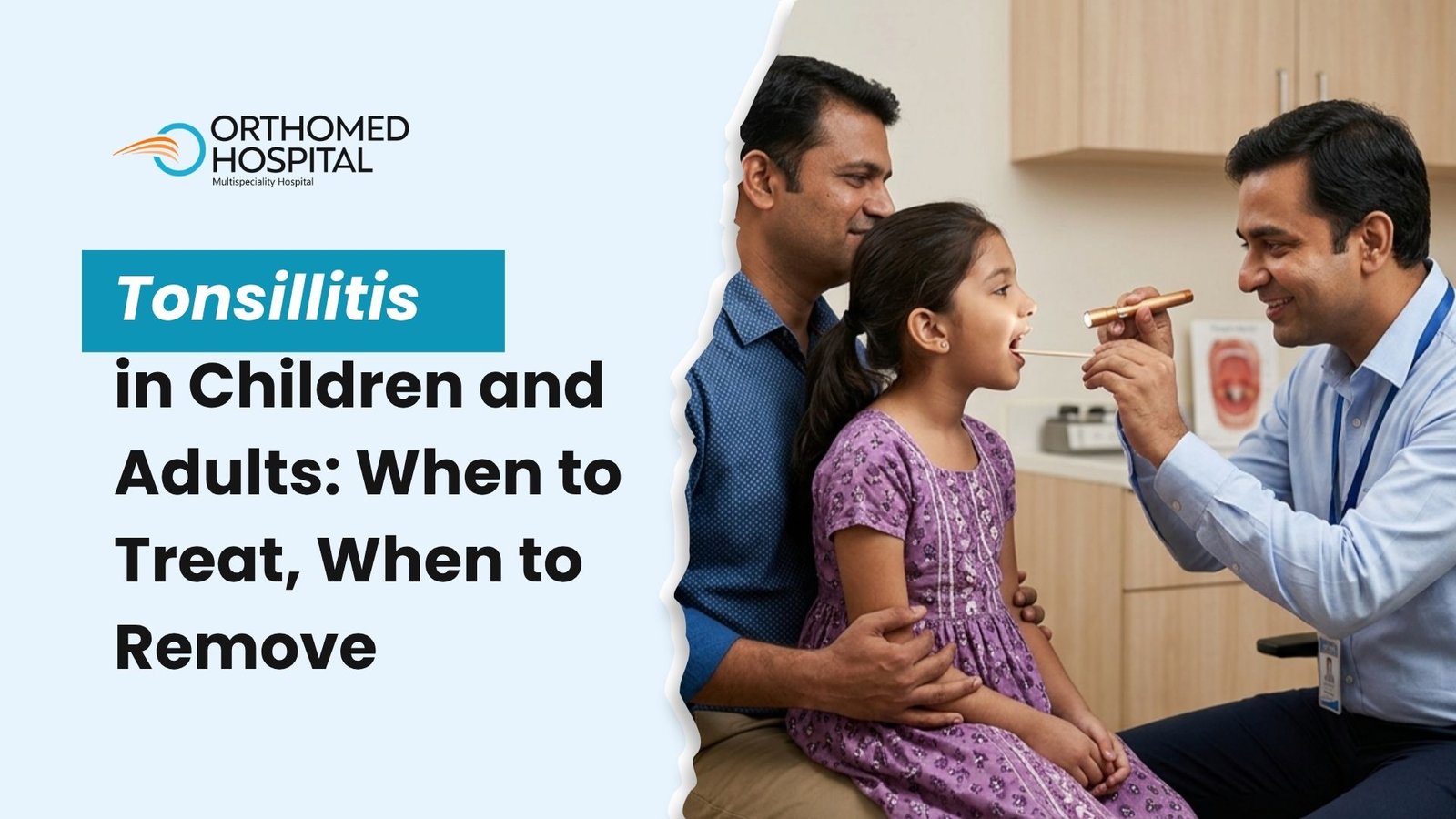
Tonsillitis in Children and Adults: When to Treat, When to Remove
We have all experienced a painful, raw sore throat at some point. You swallow a sip of water, and it feels like swallowing broken glass. For most people, a few days of warm soup, salt water gargles, and restful sleep clear up the discomfort. But when the throat pain comes back month after month, accompanied by high fever, swollen glands, and bad breath, the culprit is often tonsillitis.
Tonsillitis is one of the most common ear, nose, and throat (ENT) conditions affecting both children and adults. Because a throat infection is so common, many people assume it is just a routine nuisance that will pass on its own. However, living with frequent infections can affect a child’s school attendance, disrupt adult work schedules, and lead to poor sleep quality for the whole family.
Knowing when a throat infection is a simple bug that can be treated with medication, and when it is time to consider removing the tonsils completely, can save you or your child months of recurring pain. Let us break down how your tonsils work, what causes chronic infections, and when you should consult a leading specialist for tonsillitis treatment Chennai.
What Are Tonsils and Why Do They Get Infected?
To understand why tonsillitis happens, it helps to look at what these oval-shaped pads actually do. Your tonsils are two fleshy masses of lymphatic tissue located at the back of your throat, one on each side.
The Body’s First Line of Defense
Think of your tonsils as your body’s security guards at the main entrance of your respiratory and digestive systems. Whenever you breathe in air or swallow food, bacteria and viruses enter your mouth. The tonsils trap these invading pathogens and produce white blood cells to destroy them before they travel deeper into your lungs or bloodstream.
Because tonsils stand on the front lines of your immune system, they are constantly exposed to germs. Sometimes, especially when your immune system is overworked or when a particularly aggressive virus hits, the tonsils themselves become overwhelmed and infected. This infection and the resulting swelling is what doctors call tonsillitis.
Children vs Adults: How Tonsillitis Differs
While tonsillitis can strike at any age, it behaves very differently in a six year old child compared to a thirty five year old adult.
Tonsillitis in Children
Children between the ages of three and fifteen are the most common sufferers of tonsillitis. There are two main reasons for this:
- Developing Immune Systems: Young children are constantly exposed to new viral and bacterial strains at school, day care, and play areas. Their immune systems are still learning how to handle these germs.
- Larger Tonsil Size: Relative to the size of their narrow airways, children have naturally larger tonsils. When a child’s tonsils swell during an infection, they can partially block the airway, leading to loud snoring, mouth breathing, and even sudden pauses in breathing during sleep (sleep apnea).
A child with tonsillitis will often become irritable, refuse to eat solid foods due to swallowing pain, run a high fever, and complain of a stomachache or ear pain.
Tonsillitis in Adults
While adult tonsils tend to shrink as the immune system matures, adults can still suffer from severe, lingering infections.
Adult tonsillitis is often triggered by heavy stress, low immunity, environmental pollution, or viral infections like mononucleosis. Unlike children, adults with chronic tonsillitis frequently develop tonsil stones (tonsilloliths). These are hard, pale deposits of trapped food, dead cells, and bacteria that collect in the deep crevices of the tonsils, causing persistent bad breath and a nagging feeling that something is stuck in the throat.
Causes of Recurrent Tonsillitis: Why Infections Keep Coming Back
If you feel like you or your child finish one course of antibiotics only to end up with another swollen throat a few weeks later, you are dealing with recurrent tonsillitis. Understanding recurrent tonsillitis causes helps explain why simple home treatments eventually stop working.
1. Viral vs Bacterial Pathogens
Tonsillitis is most frequently caused by common viruses, such as the cold virus, influenza, or Epstein-Barr virus. Viral infections do not respond to antibiotics and must run their natural course.
However, bacterial infections, most notably Streptococcus pyogenes (strep throat), cause severe inflammation and require specific antibiotic treatment. If a bacterial infection is not fully eradicated, residual bacteria can hide deep within the tonsil tissue, causing a new flare-up as soon as your immune defense drops.
2. Deep Crevices and Bacterial Biofilms
Over time, repeated infections scar the surface of the tonsils, creating deep pits and grooves (crypts). Bacteria can settle into these hidden pockets and build a protective barrier known as a biofilm. This shield makes it nearly impossible for oral antibiotics or natural antibodies to reach and clear the underlying infection entirely.
3. Exposure in Shared Environments
For children in crowded classrooms or adults working in air-conditioned office spaces in bustling cities like Chennai, constant re-exposure to respiratory droplets makes it easy to contract recurring infections month after month.
Chronic Tonsillitis Symptoms: Knowing the Signs
It is important to distinguish between an isolated case of acute tonsillitis and the lingering presence of chronic tonsillitis. Acute infections appear suddenly and resolve within a week, while chronic tonsillitis involves persistent inflammation that lasts for months.
Symptom Category | Acute Tonsillitis | Chronic Tonsillitis |
Duration | 7 to 10 days | Lasts longer than 3 months or recurs constantly |
Fever | High fever (above 101 F) | Low-grade fever or no fever at all |
Throat Appearance | Bright red tonsils with white pus spots | Permanently enlarged or scarred tonsils |
Breath Odor | Temporary bad breath during infection | Persistent, severe bad breath (Halitosis) |
Lymph Nodes | Painful, swollen neck glands | Permanently firm, swollen neck glands |
Daily Impact | Missed school/work during acute illness | Chronic fatigue, sleep disruption, swallowing discomfort |
If you notice these chronic tonsillitis symptoms persisting for months, relying on over-the-counter painkillers is no longer an effective strategy. It is time to seek a formal medical evaluation.
Sore Throat Home Remedies vs Doctor Visit: When to Get Help
When a sore throat strikes, it is natural to turn to kitchen remedies first. But how do sore throat home remedies vs doctor visit compare, and when should you draw the line?
Effective Home Remedies for Early Relief
For the first 24 to 48 hours of mild throat discomfort, simple home care can ease your symptoms:
- Warm Salt Water Gargles: Dissolving half a teaspoon of salt in a glass of warm water helps reduce tissue swelling, clears mucus, and washes away surface bacteria.
- Warm Fluids and Honey: Herbal teas, clear broths, and warm water with honey soothe the throat lining and prevent dehydration.
- Steam Inhalation: Inhaling warm moisture clears nasal passages and keeps the throat from drying out, especially in air-conditioned rooms.
- Over-the-Counter Pain Relievers: Medications like paracetamol or ibuprofen can reduce fever and ease swallowing pain temporarily.
MANAGING THROAT INFECTIONS
HOME CARE & REMEDIES
* Warm salt water gargles 3 times daily
* Stay hydrated with warm teas and broths
* Rest your voice and get adequate sleep
* Use steam inhalation for throat moisture
WHEN TO VISIT A DOCTOR
* High fever lasting more than 48 hours
* Visible white pus spots on the tonsils
* Severe difficulty swallowing or breathing
* Infections recurring more than 5 times a year
When to Skip Home Remedies and See a Doctor
Home remedies offer temporary comfort, but they cannot cure a deep bacterial infection or resolve structural airway blockages. You should consult a physician immediately if you or your child experience:
- Difficulty opening the mouth (lockjaw) or severe difficulty swallowing liquid.
- Inability to breathe comfortably or noisy, labored breathing.
- A severe sore throat accompanied by a skin rash or high fever.
- Swelling that is significantly worse on one side of the throat, which can indicate a peritonsillar abscess (a dangerous collection of pus behind the tonsil).
Medical Treatment: How Doctors Treat Tonsillitis
When you visit a medical clinic, an ENT specialist will examine your throat using a bright light, feel your neck for swollen glands, and take a quick throat swab if necessary.
1. Medical Management for Viral Infections
If your test indicates a viral origin, antibiotics will not help. The specialist will prescribe a targeted supportive care routine, including pain relief medications, anti-inflammatory sprays, and advice on rest and hydration to help your body clear the virus naturally.
2. Antibiotic Therapy for Bacterial Infections
If tests confirm a bacterial infection like strep throat, your doctor will prescribe a full course of targeted oral antibiotics. It is vital to complete the entire prescription, even if you feel completely better after three days. Stopping antibiotics early allows the strongest bacteria to survive, mutate, and cause a far more resistant infection later on.
When to Remove: Indications for Tonsillectomy
For generations, removing tonsils was almost a rite of passage for young children. Today, medical science takes a far more conservative and evidence-based approach. Surgery is reserved for clear situations where keeping the tonsils does more harm to your overall health than removing them.
The surgical removal of the tonsils is called a tonsillectomy. An ENT specialist will typically recommend a tonsillectomy based on specific medical criteria:
The Paradise Criteria for Recurrent Infections
Doctors frequently use a clinical guideline known as the Paradise Criteria to determine if surgery is necessary for recurring infections. Surgery is considered if a patient experiences:
- 7 or more documented throat infections in a single year.
- 5 or more documented infections per year for two consecutive years.
- 3 or more documented infections per year for three consecutive years.
Each of these medical episodes must include a high fever, swollen neck glands, antibiotic treatment, or a positive lab test for bacterial infection.
Airway Obstruction and Sleep Apnea
In many young children, the primary reason for surgery is not pain, but size. When tonsils become permanently enlarged (tonsillar hypertrophy), they physically block the upper airway during sleep.
If your child snores loudly, gasps for air at night, experiences sleep apnea (pausing breath during sleep), or breathes exclusively through their mouth, removing the obstruction is essential. Clearing the airway restores deep, restful sleep, which is critical for healthy mental and physical development.
Other Surgical Indications
- Peritonsillar Abscess: A history of a severe pus collection behind the tonsils that does not resolve with drainage.
- Suspected Malignancy: Unilateral tonsil enlargement (one tonsil significantly larger than the other) in adults that requires laboratory biopsy to rule out serious conditions.
- Chronic Bad Breath: Severe tonsil stone formation that fails to respond to deep cleaning or non-surgical treatments.
Modern Surgery and Tonsillectomy Recovery
If your doctor recommends a tonsillectomy, you can rest assured that modern surgical techniques have made the procedure faster, safer, and far less painful than it was in the past.
Advanced Surgical Methods
Traditional surgery involved cutting out the tissue, which often caused significant bleeding. Today, advanced techniques like Coblation (controlled cold ablation) use radiofrequency energy to gently dissolve and seal tonsil tissue at lower temperatures. This modern approach minimizes damage to surrounding throat muscles, resulting in less post-operative pain and a much faster recovery.
What to Expect During Tonsillectomy Recovery
Understanding the recovery process helps parents and adult patients prepare for a smooth healing period at home.
Recovery Phase | What to Expect | Important Care Tips |
Days 1 to 3 | Moderate sore throat, mild fever, grogginess | Rest completely, take prescribed pain medication on schedule |
Days 4 to 7 | Peak discomfort, ear pain, white scabs forming | Drink plenty of cold fluids, avoid warm or acidic drinks |
Days 8 to 10 | Scabs begin to slough off, minor bleeding risk | Eat soft, bland foods like ice cream, curd rice, and mashed potatoes |
Days 11 to 14 | Pain drops significantly, throat tissue heals | Gradually return to a normal diet and light routine activities |
Key Recovery Guidelines
- Prioritize Cold Fluids: Cold water, tender coconut water, ice cream, and chilled milk soothe the throat and prevent dehydration, which is the primary cause of post-surgery pain.
- Avoid Hard, Spicy, or Scratchy Foods: Chips, fried snacks, hot spices, and acidic fruit juices can scrape off protective healing scabs and trigger bleeding.
- Rest and Limit Activity: Avoid vigorous play, heavy lifting, or sports for at least two weeks following surgery to ensure complete tissue healing.
Pediatric ENT Care: Supporting Your Child Through Treatment
Taking a young child to see a doctor for a throat condition can feel intimidating for both the parent and the child. Choosing a facility that offers a gentle, child-focused environment makes a tremendous difference.
An experienced ENT specialist for children understands how to examine a fearful young patient without causing panic. From using child-friendly instruments to explaining procedures in simple terms, pediatric ENT care focuses on making diagnostic visits stress-free and comfortable.
As a parent, you can help prepare your child by remaining calm, describing the visit as a routine health check, and reassuring them that the doctor is there to help their throat feel better.
Finding the Right Care: Choosing an ENT Facility in Chennai
When seeking medical evaluation for persistent throat pain or considering surgical options, selecting the right hospital ensures safety, comfort, and excellent clinical outcomes.
For families seeking advanced ENT care, Orthomed Hospital in Chennai provides dedicated diagnostic evaluations and modern surgical facilities for both adult and pediatric throat conditions.
When evaluating a medical center for tonsillitis treatment, keep these key factors in mind:
Qualified ENT Specialists
Look for board-certified ENT surgeons who have extensive clinical experience in treating complex throat conditions, pediatric airway issues, and performing modern coblation procedures.
Modern Diagnostic and Surgical Facilities
Ensure the hospital features modern diagnostic equipment, including flexible pediatric endoscopes, high-definition visualization systems, and advanced operating theaters equipped for safe, minimally invasive surgery.
Comprehensive Inpatient and Outpatient Care
A quality healthcare facility provides end-to-end support, from the initial consultation and precise diagnostic testing to smooth day-care surgery options and detailed post-operative recovery guidance.
Simple Preventive Habits for a Healthy Throat
While some bacterial infections are unavoidable, practicing simple daily hygiene habits reduces the risk of frequent throat flare-ups:
Practice Good Hand Hygiene
Teach children to wash their hands thoroughly with soap and water before eating and after returning from school or play areas. Clean hands prevent the transfer of viruses directly from surfaces to the mouth.
Replace Toothbrushes After Infections
Always throw away your old toothbrush after recovering from a bacterial throat infection. Bacteria can survive on toothbrush bristles, leading to immediate re-infection as soon as you start feeling better.
Maintain Healthy Hydration
Drinking adequate water throughout the day keeps your throat mucosa moist. A well-hydrated throat lining acts as a stronger physical barrier against airborne viruses and environmental irritants.
Avoid Shared Utensils
Discourage sharing water bottles, spoons, or cups at school or work, especially during cold and flu seasons, to stop the spread of saliva-borne pathogens.
Take Control of Your Family’s Throat Health Today
Living with constant throat pain, missed school days, or restless, snoring nights is exhausting. But recurring tonsillitis is not something you or your child simply have to endure indefinitely.
With the right balance of early medical diagnosis, targeted antibiotic treatments, lifestyle habits, and modern surgical solutions when needed, you can break the cycle of recurring infections for good.
If frequent throat pain or sleep disruptions are affecting your quality of life, schedule a consultation with an experienced specialist for tonsillitis treatment Chennai. Getting an expert evaluation will help you determine the exact cause of your symptoms, clear the infection safely, and put your family back on the path to vibrant health and restful sleep.
Comments are closed