
- Home
- About
- Services
- Specialists
- Research
- Achivements
- gallery
- contact




- Home
- About Us
- Orthopedics
- Know Your Alignment
- Sports Medicine
- Knee
- Arthroscopic ACI Cartilage Transplant
- Arthroscopic ACL Avulsion Fixation
- Arthroscopic ACL Primary Repair
- Arthroscopic ACL Reconstruction – All Inside Technique
- Arthroscopic ACL Rehab
- Arthroscopic ACL Revision Surgery
- Arthroscopic ACL Single Bundle Reconstruction
- Arthroscopic assisted MPFL Reconstruction
- Arthroscopic assisted Multiple Ligament Tear – SURGERY
- Arthroscopic Medial Meniscal Repair
- Arthroscopic OATS Chondroplasty
- Arthroscopic OCD Fixation
- Arthroscopic Paediatric ACL Reconstruction
- Arthroscopic PCL Avulsion Fixation
- Arthroscopic PCL Reconstruction
- Arthroscopy Assisted STEM Cell Cartilage Transplant
- PCL Rehabilitation
- Total Knee Replacement
- Shoulder
- Arthroscopic Rotator Cuff Repair
- Arthroscopic Bankart Repair
- Arthroscopy Assisted Latarjet Surgery
- AC Joint Fixation
- Arthroscopic Capsular Release
- Arthroscopic Sub – Acromial Decompression (SAD)
- Arthroscopic Calcific Tendinitis Excision
- Arthroscopic Biceps Tenodesis
- Arthroscopic SLAP Repair
- Arthroscopic Revision Cuff Repair
- Arthroscopic Revision Bankart Repair
- Shoulder Rehab
- Elbow
- Wrist
- Hip
- Ankle
- Our Specialities
- Cardiology
- Gastroenterology
- Radiology
- Internal Medicine & Diabetology
- Anesthesiology & Intensive Care Unit
- Neurology
- Nephrology
- Urology
- Oncology
- Rheumatology
- Endocrinology
- General Surgery
- Laparoscopic Surgery
- Podiatric / Diabetic Foot Clinic
- Obstetrics & Gynecology
- ENT
- Plastic & Cosmetic Surgery
- Paediatrics
- Pulmonology
- Psychiatry
- Vascular Surgery
- Dermatology
- Oral and Maxillofacial Surgery
- Our Services
- Resource
- Enquiry
- Home
- About Us
- Orthopedics
- Know Your Alignment
- Sports Medicine
- Knee
- Arthroscopic ACI Cartilage Transplant
- Arthroscopic ACL Avulsion Fixation
- Arthroscopic ACL Primary Repair
- Arthroscopic ACL Reconstruction – All Inside Technique
- Arthroscopic ACL Rehab
- Arthroscopic ACL Revision Surgery
- Arthroscopic ACL Single Bundle Reconstruction
- Arthroscopic assisted MPFL Reconstruction
- Arthroscopic assisted Multiple Ligament Tear – SURGERY
- Arthroscopic Medial Meniscal Repair
- Arthroscopic OATS Chondroplasty
- Arthroscopic OCD Fixation
- Arthroscopic Paediatric ACL Reconstruction
- Arthroscopic PCL Avulsion Fixation
- Arthroscopic PCL Reconstruction
- Arthroscopy Assisted STEM Cell Cartilage Transplant
- PCL Rehabilitation
- Total Knee Replacement
- Shoulder
- Arthroscopic Rotator Cuff Repair
- Arthroscopic Bankart Repair
- Arthroscopy Assisted Latarjet Surgery
- AC Joint Fixation
- Arthroscopic Capsular Release
- Arthroscopic Sub – Acromial Decompression (SAD)
- Arthroscopic Calcific Tendinitis Excision
- Arthroscopic Biceps Tenodesis
- Arthroscopic SLAP Repair
- Arthroscopic Revision Cuff Repair
- Arthroscopic Revision Bankart Repair
- Shoulder Rehab
- Elbow
- Wrist
- Hip
- Ankle
- Our Specialities
- Cardiology
- Gastroenterology
- Radiology
- Internal Medicine & Diabetology
- Anesthesiology & Intensive Care Unit
- Neurology
- Nephrology
- Urology
- Oncology
- Rheumatology
- Endocrinology
- General Surgery
- Laparoscopic Surgery
- Podiatric / Diabetic Foot Clinic
- Obstetrics & Gynecology
- ENT
- Plastic & Cosmetic Surgery
- Paediatrics
- Pulmonology
- Psychiatry
- Vascular Surgery
- Dermatology
- Oral and Maxillofacial Surgery
- Our Services
- Resource
- Enquiry


- Home
- About Us
- Orthopedics
- Know Your Alignment
- Sports Medicine
- Knee
- Arthroscopic ACI Cartilage Transplant
- Arthroscopic ACL Avulsion Fixation
- Arthroscopic ACL Primary Repair
- Arthroscopic ACL Reconstruction – All Inside Technique
- Arthroscopic ACL Rehab
- Arthroscopic ACL Revision Surgery
- Arthroscopic ACL Single Bundle Reconstruction
- Arthroscopic assisted MPFL Reconstruction
- Arthroscopic assisted Multiple Ligament Tear – SURGERY
- Arthroscopic Medial Meniscal Repair
- Arthroscopic OATS Chondroplasty
- Arthroscopic OCD Fixation
- Arthroscopic Paediatric ACL Reconstruction
- Arthroscopic PCL Avulsion Fixation
- Arthroscopic PCL Reconstruction
- Arthroscopy Assisted STEM Cell Cartilage Transplant
- PCL Rehabilitation
- Total Knee Replacement
- Shoulder
- Arthroscopic Rotator Cuff Repair
- Arthroscopic Bankart Repair
- Arthroscopy Assisted Latarjet Surgery
- AC Joint Fixation
- Arthroscopic Capsular Release
- Arthroscopic Sub – Acromial Decompression (SAD)
- Arthroscopic Calcific Tendinitis Excision
- Arthroscopic Biceps Tenodesis
- Arthroscopic SLAP Repair
- Arthroscopic Revision Cuff Repair
- Arthroscopic Revision Bankart Repair
- Shoulder Rehab
- Elbow
- Wrist
- Hip
- Ankle
- Our Specialities
- Cardiology
- Gastroenterology
- Radiology
- Internal Medicine & Diabetology
- Anesthesiology & Intensive Care Unit
- Neurology
- Nephrology
- Urology
- Oncology
- Rheumatology
- Endocrinology
- General Surgery
- Laparoscopic Surgery
- Podiatric / Diabetic Foot Clinic
- Obstetrics & Gynecology
- ENT
- Plastic & Cosmetic Surgery
- Paediatrics
- Pulmonology
- Psychiatry
- Vascular Surgery
- Dermatology
- Oral and Maxillofacial Surgery
- Our Services
- Resource
- Enquiry
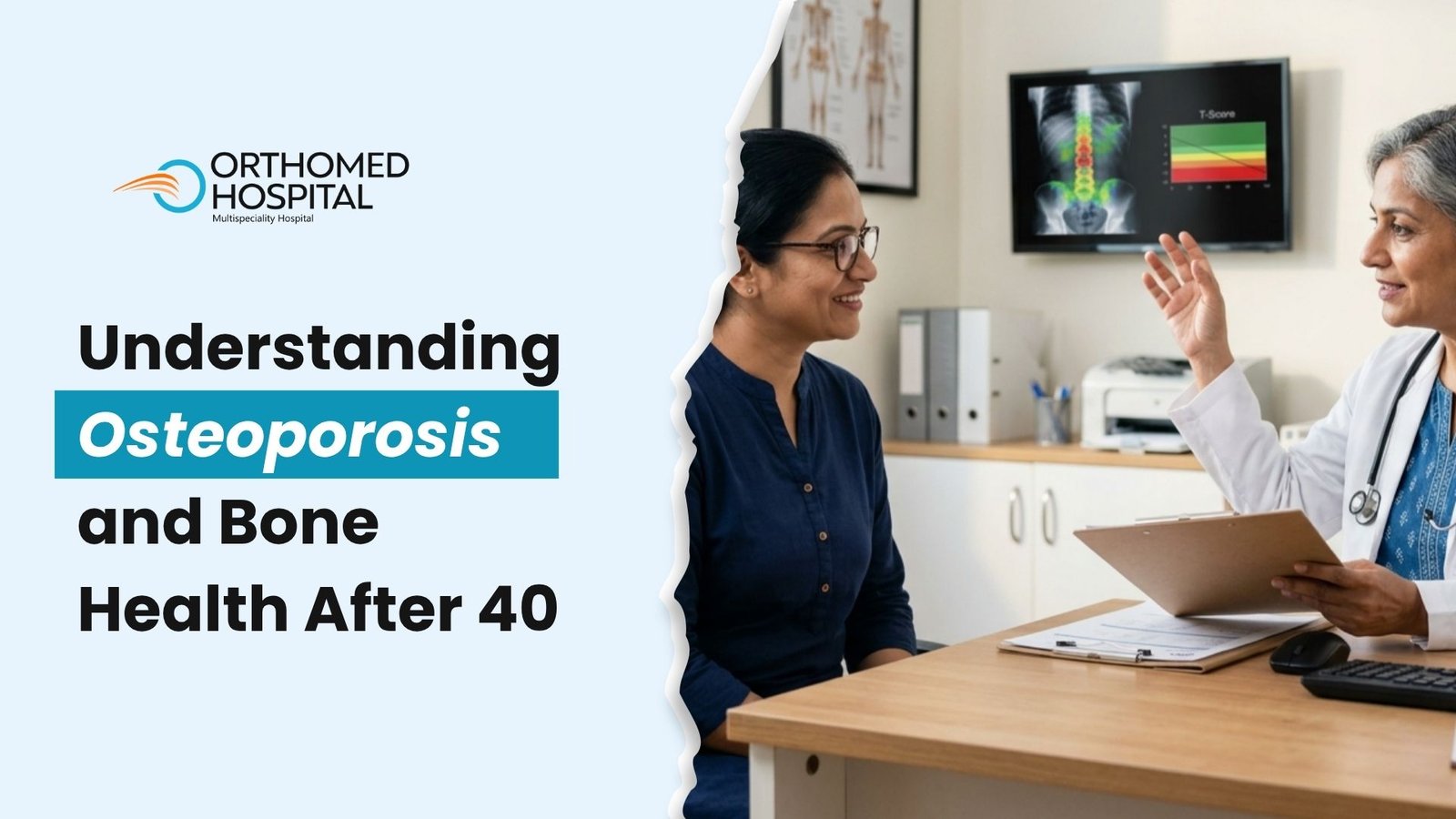
Understanding Osteoporosis and Bone Health After 40
When we think about staying healthy in our 40s and 50s, our focus usually goes to managing weight, keeping blood pressure in check, or watching our cholesterol levels. We look in the mirror for gray hairs or fine lines, but we rarely think about what is happening deep inside our skeleton.
Your bones are not static, lifeless rocks. They are living, growing tissues that constantly break down and rebuild themselves throughout your life. However, as you cross the threshold of 40, a quiet shift begins inside your body. The natural remodeling balance tilts. Your body starts removing old bone faster than it can build new bone.
Without obvious warning signs, this gradual loss of density can weaken your skeleton, leading to a condition known as osteoporosis. Often called a silent condition, osteoporosis progresses without pain or noticeable symptoms until a minor trip or a simple fall results in a sudden bone fracture.
Understanding how your bones change after 40, recognizing early risks like calcium deficiency, and knowing when to seek professional medical care can help you maintain strong bones and an active lifestyle well into your golden years.
What Is Osteoporosis?
Osteoporosis translates directly to porous bones. In a young, healthy adult, the inside of a bone has a dense, honeycomb-like structure. When viewed under a microscope, the walls of this honeycomb are thick and sturdy.
When a person develops osteoporosis, the spaces within that honeycomb structure become much larger. The outer shell of the bone also grows thinner and weaker. This structural decline makes your skeleton fragile and significantly increases the risk of unexpected fractures.
Osteopenia vs Osteoporosis
Bone loss does not happen overnight. It occurs on a continuous spectrum:
- Normal Bone Density: Your bones have optimal mineral content and strong structural integrity.
- Osteopenia: This is the middle stage between normal bone density and osteoporosis. Your bones have lower density than normal, but they are not yet brittle enough to be classified as fully osteoporotic. Osteopenia serves as a critical early warning sign to take action.
- Osteoporosis: Bone density has dropped to a level where fragile bones can break easily from mild stress, such as bending over to pick up a bag, coughing severely, or experiencing a minor bump.
Why Crossing 40 Changes Your Bones
During your childhood, teenage years, and early twenties, your body builds new bone much faster than it breaks down old bone. Most people reach their peak bone mass around age 30. Think of peak bone mass as a personal bone bank account. The more bone density you deposit during your youth, the more reserves you have to draw from as you age.
After age 40, everyone gradually loses small amounts of bone mass as part of the natural aging process. However, specific factors can cause this loss to accelerate rapidly.
Hormonal Changes and Menopause
Hormones play a massive role in maintaining bone strength. In women, the hormone estrogen acts as a natural protector of bone density. As women enter perimenopause and menopause in their mid to late 40s, estrogen levels drop sharply. This hormonal decline causes rapid bone loss, particularly in the spine and hips. Women can lose up to 20% of their total bone density in the five to seven years following menopause.
While women face a higher risk, men are not immune. Men experience a gradual decline in testosterone as they age, which can also lead to weakened bones and increased fracture risks over time.
Nutritional Gaps and Calcium Deficiency
Your body needs a constant supply of calcium to keep your bones strong. Calcium is not just used for skeleton strength; it is also essential for heart function, muscle contraction, and nerve signaling.
If your daily diet lacks sufficient calcium, your body will harvest the calcium it needs directly from your bones. Over months and years, this continuous withdrawal creates a severe calcium deficiency, leaving your skeleton hollowed out and fragile.
Inactive Lifestyles
Bones respond directly to physical stress. When you lift weights, walk, or run, the mechanical force placed on your skeleton signals your body to deposit extra minerals and rebuild stronger bone tissue. Sitting at a desk for long hours without regular exercise tells your body that dense bones are unnecessary, accelerating bone loss.
The Bone Loss Timeline After 40
- Age 30: You achieve Peak Bone Mass, reaching your maximum lifetime bone density.
- Age 30 to 40: Remodeling remains balanced, with bone buildup naturally equaling bone breakdown.
- Age 40 to 50: Gradual decline begins, resulting in an average loss of about 1% bone mass per year.
- Post-40s: Bone loss accelerates significantly in women due to falling estrogen levels during perimenopause and menopause.
Signs and Risk Factors: Are Your Bones Vulnerable?
Because bone loss happens beneath the surface, osteoporosis rarely causes pain in its early stages. Many people have no idea their bones are weakening until they experience an unexpected fracture.
However, there are subtle clues and established risk factors that indicate it is time to check your bone health.
Category | High Risk Factors | Action Needed |
Unchangeable Factors | Age over 40, female gender, early menopause, family history of hip fractures | Schedule a DEXA bone density scan |
Nutritional Factors | Chronic calcium deficiency, low Vitamin D levels, extreme crash diets | Adjust daily diet and consult for supplements |
Lifestyle Factors | Smoking, alcohol consumption, lack of exercise, long desk hours | Adopt weight-bearing exercises, quit smoking |
Medical Factors | Long-term steroid use, thyroid disorders, rheumatoid arthritis | Review medications with a specialist |
Subtle Physical Warning Signs
- Loss of Height: Shrinking by an inch or more over a few years can indicate that the bones in your spine (vertebrae) are weakening and compressing under your body weight.
- Stooped Posture: Developing a rounded upper back or forward curve in your spine often results from small, silent compression fractures in the spinal column.
- Sudden Back Pain: Unexplained, sharp back pain caused by collapsed vertebrae is often mistaken for simple muscle strain.
- Fragility Fractures: Breaking a bone from a minor fall from standing height or lower is a primary indicator of reduced bone density.
How Osteoporosis Is Diagnosed: The DEXA Scan
Diagnosing bone loss before a fracture occurs is fast, painless, and highly accurate. The gold standard test for measuring bone density is a Dual-Energy X-ray Absorptiometry scan, commonly known as a DEXA scan.
What Happens During a DEXA Scan?
A DEXA scan uses very low doses of X-rays to measure the exact amount of calcium and other bone minerals packed into a segment of your bone. The test usually focuses on your lower spine, hips, and wrist, which are the areas most vulnerable to osteoporosis fractures.
The scan takes about 10 to 15 minutes, requires no injections or special preparation, and is completely painless.
Understanding Your T-Score
Your DEXA scan result is provided as a number called a T-score, which compares your bone density to that of a healthy 30-year-old adult:
- T-score of -1.0 or higher: Normal bone density.
- T-score between -1.1 and -2.4: Osteopenia (low bone density).
- T-score of -2.5 or lower: Osteoporosis (high risk for fractures).
If you are over 40 and have risk factors like early menopause, a family history of fractures, or long-term steroid use, getting a baseline DEXA scan is one of the smartest preventive steps you can take.
Comprehensive Osteoporosis Treatment Options
If a DEXA scan reveals that you have osteopenia or osteoporosis, there is no need to panic. Modern medicine offers highly effective osteoporosis treatment options that can stop further bone loss, rebuild bone density, and drastically reduce your risk of fractures.
Effective medical management usually involves a combination of specialized prescription medications, targeted nutritional support, and therapeutic lifestyle adjustments.
Prescription Medications
Gastroenterologists and orthopedic specialists prescribe different classes of medications depending on your specific age, gender, and level of bone loss:
- Bisphosphonates: These are the most commonly prescribed medications for osteoporosis. They work by slowing down the cells that break down old bone tissue, allowing your body to preserve existing bone mass.
- Bone-Building (Anabolic) Agents: For individuals with severe osteoporosis or a history of fractures, anabolic medications stimulate new bone formation, rapidly increasing bone density.
- Hormone Replacement Therapy (HRT): For women experiencing early menopause, carefully monitored estrogen therapy can help stabilize bone density while easing menopausal symptoms.
- Targeted Biologics: Injectable treatments administered twice a year can effectively halt bone breakdown in high-risk patients.
Overcoming Calcium and Vitamin D Deficiencies
Medications cannot rebuild bone without the proper building blocks. Your body needs adequate levels of calcium and Vitamin D working together.
- Calcium: Adults over 40 need between 1,000 mg and 1,200 mg of calcium daily. While dairy products like milk, yogurt, and paneer are rich sources, you can also get calcium from dark leafy greens, ragi (finger millet), almonds, and sesame seeds.
- Vitamin D: Vitamin D is the key that unlocks calcium absorption in your gut. Without enough Vitamin D, your body cannot absorb the calcium you consume, no matter how much you eat. Spending 15 to 20 minutes in morning sunlight and taking prescribed Vitamin D3 supplements can fix this common deficit.
The Bone Rebuilding Triad
- Targeted Medications: Slow down bone breakdown and trigger the formation of new, healthy bone tissue.
- Calcium & Vitamin D: Provide the essential raw minerals required to build and maintain bone density.
- Weight-Bearing Exercise: Sends mechanical signals to your bones to lock those essential minerals into place.
Daily Lifestyle Habits for Stronger Bones After 40
While medical treatments are vital for managing established bone loss, your daily lifestyle choices determine how well your skeleton ages over time.
Engage in Weight-Bearing and Resistance Exercises
To keep your bones strong, you must subject them to controlled physical force. Non-impact activities like swimming or cycling are excellent for heart health, but they do not build bone density.
Focus on weight-bearing and strength training activities:
- Brisk Walking: A daily 30-minute walk places gentle impact on your hip and leg bones, stimulating bone retention.
- Resistance Training: Using light dumbbells, resistance bands, or bodyweight exercises (like squats and wall push-ups) pulls on your tendons, signaling your bones to strengthen.
- Balance Exercises: Incorporating simple balance drills like standing on one leg or practicing yoga reduces your risk of slipping and falling.
Avoid Bone-Draining Habits
- Reduce High Salt Intake: Consuming excessive sodium forces your kidneys to excrete extra calcium through your urine, stripping it from your blood and bones.
- Limit Carbonated and Caffeinated Drinks: High consumption of cola beverages and excessive caffeine can interfere with calcium absorption in your digestive tract.
- Quit Smoking and Limit Alcohol: Tobacco smoke directly damages bone-building cells, while heavy alcohol intake impairs liver function and reduces your body’s ability to absorb essential vitamins.
Preventing Falls: Protecting Fragile Bones at Home
For someone living with weak bones, a simple fall at home can lead to a serious hip, spine, or wrist fracture. Making small safety adjustments to your living space can reduce your risk of falling:
- Clear Walkways: Remove loose throw rugs, electrical cords, and cluttered items from hallways and walking areas.
- Improve Lighting: Ensure hallways, staircases, and bathrooms are brightly lit. Use nightlights in bedrooms and corridors for night trips to the bathroom.
- Install Support Bars: Place sturdy grab bars inside bathrooms and next to toilet seats, especially for older adults living at home.
- Wear Non-Slip Footwear: Avoid walking around the house in smooth socks or loose slippers. Wear comfortable shoes with rubber soles that grip the floor securely.
Finding the Right Care: Choosing an Orthopedic Hospital in Chennai
Protecting your bone health after 40 requires expert evaluation, accurate diagnostic scanning, and personalized treatment plans tailored to your lifestyle. When seeking guidance for joint discomfort, back pain, or bone density testing, choosing a modern healthcare facility makes all the difference.
If you are looking for advanced bone and joint care, searching for the Best Ortho hospital in chennai leads patients to facilities that specialize in comprehensive bone health care.
For residents across Chennai, Orthomed Hospital offers dedicated orthopedic evaluations, high-precision bone density assessments, and personalized rehabilitation programs.
When selecting a healthcare center for your bone health evaluation, keep these essential factors in mind:
Qualified Orthopedic Specialists
Look for experienced specialists who focus on bone preservation, joint health, and modern osteoporosis management. Consulting a skilled ortho specialist in chennai ensures you receive accurate guidance on whether you need simple lifestyle changes, dietary supplements, or medical treatment.
Modern Diagnostic Infrastructure
Choose a facility equipped with high-precision DEXA scanners, digital X-rays, and comprehensive laboratory facilities to measure calcium levels, Vitamin D, and hormone profiles accurately.
Integrated Rehabilitation Support
Rebuilding bone strength often requires structured exercise and fall-prevention guidance. A center featuring a fully equipped physiotherapy department staffed by experienced physical therapists helps you exercise safely without risking injury.
Take Charge of Your Bone Health Today
Entering your 40s is a powerful time to take control of your long-term health. While natural bone loss is an inevitable part of aging, developing fragile, fracture-prone bones is not something you simply have to accept.
By staying proactive, eating a calcium-rich diet, staying active with weight-bearing exercises, and getting a routine DEXA bone density scan, you can catch bone loss early and protect your skeleton.
Don’t wait for a sudden fracture or persistent back pain to tell you that your bones need attention. Schedule a consultation with a qualified orthopedic specialist, assess your bone density, and build a strong foundation for an active, pain-free future.
Comments are closed