
- Home
- About
- Services
- Specialists
- Research
- Achivements
- gallery
- contact




- Home
- About Us
- Orthopedics
- Know Your Alignment
- Sports Medicine
- Knee
- Arthroscopic ACI Cartilage Transplant
- Arthroscopic ACL Avulsion Fixation
- Arthroscopic ACL Primary Repair
- Arthroscopic ACL Reconstruction – All Inside Technique
- Arthroscopic ACL Rehab
- Arthroscopic ACL Revision Surgery
- Arthroscopic ACL Single Bundle Reconstruction
- Arthroscopic assisted MPFL Reconstruction
- Arthroscopic assisted Multiple Ligament Tear – SURGERY
- Arthroscopic Medial Meniscal Repair
- Arthroscopic OATS Chondroplasty
- Arthroscopic OCD Fixation
- Arthroscopic Paediatric ACL Reconstruction
- Arthroscopic PCL Avulsion Fixation
- Arthroscopic PCL Reconstruction
- Arthroscopy Assisted STEM Cell Cartilage Transplant
- PCL Rehabilitation
- Total Knee Replacement
- Shoulder
- Arthroscopic Rotator Cuff Repair
- Arthroscopic Bankart Repair
- Arthroscopy Assisted Latarjet Surgery
- AC Joint Fixation
- Arthroscopic Capsular Release
- Arthroscopic Sub – Acromial Decompression (SAD)
- Arthroscopic Calcific Tendinitis Excision
- Arthroscopic Biceps Tenodesis
- Arthroscopic SLAP Repair
- Arthroscopic Revision Cuff Repair
- Arthroscopic Revision Bankart Repair
- Shoulder Rehab
- Elbow
- Wrist
- Hip
- Ankle
- Our Specialities
- Cardiology
- Gastroenterology
- Radiology
- Internal Medicine & Diabetology
- Anesthesiology & Intensive Care Unit
- Neurology
- Nephrology
- Urology
- Oncology
- Rheumatology
- Endocrinology
- General Surgery
- Laparoscopic Surgery
- Podiatric / Diabetic Foot Clinic
- Obstetrics & Gynecology
- ENT
- Plastic & Cosmetic Surgery
- Paediatrics
- Pulmonology
- Psychiatry
- Vascular Surgery
- Dermatology
- Oral and Maxillofacial Surgery
- Our Services
- Resource
- Enquiry
- Home
- About Us
- Orthopedics
- Know Your Alignment
- Sports Medicine
- Knee
- Arthroscopic ACI Cartilage Transplant
- Arthroscopic ACL Avulsion Fixation
- Arthroscopic ACL Primary Repair
- Arthroscopic ACL Reconstruction – All Inside Technique
- Arthroscopic ACL Rehab
- Arthroscopic ACL Revision Surgery
- Arthroscopic ACL Single Bundle Reconstruction
- Arthroscopic assisted MPFL Reconstruction
- Arthroscopic assisted Multiple Ligament Tear – SURGERY
- Arthroscopic Medial Meniscal Repair
- Arthroscopic OATS Chondroplasty
- Arthroscopic OCD Fixation
- Arthroscopic Paediatric ACL Reconstruction
- Arthroscopic PCL Avulsion Fixation
- Arthroscopic PCL Reconstruction
- Arthroscopy Assisted STEM Cell Cartilage Transplant
- PCL Rehabilitation
- Total Knee Replacement
- Shoulder
- Arthroscopic Rotator Cuff Repair
- Arthroscopic Bankart Repair
- Arthroscopy Assisted Latarjet Surgery
- AC Joint Fixation
- Arthroscopic Capsular Release
- Arthroscopic Sub – Acromial Decompression (SAD)
- Arthroscopic Calcific Tendinitis Excision
- Arthroscopic Biceps Tenodesis
- Arthroscopic SLAP Repair
- Arthroscopic Revision Cuff Repair
- Arthroscopic Revision Bankart Repair
- Shoulder Rehab
- Elbow
- Wrist
- Hip
- Ankle
- Our Specialities
- Cardiology
- Gastroenterology
- Radiology
- Internal Medicine & Diabetology
- Anesthesiology & Intensive Care Unit
- Neurology
- Nephrology
- Urology
- Oncology
- Rheumatology
- Endocrinology
- General Surgery
- Laparoscopic Surgery
- Podiatric / Diabetic Foot Clinic
- Obstetrics & Gynecology
- ENT
- Plastic & Cosmetic Surgery
- Paediatrics
- Pulmonology
- Psychiatry
- Vascular Surgery
- Dermatology
- Oral and Maxillofacial Surgery
- Our Services
- Resource
- Enquiry


- Home
- About Us
- Orthopedics
- Know Your Alignment
- Sports Medicine
- Knee
- Arthroscopic ACI Cartilage Transplant
- Arthroscopic ACL Avulsion Fixation
- Arthroscopic ACL Primary Repair
- Arthroscopic ACL Reconstruction – All Inside Technique
- Arthroscopic ACL Rehab
- Arthroscopic ACL Revision Surgery
- Arthroscopic ACL Single Bundle Reconstruction
- Arthroscopic assisted MPFL Reconstruction
- Arthroscopic assisted Multiple Ligament Tear – SURGERY
- Arthroscopic Medial Meniscal Repair
- Arthroscopic OATS Chondroplasty
- Arthroscopic OCD Fixation
- Arthroscopic Paediatric ACL Reconstruction
- Arthroscopic PCL Avulsion Fixation
- Arthroscopic PCL Reconstruction
- Arthroscopy Assisted STEM Cell Cartilage Transplant
- PCL Rehabilitation
- Total Knee Replacement
- Shoulder
- Arthroscopic Rotator Cuff Repair
- Arthroscopic Bankart Repair
- Arthroscopy Assisted Latarjet Surgery
- AC Joint Fixation
- Arthroscopic Capsular Release
- Arthroscopic Sub – Acromial Decompression (SAD)
- Arthroscopic Calcific Tendinitis Excision
- Arthroscopic Biceps Tenodesis
- Arthroscopic SLAP Repair
- Arthroscopic Revision Cuff Repair
- Arthroscopic Revision Bankart Repair
- Shoulder Rehab
- Elbow
- Wrist
- Hip
- Ankle
- Our Specialities
- Cardiology
- Gastroenterology
- Radiology
- Internal Medicine & Diabetology
- Anesthesiology & Intensive Care Unit
- Neurology
- Nephrology
- Urology
- Oncology
- Rheumatology
- Endocrinology
- General Surgery
- Laparoscopic Surgery
- Podiatric / Diabetic Foot Clinic
- Obstetrics & Gynecology
- ENT
- Plastic & Cosmetic Surgery
- Paediatrics
- Pulmonology
- Psychiatry
- Vascular Surgery
- Dermatology
- Oral and Maxillofacial Surgery
- Our Services
- Resource
- Enquiry
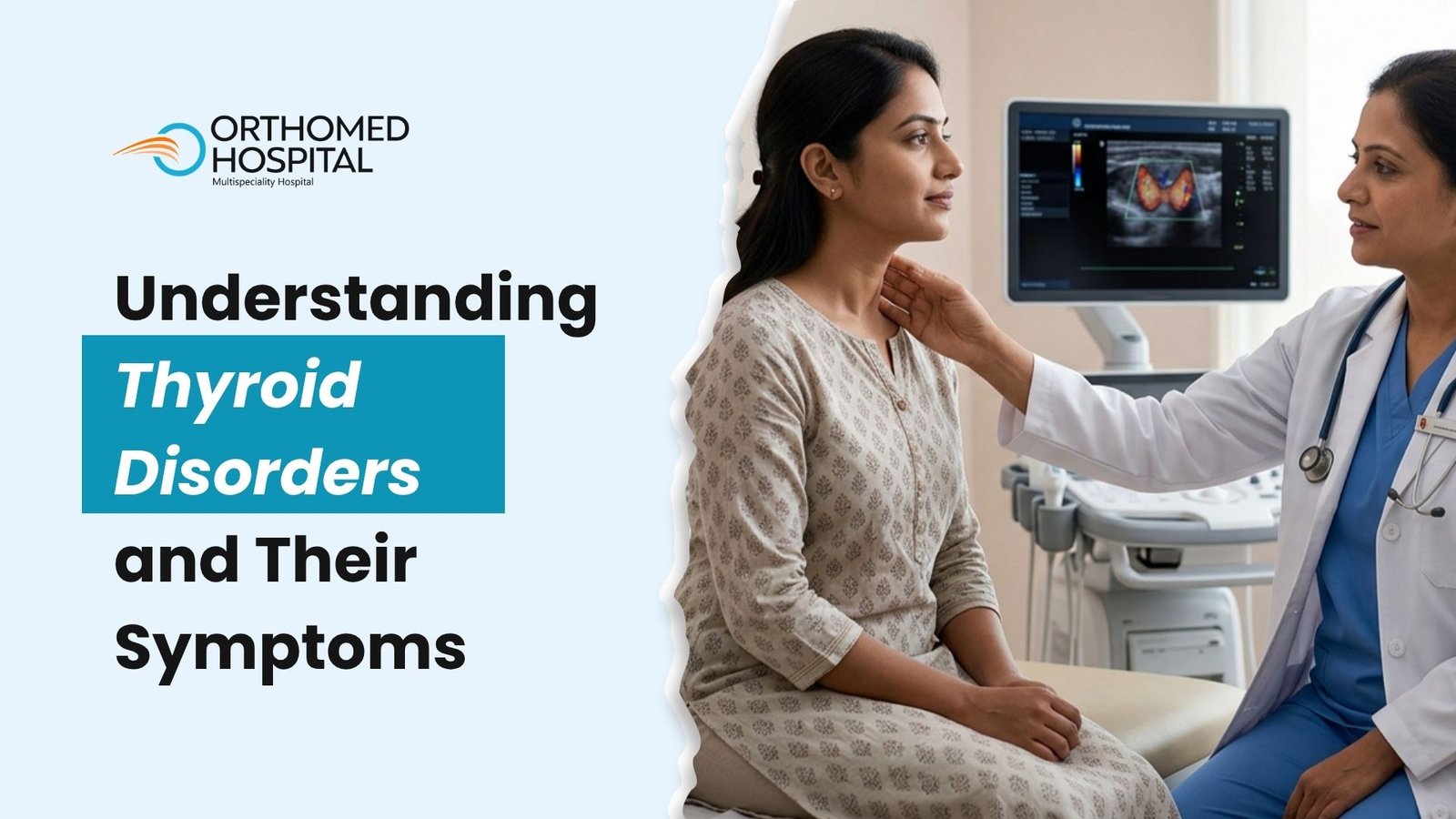
Understanding Thyroid Disorders and Their Symptoms
Have you ever felt exhausted even after a full eight hours of sleep? Or maybe you have noticed sudden weight changes, hair thinning, or unexpected mood swings that seem to come out of nowhere. When our bodies feel out of balance, we often blame work stress, poor eating habits, or the fast pace of city life.
However, many times the real root of the problem is a tiny, butterfly-shaped gland resting quietly at the base of your neck.
That small organ is your thyroid gland. Despite its modest size, it acts as the master control center for your body. From your heart rate and body temperature to how quickly you burn calories, the thyroid gland influences almost every single cell in your body. When it produces too much or too little hormone, your entire system feels the impact.
Across urban India, thyroid disorders have become remarkably common, affecting millions of men and women. Because the symptoms often develop slowly and mimic everyday tiredness or stress, many people live with thyroid imbalances for years without realizing it.
Understanding how your thyroid functions, recognizing early warning signs, and knowing when to consult a specialist will help you take control of your endocrine health and feel energized again.
What Does the Thyroid Gland Actually Do?
To understand thyroid disorders, it helps to look at how this vital gland operates under normal conditions.
Your thyroid is part of the endocrine system, a network of glands that produce chemical messengers called hormones. The thyroid gland produces two primary hormones:
- Thyroxine (T4): The primary hormone secreted by the thyroid gland, which contains four iodine atoms.
- Triiodothyronine (T3): The active form of the hormone, created when T4 loses one iodine atom in tissues like the liver and kidneys.
THE THYROID FEEDBACK LOOP
1. Pituitary Gland monitors blood hormone levels
2. Releases TSH (Thyroid Stimulating Hormone) to command the thyroid
3. Thyroid Gland produces T4 and T3 hormones
4. Hormones regulate cellular metabolism, heart rate, and temperature
5. Normal levels signal the brain to reduce TSH production
Think of your thyroid hormones as the accelerator pedal in a car. When the gland produces the right amount of T3 and T4, your metabolic engine hums along at a steady, balanced speed.
Your brain, specifically the pituitary gland, acts like a watchful cruise control system. It constantly checks the levels of thyroid hormones in your bloodstream and sends out a signal called TSH (Thyroid Stimulating Hormone) to tell the thyroid when to speed up or slow down.
When this delicate feedback system gets disrupted, thyroid disorders develop.
Common Types of Thyroid Disorders
Thyroid conditions generally fall into two major categories: an underactive thyroid that slows everything down, or an overactive thyroid that speeds everything up. Beyond these, structural changes like nodules and goiters can also occur.
|
Condition |
Hormone Activity |
Metabolic Speed |
Typical Key Indicators |
|
Hypothyroidism |
Low T3 and T4, High TSH |
Abnormally Slow |
Fatigue, weight gain, feeling cold, dry skin, constipation |
|
Hyperthyroidism |
High T3 and T4, Low TSH |
Abnormally Fast |
Weight loss, rapid heartbeat, anxiety, heat sensitivity, tremors |
|
Goiter |
Can be normal, high, or low |
Variable |
Visible swelling or lump at the base of the front neck |
|
Thyroid Nodules |
Mostly normal, sometimes active |
Normal to Fast |
Solid or fluid-filled lumps detected by physical touch or scan |
|
Thyroiditis |
Initial high spike followed by low |
Fluctuating |
Temporary inflammation or soreness in the neck gland |
Hypothyroidism: When Your System Slows Down
Hypothyroidism occurs when your thyroid gland fails to produce enough hormones to meet your body’s daily needs. Without sufficient hormones, your entire metabolism slows down.
Common Symptoms of Hypothyroidism
Because the body’s internal engine is running on low power, hypothyroidism causes a wide range of sluggish symptoms:
- Persistent Fatigue: Feeling completely drained of energy, even after resting all weekend.
- Unexplained Weight Gain: Putting on extra kilos despite eating your usual meals and staying active.
- Cold Intolerance: Feeling uncomfortably chilly when everyone else in the room is warm and comfortable.
- Dry Skin and Hair Loss: Skin becomes rough and flaky, while hair turns brittle, thins out, or falls out in larger amounts during showers.
- Digestive Sluggishness: Chronic constipation due to slower intestinal muscle movements.
- Brain Fog and Low Mood: Difficulty concentrating at work, frequent forgetfulness, and feelings of sadness or depression.
- Irregular Menstrual Cycles: Women often experience heavier, more frequent, or painful periods.
What Causes Hypothyroidism?
The most common cause of hypothyroidism worldwide is an autoimmune condition called Hashimoto’s Thyroiditis. In this condition, your body’s immune system mistakenly attacks its own thyroid tissue, damaging the cells and reducing their ability to produce hormones. Other causes include past thyroid surgery, radiation treatment, or severe iodine deficiency.
Hyperthyroidism: When Your System Goes Into Overdrive
On the opposite end of the spectrum is hyperthyroidism. This happens when the thyroid gland becomes overactive and pumps out far more hormones than your body requires.
Common Symptoms of Hyperthyroidism
With too much hormone circulating, your body’s engine runs in permanent overdrive:
- Rapid or Irregular Heartbeat (Palpitations): Feeling your heart pounding or fluttering in your chest, even while sitting quietly at your desk.
- Sudden Weight Loss: Shedding weight rapidly despite having an increased appetite and eating more food.
- Heat Intolerance and Sweating: Feeling excessively hot in normal temperatures and sweating heavily.
- Nervousness and Irritability: Feeling constantly anxious, jittery, restless, or having trouble sitting still.
- Hand Tremors: A fine, noticeable trembling in your fingers or hands when you hold them out.
- Sleep Disturbances: Difficulty falling asleep or waking up frequently throughout the night.
- Frequent Bowel Movements: Faster digestion leading to loose stools or diarrhea.
What Causes Hyperthyroidism?
The primary driver of an overactive thyroid is Graves’ Disease, an autoimmune disorder where abnormal antibodies stimulate the thyroid to overproduce hormones continuously. Hyperthyroidism can also be caused by overactive thyroid nodules (toxic adenomas) that produce hormones independently of the brain’s signals.
Structural Thyroid Conditions: Goiters and Nodules
Not all thyroid problems involve abnormal hormone numbers. Sometimes, the physical structure of the gland changes.
What is a Goiter?
A goiter is an abnormal enlargement of the entire thyroid gland. It can appear as a general swelling at the front of your neck. A goiter can develop when the thyroid is underactive, overactive, or even when hormone levels are completely normal. Large goiters can press against the windpipe or food pipe, causing difficulty swallowing, coughing, or a tight feeling in the throat.
What are Thyroid Nodules?
Thyroid nodules are solid or fluid-filled lumps that form within the thyroid tissue. They are extremely common, especially in adults over 40. The vast majority (over 90%) of thyroid nodules are completely benign (non-cancerous) and cause no pain.
However, any newly discovered nodule should be evaluated by an endocrine doctor using high-resolution ultrasound imaging to check its size and rule out rare malignancies.
Why Women in Urban India Face Higher Thyroid Risks
In busy metropolitan centers like Chennai, healthcare professionals notice a high prevalence of thyroid disorders, particularly among women. In fact, women are five to eight times more likely to develop thyroid problems than men.
Several factors contribute to this increased risk:
- Hormonal Milestones
Women experience major hormonal transitions throughout life, including puberty, pregnancy, postpartum recovery, and menopause. These hormonal shifts place extra demand on the endocrine system and can trigger dormant autoimmune thyroid conditions.
- High Daily Stress and Cortisol
Managing career demands, household responsibilities, and family care leads to chronic physical and emotional stress. Constant stress elevates cortisol, which suppresses normal thyroid function and interferes with the conversion of T4 into active T3.
- Nutritional Gaps
While commercial table salt in India is iodized, many urban diets have shifted toward specialty salts that may lack sufficient iodine. Additionally, widespread deficiencies in Vitamin D3, Vitamin B12, and selenium weaken overall endocrine health, making the thyroid vulnerable to inflammation.
How Thyroid Disorders Are Diagnosed
Diagnosing a thyroid imbalance is straightforward, accurate, and completely non-invasive. When you visit a healthcare clinic for an evaluation, a specialist will use specific diagnostic tools to get a complete picture of your gland’s performance.
THE THYROID DIAGNOSTIC WORKUP
1. CLINICAL EVALUATION
* Physical neck palpation to feel size and nodules
* Checking pulse rate, blood pressure, and reflexes
* Review of family medical history and daily symptoms
2. LABORATORY BLOOD PANEL
* TSH Test: The primary screening indicator
* Free T3 and Free T4: Measuring active circulating hormones
* Anti-TPO Antibodies: Checking for underlying autoimmune disease
3. IMAGING & FURTHER TESTS (IF NEEDED)
* High-Resolution Neck Ultrasound: Visualizing gland texture and nodules
* FNAC Biopsy: Gentle needle test for suspicious lumps
Understanding Your Blood Tests
- High TSH + Low T4: Points clearly to Primary Hypothyroidism (the brain is shouting at a sluggish thyroid to work harder).
- Low TSH + High T4 / T3: Points to Hyperthyroidism (excess hormones are signaling the brain to shut off TSH production).
- Elevated Anti-TPO Antibodies: Confirms that an autoimmune reaction (such as Hashimoto’s or Graves’) is the root cause of the disorder.
Modern Medical Thyroid Treatment Options
Living with a thyroid imbalance does not mean you have to suffer from fatigue or health complications. Modern medicine provides highly reliable, safe thyroid treatment options designed to restore your hormone balance and help you feel like yourself again.
Treating Hypothyroidism: Hormone Replacement Therapy
Hypothyroidism cannot usually be cured overnight, but it is exceptionally easy to manage. Treatment involves taking a daily synthetic thyroid hormone tablet called Levothyroxine.
- How it works: Levothyroxine is identical to the natural T4 hormone your body produces. It replaces the missing hormone, restoring your metabolism to a healthy rate.
- Daily routine: The tablet is taken once daily in the morning on an empty stomach with a glass of plain water, at least 30 to 45 minutes before tea, coffee, or breakfast.
- Monitoring: Your doctor will recheck your TSH levels every six to eight weeks initially until your dosage is balanced, and then once or twice a year for routine maintenance.
Treating Hyperthyroidism: Calming an Overactive Gland
Managing an overactive thyroid involves reducing excess hormone production through one of three standard methods:
- Anti-Thyroid Medications: Drugs like Methimazole or Carbimazole reduce the amount of hormone the thyroid gland produces.
- Radioactive Iodine (RAI) Therapy: A safe, widely used oral treatment where overactive thyroid cells absorb radioactive iodine and gradually shrink, bringing hormone production down.
- Thyroid Surgery (Thyroidectomy): Surgical removal of part or all of the thyroid gland, typically reserved for large goiters, nodules causing breathing difficulty, or patients who cannot tolerate medications.
Simple Daily Habits to Support Your Endocrine Health
While medical therapy is essential for balancing hormone levels, adopting healthy daily habits provides the necessary foundation for long-term vitality and endocrine wellness.
-
Eat a Nutrient-Dense, Balanced Diet
- Iodine: Essential for hormone creation. Use iodized salt in daily cooking, and include natural sources like dairy, eggs, and seafood.
- Selenium: Helps convert T4 into active T3 and protects the gland from oxidative stress. Good sources include eggs, sunflower seeds, mushrooms, and nuts.
- Zinc and Iron: Crucial minerals for thyroid hormone synthesis. Include lentils, chickpeas, pumpkin seeds, and lean meats in your meals.
- Limit Goitrogenic Foods in Excess: Raw cruciferous vegetables like cabbage, cauliflower, and broccoli contain compounds that can interfere with iodine uptake if eaten raw in massive quantities. Steaming or cooking these vegetables deactivates these compounds, making them completely safe to enjoy.
-
Prioritize Stress Reduction and Restful Sleep
Chronic high stress disrupts your entire endocrine balance. Dedicate 15 to 20 minutes each day to stress-relieving activities like slow yoga, deep breathing exercises, or morning walks in natural sunlight. Aim for seven to eight hours of sound, uninterrupted sleep every night to allow your hormones to regulate naturally.
-
Avoid Self-Medicating or Skipping Doses
Never start, stop, or change your thyroid medication dosage based on how you feel on a particular day. Always consult your doctor and rely on objective blood test results before adjusting your treatment.
Finding the Right Care: Choosing Thyroid Care in Chennai
When dealing with fatigue, weight fluctuations, or neck swelling, finding the right medical center ensures accurate diagnosis and effective long-term management. You need experienced physicians who understand how to balance hormones safely while addressing your individual lifestyle needs.
If you are looking for advanced diagnostic services and comprehensive endocrine care, consulting an experienced Thyroid specialist in chennai is your best next step.
For residents across Chennai, Orthomed Hospital provides dedicated multispecialty medical consultations, comprehensive diagnostic lab testing, and personalized treatment plans for both underactive and overactive thyroid conditions. Conveniently located in central Chennai, the facility features modern diagnostic infrastructure to support your overall wellness journey.
When selecting a healthcare center for your thyroid care in chennai, keep these essential factors in mind:
Qualified Medical Specialists
Look for board-certified physicians and endocrinology experts who take the time to evaluate your full symptom history, explain your lab numbers clearly, and tailor your medication to your body weight and metabolic needs.
Modern Diagnostic Laboratory Facilities
Accurate hormone testing is the foundation of successful thyroid care. Choose a hospital equipped with advanced automated clinical laboratories for fast, reliable TSH, Free T3, Free T4, and antibody testing.
Comprehensive Multispecialty Support
Thyroid disorders often affect other areas of health, including heart function, bone density, weight management, and reproductive health. A multispecialty hospital allows you to consult cardiologists, gynecologists, and nutritionists under one roof for complete holistic care.
Take Charge of Your Endocrine Health Today
Living with untreated thyroid disorders can leave you feeling constantly exhausted, frustrated by weight struggles, and held back from enjoying daily life. But you do not have to accept chronic fatigue or low mood as your normal state.
Thyroid imbalances are among the most treatable medical conditions in modern healthcare. With a simple blood test, expert medical evaluation, and consistent treatment, you can restore your body’s natural rhythm, boost your energy, and reclaim your vitality.
If you have been noticing persistent tiredness, unexplained weight changes, or hair thinning, do not wait for symptoms to worsen. Schedule a consultation with a qualified medical specialist today, get your thyroid levels checked, and take the first step toward lasting health and wellness.
Comments are closed