
- Home
- About
- Services
- Specialists
- Research
- Achivements
- gallery
- contact




- Home
- About Us
- Orthopedics
- Know Your Alignment
- Sports Medicine
- Knee
- Arthroscopic ACI Cartilage Transplant
- Arthroscopic ACL Avulsion Fixation
- Arthroscopic ACL Primary Repair
- Arthroscopic ACL Reconstruction – All Inside Technique
- Arthroscopic ACL Rehab
- Arthroscopic ACL Revision Surgery
- Arthroscopic ACL Single Bundle Reconstruction
- Arthroscopic assisted MPFL Reconstruction
- Arthroscopic assisted Multiple Ligament Tear – SURGERY
- Arthroscopic Medial Meniscal Repair
- Arthroscopic OATS Chondroplasty
- Arthroscopic OCD Fixation
- Arthroscopic Paediatric ACL Reconstruction
- Arthroscopic PCL Avulsion Fixation
- Arthroscopic PCL Reconstruction
- Arthroscopy Assisted STEM Cell Cartilage Transplant
- PCL Rehabilitation
- Total Knee Replacement
- Shoulder
- Arthroscopic Rotator Cuff Repair
- Arthroscopic Bankart Repair
- Arthroscopy Assisted Latarjet Surgery
- AC Joint Fixation
- Arthroscopic Capsular Release
- Arthroscopic Sub – Acromial Decompression (SAD)
- Arthroscopic Calcific Tendinitis Excision
- Arthroscopic Biceps Tenodesis
- Arthroscopic SLAP Repair
- Arthroscopic Revision Cuff Repair
- Arthroscopic Revision Bankart Repair
- Shoulder Rehab
- Elbow
- Wrist
- Hip
- Ankle
- Our Specialities
- Cardiology
- Gastroenterology
- Radiology
- Internal Medicine & Diabetology
- Anesthesiology & Intensive Care Unit
- Neurology
- Nephrology
- Urology
- Oncology
- Rheumatology
- Endocrinology
- General Surgery
- Laparoscopic Surgery
- Podiatric / Diabetic Foot Clinic
- Obstetrics & Gynecology
- ENT
- Plastic & Cosmetic Surgery
- Paediatrics
- Pulmonology
- Psychiatry
- Vascular Surgery
- Dermatology
- Oral and Maxillofacial Surgery
- Our Services
- Resource
- Enquiry
- Home
- About Us
- Orthopedics
- Know Your Alignment
- Sports Medicine
- Knee
- Arthroscopic ACI Cartilage Transplant
- Arthroscopic ACL Avulsion Fixation
- Arthroscopic ACL Primary Repair
- Arthroscopic ACL Reconstruction – All Inside Technique
- Arthroscopic ACL Rehab
- Arthroscopic ACL Revision Surgery
- Arthroscopic ACL Single Bundle Reconstruction
- Arthroscopic assisted MPFL Reconstruction
- Arthroscopic assisted Multiple Ligament Tear – SURGERY
- Arthroscopic Medial Meniscal Repair
- Arthroscopic OATS Chondroplasty
- Arthroscopic OCD Fixation
- Arthroscopic Paediatric ACL Reconstruction
- Arthroscopic PCL Avulsion Fixation
- Arthroscopic PCL Reconstruction
- Arthroscopy Assisted STEM Cell Cartilage Transplant
- PCL Rehabilitation
- Total Knee Replacement
- Shoulder
- Arthroscopic Rotator Cuff Repair
- Arthroscopic Bankart Repair
- Arthroscopy Assisted Latarjet Surgery
- AC Joint Fixation
- Arthroscopic Capsular Release
- Arthroscopic Sub – Acromial Decompression (SAD)
- Arthroscopic Calcific Tendinitis Excision
- Arthroscopic Biceps Tenodesis
- Arthroscopic SLAP Repair
- Arthroscopic Revision Cuff Repair
- Arthroscopic Revision Bankart Repair
- Shoulder Rehab
- Elbow
- Wrist
- Hip
- Ankle
- Our Specialities
- Cardiology
- Gastroenterology
- Radiology
- Internal Medicine & Diabetology
- Anesthesiology & Intensive Care Unit
- Neurology
- Nephrology
- Urology
- Oncology
- Rheumatology
- Endocrinology
- General Surgery
- Laparoscopic Surgery
- Podiatric / Diabetic Foot Clinic
- Obstetrics & Gynecology
- ENT
- Plastic & Cosmetic Surgery
- Paediatrics
- Pulmonology
- Psychiatry
- Vascular Surgery
- Dermatology
- Oral and Maxillofacial Surgery
- Our Services
- Resource
- Enquiry


- Home
- About Us
- Orthopedics
- Know Your Alignment
- Sports Medicine
- Knee
- Arthroscopic ACI Cartilage Transplant
- Arthroscopic ACL Avulsion Fixation
- Arthroscopic ACL Primary Repair
- Arthroscopic ACL Reconstruction – All Inside Technique
- Arthroscopic ACL Rehab
- Arthroscopic ACL Revision Surgery
- Arthroscopic ACL Single Bundle Reconstruction
- Arthroscopic assisted MPFL Reconstruction
- Arthroscopic assisted Multiple Ligament Tear – SURGERY
- Arthroscopic Medial Meniscal Repair
- Arthroscopic OATS Chondroplasty
- Arthroscopic OCD Fixation
- Arthroscopic Paediatric ACL Reconstruction
- Arthroscopic PCL Avulsion Fixation
- Arthroscopic PCL Reconstruction
- Arthroscopy Assisted STEM Cell Cartilage Transplant
- PCL Rehabilitation
- Total Knee Replacement
- Shoulder
- Arthroscopic Rotator Cuff Repair
- Arthroscopic Bankart Repair
- Arthroscopy Assisted Latarjet Surgery
- AC Joint Fixation
- Arthroscopic Capsular Release
- Arthroscopic Sub – Acromial Decompression (SAD)
- Arthroscopic Calcific Tendinitis Excision
- Arthroscopic Biceps Tenodesis
- Arthroscopic SLAP Repair
- Arthroscopic Revision Cuff Repair
- Arthroscopic Revision Bankart Repair
- Shoulder Rehab
- Elbow
- Wrist
- Hip
- Ankle
- Our Specialities
- Cardiology
- Gastroenterology
- Radiology
- Internal Medicine & Diabetology
- Anesthesiology & Intensive Care Unit
- Neurology
- Nephrology
- Urology
- Oncology
- Rheumatology
- Endocrinology
- General Surgery
- Laparoscopic Surgery
- Podiatric / Diabetic Foot Clinic
- Obstetrics & Gynecology
- ENT
- Plastic & Cosmetic Surgery
- Paediatrics
- Pulmonology
- Psychiatry
- Vascular Surgery
- Dermatology
- Oral and Maxillofacial Surgery
- Our Services
- Resource
- Enquiry
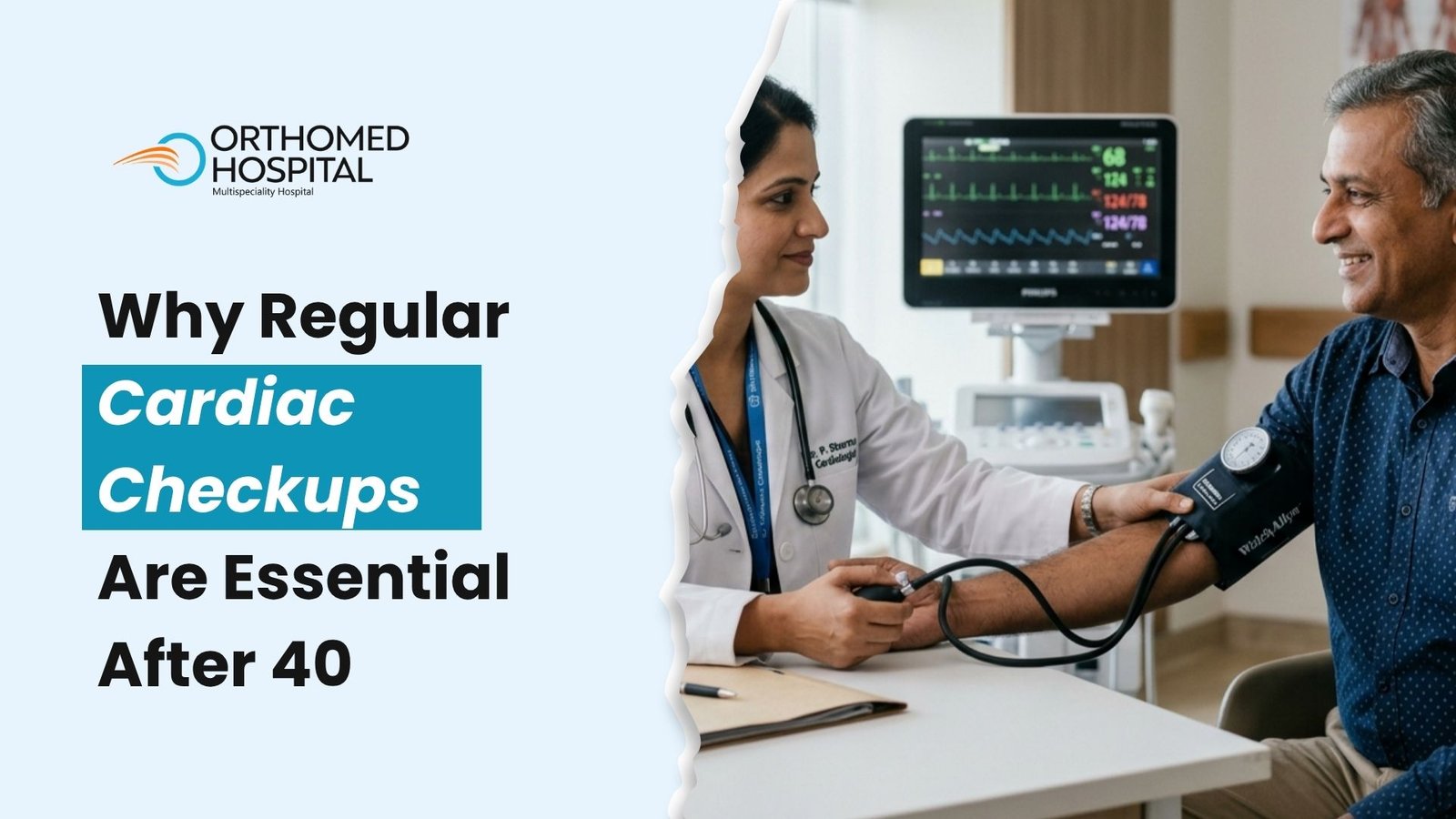
Why Regular Cardiac Checkups Are Essential After 40
Life after 40 often brings a sense of stability. Your career is settled, your family routines are established, and you feel more confident about your future. However, as you celebrate this milestone decade, your body is quietly undergoing changes beneath the surface.
While you might focus on managing work stress, eating well, or staying active, your cardiovascular system requires extra attention. The human heart beats around 100,000 times a day, pumping vital blood to every cell in your body. But after four decades of non-stop work, blood vessels naturally lose some of their elasticity, and silent risk factors like high blood pressure or elevated cholesterol begin to take a toll.
In cities like Chennai, where high-stress corporate routines, changing dietary habits, and long commutes are common, heart issues are appearing in adults much earlier than in previous generations. The good news is that most heart conditions develop slowly over many years. This gives you a crucial window of opportunity to catch potential problems before they turn into medical emergencies.
Booking a routine cardiac health checkup is not about worrying over your health. It is about taking a proactive step to protect your future so you can continue living a active, vibrant life.
The Hidden Shift: What Happens to Your Heart After 40
To understand why preventive screenings become vital in your 40s, it helps to look at how your circulatory system changes over time.
Arterial Stiffening and Plaque Buildup
As you age, the walls of your arteries naturally grow thicker and less flexible. If you have had higher cholesterol levels or a rich diet over the years, microscopic fatty deposits called plaque start building up along the inner walls of these blood vessels. This process, known as atherosclerosis, narrows the passageways for blood flow. Because plaque develops slowly without causing discomfort, many people have no idea their arteries are narrowing.
Rising Blood Pressure
Because stiffer, narrower arteries offer more resistance to flowing blood, your heart has to pump harder to push blood throughout your body. This extra exertion raises your blood pressure. High blood pressure is often called a silent killer because it rarely causes noticeable symptoms like headaches or dizziness until it reaches dangerous levels.
Metabolic Slowdown and Insulin Resistance
After 40, your natural metabolism slows down, making it easier to gain weight around your midsection. At the same time, your cells may become less responsive to insulin. Higher blood sugar levels directly damage the delicate inner lining of your blood vessels, accelerating the risk of heart disease.
Why Young and Middle-Aged South Indians Face Higher Cardiac Risks
Heart disease is no longer a condition that affects only senior citizens. Across urban India, cardiologists are seeing a dramatic rise in heart attacks among individuals in their 40s and even late 30s.
The Genetic Factor
Research shows that South Asian populations have a higher genetic predisposition to cardiovascular conditions. We tend to develop heart problems nearly a decade earlier than Western populations. Furthermore, South Asians are more likely to develop smaller, narrower coronary arteries and higher levels of Lipoprotein(a), a specific type of cholesterol that increases blood clot risks.
The Modern Urban Lifestyle
Life in bustling commercial centers like Royapettah, Mylapore, and Central Chennai comes with daily demands. Long office hours, sitting for extended periods at a computer, eating processed foods, and dealing with daily traffic stress create a perfect storm for heart strain.
- Chronic High Stress: Elevates cortisol and adrenaline, keeping your heart rate and blood pressure elevated for hours.
- Irregular Sleep Patterns: Lack of restful sleep prevents your heart rate and blood pressure from dipping naturally at night, depriving your vascular system of essential recovery time.
- Hidden Dietary Sodium: Regular consumption of restaurant meals, processed snacks, and traditional high-salt foods raises blood pressure over time.
Silent Warning Signs You Should Never Ignore
Many people delay booking a heart screening because they feel completely healthy. They assume that if their heart were struggling, they would feel severe chest pain. However, early heart problems rarely feel like the dramatic chest-clutching scenes shown in movies.
Here are subtle warning signs that indicate your heart needs an immediate evaluation:
- Unusual Fatigue: Feeling exhausted after simple tasks like climbing a single flight of stairs or walking short distances that used to feel easy.
- Shortness of Breath: Feeling winded while doing light household chores or waking up needing to sit upright to breathe comfortably.
- Unexplained Discomfort: Experiencing a dull ache, tightness, or squeezing sensation in your chest, upper back, neck, jaw, or left shoulder during physical effort.
- Frequent Dizziness or Lightheadedness: Feeling faint when standing up quickly, which can point to blood pressure fluctuations or irregular heart rhythms.
- Swelling in the Feet and Ankles: Noticeable fluid retention around your ankles by the end of the day, suggesting your heart is not pumping blood efficiently.
Key Tests Included in a Comprehensive Cardiac Health Checkup
A complete heart checkup is quick, painless, and provides a clear picture of your cardiovascular wellness. Here is what you can expect during a routine heart screening:
Diagnostic Test | What It Measures | Why It Matters |
Lipid Profile (Blood Test) | Total cholesterol, HDL (good), LDL (bad), and triglycerides | Detects circulating fatty deposits before they form severe arterial plaque |
Fasting Blood Sugar & HbA1c | Average blood glucose over the past 3 months | Identifies diabetes or prediabetes, which doubles heart disease risk |
Electrocardiogram (ECG) | The electrical signals and rhythm of your heart | Detects past silent heart attacks, poor blood flow, or irregular heartbeats |
Echocardiogram (Echo) | Ultrasound images of your heart chambers and valves | Measures how well your heart muscle pumps blood with every beat |
Treadmill Test (TMT / Stress Test) | Heart performance while walking on a treadmill | Reveals hidden blockages that only show up when the heart works harder |
The Value of Early Detection: Prevention vs Emergency Care
The primary goal of regular screenings is to identify risk factors while they are fully manageable. Catching a condition early allows you to reverse or control it using simple, non-invasive methods.
THE PATHWAYS OF CARDIAC HEALTH
PREVENTIVE APPROACH (EARLY CHECKUP)
* Regular screenings after age 40
* Detection of early arterial stiffness or cholesterol shifts
* Treatment through simple dietary tweaks and mild medication
* Long-term protection against sudden cardiac events
REACTIVE APPROACH (WAITING FOR SYMPTOMS)
* Ignoring subtle fatigue or high blood pressure
* Silent progression of arterial blockages over years
* Emergency hospital visits for acute chest pain
* Complex surgical interventions and long recovery periods
When you schedule a routine assessment, you give your doctor the opportunity to recommend small adjustments to your diet, exercise routine, or daily habit. In many cases, early intervention prevents the need for complex medical procedures later in life.
Finding the Right Care: Choosing a Heart Specialist in Chennai
When taking charge of your heart health, selecting the right hospital and specialist is an important step. You want a medical center that combines modern diagnostic equipment with compassionate, patient-centered care.
If you are looking for dedicated cardiovascular evaluations, finding the best heart specialist in Chennai leads patients to centers that prioritize preventive care alongside emergency treatments.
For residents in Chennai, Orthomed Hospital offers dedicated cardiac evaluations, high-precision diagnostic testing, and personalized heart health consultations. Located conveniently in the city, the hospital features modern clinical infrastructure designed to make your health screening smooth and comfortable.
When choosing a heart care hospital in Chennai for your checkup, keep these essential factors in mind:
Qualified Cardiology Experts
Look for experienced cardiologists who take the time to explain your test results clearly and provide practical lifestyle advice tailored to your daily routine.
Modern Diagnostic Technology
Ensure the cardiology hospital is equipped with high-resolution echocardiogram machines, digital ECG systems, and advanced laboratory testing facilities for accurate, reliable results.
Comprehensive Care Under One Roof
A quality facility provides seamless care, from basic blood tests and consultations to advanced non-invasive screenings and emergency support if needed.
Simple Daily Habits for a Stronger Heart After 40
While medical screenings give you accurate insights into your health, your daily lifestyle choices form the foundation of long-term cardiovascular strength.
Adopt a Heart-Healthy Regional Diet
You do not need to give up traditional foods to keep your heart healthy. Simple swaps make a big difference:
- Replace refined white rice with fiber-rich options like brown rice, foxtail millet (thinai), or finger millet (ragi) to keep blood sugar stable.
- Increase your intake of fresh vegetables, lentils, and steamed dishes like idli while reducing deep-fried snacks.
- Use heart-healthy cooking oils in moderation, such as cold-pressed sesame oil or groundnut oil, and avoid re-using oil for frying.
Move for at Least 30 Minutes Daily
Regular physical activity keeps your heart muscle strong and your blood vessels flexible. You do not need an intense gym routine; a brisk 30-minute walk around your neighborhood or local park every day works wonders for your circulation.
Practice Stress Management
Dedicate 10 to 15 minutes every morning or evening to quiet relaxation. Simple breathing exercises, yoga, or listening to calm music reduces stress hormones and helps maintain healthy blood pressure levels.
Take Charge of Your Heart Health Today
Crossing 40 is an exciting milestone that deserves to be celebrated with confidence. Taking care of your heart is the best investment you can make to ensure you enjoy the years ahead in good health.
Do not wait for chest discomfort or extreme fatigue to tell you that your heart needs attention. Booking a routine cardiac health checkup allows you to stay ahead of potential issues, keep your blood pressure and cholesterol in a healthy range, and enjoy complete peace of mind.
Listen to your body, prioritize preventive care, and schedule a consultation with an experienced heart specialist today to keep your heart beating strong for life.
Comments are closed