
- Home
- About
- Services
- Specialists
- Research
- Achivements
- gallery
- contact




- Home
- About Us
- Orthopedics
- Know Your Alignment
- Sports Medicine
- Knee
- Arthroscopic ACI Cartilage Transplant
- Arthroscopic ACL Avulsion Fixation
- Arthroscopic ACL Primary Repair
- Arthroscopic ACL Reconstruction – All Inside Technique
- Arthroscopic ACL Rehab
- Arthroscopic ACL Revision Surgery
- Arthroscopic ACL Single Bundle Reconstruction
- Arthroscopic assisted MPFL Reconstruction
- Arthroscopic assisted Multiple Ligament Tear – SURGERY
- Arthroscopic Medial Meniscal Repair
- Arthroscopic OATS Chondroplasty
- Arthroscopic OCD Fixation
- Arthroscopic Paediatric ACL Reconstruction
- Arthroscopic PCL Avulsion Fixation
- Arthroscopic PCL Reconstruction
- Arthroscopy Assisted STEM Cell Cartilage Transplant
- PCL Rehabilitation
- Total Knee Replacement
- Shoulder
- Arthroscopic Rotator Cuff Repair
- Arthroscopic Bankart Repair
- Arthroscopy Assisted Latarjet Surgery
- AC Joint Fixation
- Arthroscopic Capsular Release
- Arthroscopic Sub – Acromial Decompression (SAD)
- Arthroscopic Calcific Tendinitis Excision
- Arthroscopic Biceps Tenodesis
- Arthroscopic SLAP Repair
- Arthroscopic Revision Cuff Repair
- Arthroscopic Revision Bankart Repair
- Shoulder Rehab
- Elbow
- Wrist
- Hip
- Ankle
- Our Specialities
- Cardiology
- Gastroenterology
- Radiology
- Internal Medicine & Diabetology
- Anesthesiology & Intensive Care Unit
- Neurology
- Nephrology
- Urology
- Oncology
- Rheumatology
- Endocrinology
- General Surgery
- Laparoscopic Surgery
- Podiatric / Diabetic Foot Clinic
- Obstetrics & Gynecology
- ENT
- Plastic & Cosmetic Surgery
- Paediatrics
- Pulmonology
- Psychiatry
- Vascular Surgery
- Dermatology
- Oral and Maxillofacial Surgery
- Our Services
- Resource
- Enquiry
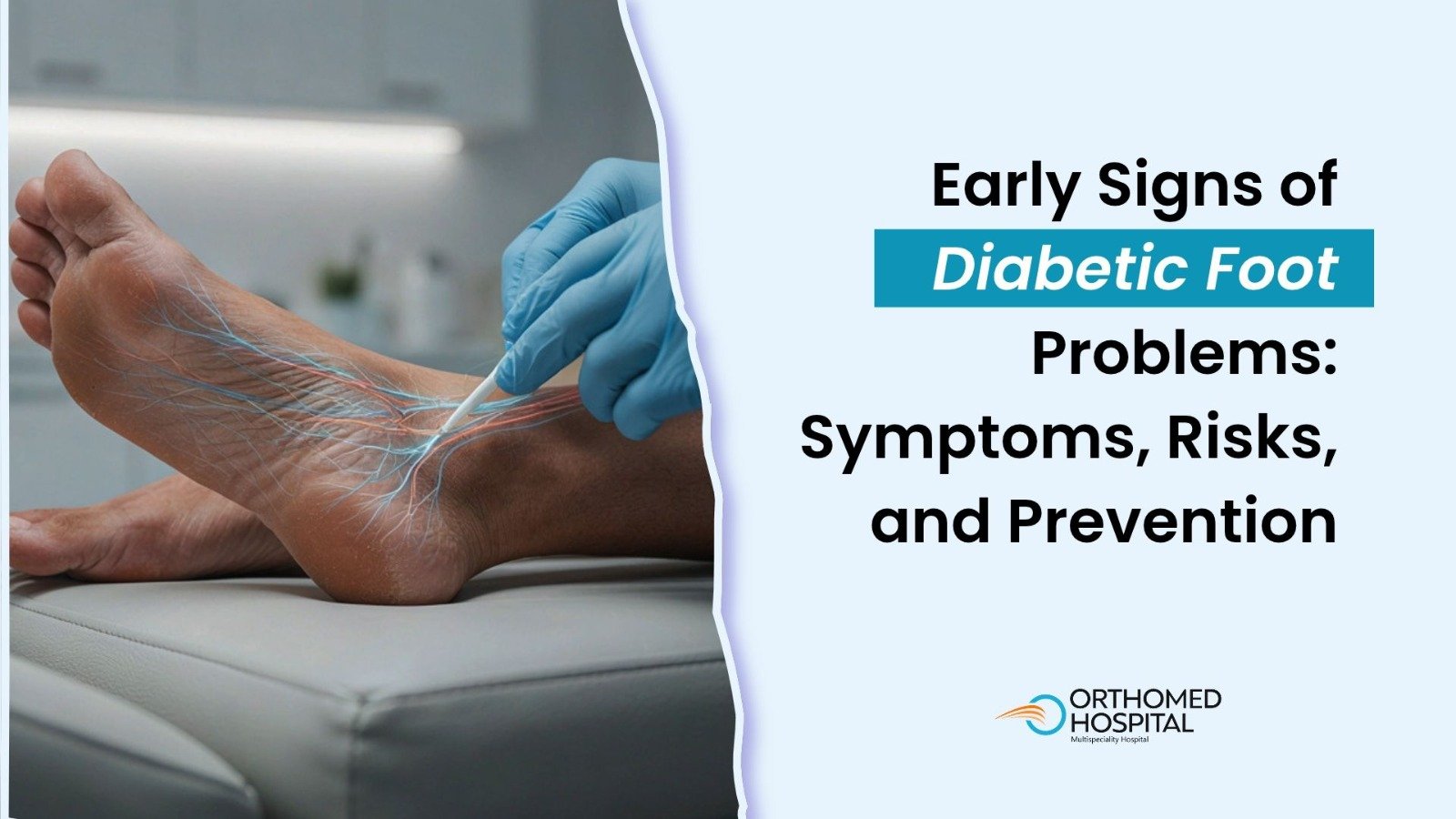
Early Signs of Diabetic Foot Problems: Symptoms, Risks, and Prevention
Most people with diabetes keep a close eye on their sugar readings. Very few look at their feet with the same care. That is a problem, because the feet are often where diabetes does its quietest and most serious damage.
A small blister from new chappals. A heel crack that never closes. A toe that feels slightly numb in the morning. In a person with diabetes, these can be the start of an ulcer, an infection, and in the worst cases, an avoidable amputation.
The good news is that diabetic foot problems almost always give warning signs first. If you know what to look for, you can catch them while treatment is still simple. This guide walks you through the early signs of diabetic foot problems, why they happen, who is most at risk, and what you can do every day to protect your feet.
Why Diabetes Affects the Feet
India now has over 100 million people living with diabetes, according to the ICMR-INDIAB study published in 2023. A large share of them will develop some kind of foot complication over their lifetime. To understand why, it helps to know what high blood sugar does to the body over the years.
There are two main reasons diabetes harms the feet.
Nerve damage (diabetic neuropathy). Sugar levels that stay high over time slowly damage the nerves, and the longest nerves in the body, the ones running to your feet, are usually affected first. When these nerves stop working well, you lose the ability to feel pain, heat, and pressure properly. You could step on a pin, burn your sole on a hot floor, or wear a shoe that rubs your skin raw, and simply not notice.
Poor blood flow (peripheral arterial disease). Diabetes also narrows and hardens the blood vessels in the legs. Less blood reaches the feet, which means less oxygen and fewer infection-fighting cells. A wound that would heal in a week in a healthy person can stay open for months.
Put these two together and you get the classic diabetic foot problem: an injury you cannot feel, in a foot that cannot heal it. That is why early detection matters so much.
Early Signs of Diabetic Foot Problems You Should Not Ignore
The early signs of diabetic foot problems are often mild and easy to explain away. People blame them on age, tiredness, or the weather. Here are the changes worth paying attention to.
Tingling, burning, or “pins and needles”
One of the first diabetic foot symptoms many people notice is a tingling or burning feeling in the toes or soles, often worse at night. Some describe it as walking on sand or wearing an invisible sock. This is usually the beginning of nerve damage.
Numbness or reduced feeling
As neuropathy progresses, the burning can give way to numbness. You might not feel the floor properly, or you may realise you cannot tell whether the bath water is hot. Reduced sensation is one of the most dangerous changes because it removes your natural warning system.
Changes in skin colour
Look at the colour of your feet. Skin that turns pale when you raise your legs, bluish or dusky when you sit, or unusually red in one area can point to blood flow problems or early inflammation.
Changes in skin temperature
A foot that feels much colder than the other may have poor circulation. A spot that feels warm or hot to the touch, especially if it is also red or swollen, can be an early sign of infection or a condition called Charcot foot, where the bones of the foot weaken and start to collapse.
Dry, cracked skin
Diabetes affects the nerves that control sweating, so the skin on the feet often becomes very dry. Deep cracks in the heels are common in our climate anyway, but in a person with diabetes, each crack is an open door for bacteria.
Calluses and corns
Thick, hard skin on the ball of the foot, the heel, or the tips of the toes shows that one area is taking too much pressure. Under a callus, the skin can break down and form an ulcer you cannot see from the surface. A callus with a dark spot or blood underneath needs prompt attention.
Slow-healing cuts, blisters, or sores
If a small cut or blister on your foot has not improved in a few days, take it seriously. Slow healing is one of the clearest early signs of diabetic foot ulcers.
Swelling, nail changes, or calf pain
Swelling in one foot, especially with warmth, can point to infection or Charcot changes. Thick, yellow nails often mean fungal infection, and ingrown nails can turn infected quickly. Cramping calf pain while walking that eases with rest, called claudication, signals poor blood supply to the legs.
Early Signs of Diabetic Foot Ulcers
A diabetic foot ulcer is an open wound, most often on the sole, the ball of the foot, or the big toe. Ulcers are the most common reason people with diabetes are admitted to hospital for foot problems. The earlier one is found, the better the chances of full healing.
Watch for:
- Drainage or staining on your socks, even a small spot
- A patch of skin that looks red, soft, or broken under a callus
- A small black or dark area on the skin
- An unusual smell from the foot
- Any break in the skin that does not close within two or three days
Because many people with diabetes have reduced feeling, an ulcer can be present without any pain at all. Do not wait for it to hurt. If you see it, get it checked.
Diabetic Foot Infection Symptoms
An infection can develop in an ulcer, a crack, an ingrown nail, or even a small cut. Diabetic foot infection symptoms include:
- Redness that spreads outward from a wound
- Warmth and swelling around the area
- Pus or cloudy fluid
- A foul smell
- Increasing pain, if you still have sensation
- Fever, chills, or feeling generally unwell
- Blood sugar readings that suddenly go high without a clear reason
That last point is easy to miss. An infection often pushes sugar levels up, so an unexplained spike can be your body’s way of telling you something is wrong. If you notice spreading redness, fever, or a wound that turns black, treat it as an emergency and see a doctor the same day.
Who Is at Higher Risk of Diabetic Foot Complications?
Anyone with diabetes can develop foot problems, but some people face a much higher risk of diabetic foot complications. You should be extra careful if you:
- Have had diabetes for more than ten years
- Have blood sugar that is often poorly controlled
- Already have numbness or tingling in your feet
- Smoke or chew tobacco, both of which reduce blood flow
- Have high blood pressure or high cholesterol
- Have kidney disease or eye problems from diabetes
- Have had a foot ulcer or amputation before
- Have foot deformities such as bunions, hammer toes, or flat feet
- Are overweight, which puts more pressure on the feet
- Walk barefoot often, at home, in temples, or outdoors
Walking barefoot deserves a special mention. It is part of daily life in Tamil Nadu, at home and at the temple. For someone with reduced feeling, a hot floor or sharp stone can cause an injury they do not notice until it is infected. Soft indoor footwear helps.
What Happens If Diabetic Foot Problems Are Ignored?
Diabetic foot complications are a leading cause of non-accidental lower limb amputation. The path is usually the same: an unnoticed injury becomes an ulcer, the ulcer gets infected, and poor blood flow stops it from healing. Nearly every step on that path can be stopped with early action.
Diabetic Foot Care Tips for Everyday Life
Prevention is simple, but it has to be consistent. These diabetic foot care tips take only a few minutes a day.
Check your feet every day
Make it a habit, like brushing your teeth. Look at the tops, soles, heels, and between the toes. If you cannot bend easily, use a mirror on the floor or ask a family member to look for you. You are checking for cuts, blisters, redness, swelling, cracks, and colour changes.
Wash and dry carefully
Wash your feet daily with lukewarm water and mild soap. Test the water with your elbow or a thermometer, not your foot, since your feet may not sense heat properly. Dry gently, especially between the toes, where moisture can lead to fungal infection.
Moisturise, but not between the toes
Apply a plain moisturiser to the tops and soles to prevent cracks. Skip the spaces between the toes, as extra moisture there encourages infection.
Cut nails straight across
Trim toenails straight across and gently file the edges. Do not dig into the corners. If your nails are thick or you have trouble seeing or reaching, let a professional do it.
Never treat corns or calluses yourself
Avoid blades, razors, and over-the-counter corn removers that contain acid. These can burn or cut the skin and cause an ulcer. A podiatrist or diabetic foot specialist can safely reduce calluses.
Wear the right footwear
Choose shoes that fit well, with enough room for your toes and soft insides with no rough seams. Check inside your shoes before wearing them for stones or anything sharp. Break in new shoes slowly. Wear clean, dry, cotton socks without tight elastic bands. If you have foot deformities or a past ulcer, ask about customised diabetic footwear.
Keep blood sugar under control
Every point you bring your sugar down helps protect your nerves and blood vessels. Take your medicines as prescribed, follow your diet plan, and keep up with your HbA1c tests.
Stay active and stop smoking
Walking improves circulation, so walk in proper footwear and check your feet afterwards. Tobacco narrows blood vessels further, and quitting is one of the best things you can do for your feet.
Get a professional foot check
Even if your feet look fine, have them examined by a doctor at least once a year. If you already have numbness, poor circulation, or a history of ulcers, you may need checks every few months. A simple screening can detect nerve damage and blood flow problems long before you notice symptoms.
When Should You See a Doctor?
Book an appointment soon if you notice new tingling or numbness, a cut or crack that has not improved in two to three days, calluses with dark spots underneath, a change in foot shape, or calf pain when you walk.
Seek care the same day if you see spreading redness, pus, a bad smell, black tissue, or fever along with a foot wound. When in doubt, get it checked. A five-minute examination is far easier than weeks of wound care.
How Diabetic Foot Problems Are Treated
Early changes such as neuropathy or calluses are managed with better sugar control, nerve pain medicines, callus care, and footwear changes. Ulcers need wound cleaning, removal of dead tissue, dressings, and offloading, which means taking pressure off the area with special footwear or casts. Infections need antibiotics, and deeper ones may need surgical drainage. The best outcomes come when diabetologists, foot specialists, and vascular surgeons work together.
Diabetic Foot Care at Orthomed Multispeciality Hospital
At Orthomed Multispeciality Hospital in Chennai, our Podiatric and Diabetic Foot Clinic is set up to catch problems early and treat them thoroughly. Patients have access to foot screening, wound care, and specialist support from orthopaedics, vascular surgery, endocrinology, and general surgery under one roof. We also offer free home lab tests to make regular sugar monitoring easier, along with home nursing care for patients who need wound dressings after treatment.
Whether you have just been diagnosed with diabetes or have lived with it for years, a foot check is one of the simplest ways to protect your mobility and independence.
Final Thoughts
Your feet carry you through every part of your day. When you have diabetes, they need a little extra attention in return. Most diabetic foot problems start small and stay small if they are found early. Look at your feet every day, wear the right footwear, keep your sugar in check, and never ignore a wound that is slow to heal.
If you have noticed any of the early signs of diabetic foot problems described here, do not wait for them to get worse. Book a consultation with the diabetic foot specialists at Orthomed Multispeciality Hospital, Chennai. Call us at +91 99400 99992 to schedule your foot screening today.
Comments are closed