
- Home
- About
- Services
- Specialists
- Research
- Achivements
- gallery
- contact




- Home
- About Us
- Orthopedics
- Know Your Alignment
- Sports Medicine
- Knee
- Arthroscopic ACI Cartilage Transplant
- Arthroscopic ACL Avulsion Fixation
- Arthroscopic ACL Primary Repair
- Arthroscopic ACL Reconstruction – All Inside Technique
- Arthroscopic ACL Rehab
- Arthroscopic ACL Revision Surgery
- Arthroscopic ACL Single Bundle Reconstruction
- Arthroscopic assisted MPFL Reconstruction
- Arthroscopic assisted Multiple Ligament Tear – SURGERY
- Arthroscopic Medial Meniscal Repair
- Arthroscopic OATS Chondroplasty
- Arthroscopic OCD Fixation
- Arthroscopic Paediatric ACL Reconstruction
- Arthroscopic PCL Avulsion Fixation
- Arthroscopic PCL Reconstruction
- Arthroscopy Assisted STEM Cell Cartilage Transplant
- PCL Rehabilitation
- Total Knee Replacement
- Shoulder
- Arthroscopic Rotator Cuff Repair
- Arthroscopic Bankart Repair
- Arthroscopy Assisted Latarjet Surgery
- AC Joint Fixation
- Arthroscopic Capsular Release
- Arthroscopic Sub – Acromial Decompression (SAD)
- Arthroscopic Calcific Tendinitis Excision
- Arthroscopic Biceps Tenodesis
- Arthroscopic SLAP Repair
- Arthroscopic Revision Cuff Repair
- Arthroscopic Revision Bankart Repair
- Shoulder Rehab
- Elbow
- Wrist
- Hip
- Ankle
- Our Specialities
- Cardiology
- Gastroenterology
- Radiology
- Internal Medicine & Diabetology
- Anesthesiology & Intensive Care Unit
- Neurology
- Nephrology
- Urology
- Oncology
- Rheumatology
- Endocrinology
- General Surgery
- Laparoscopic Surgery
- Podiatric / Diabetic Foot Clinic
- Obstetrics & Gynecology
- ENT
- Plastic & Cosmetic Surgery
- Paediatrics
- Pulmonology
- Psychiatry
- Vascular Surgery
- Dermatology
- Oral and Maxillofacial Surgery
- Our Services
- Resource
- Enquiry
- Home
- About Us
- Orthopedics
- Know Your Alignment
- Sports Medicine
- Knee
- Arthroscopic ACI Cartilage Transplant
- Arthroscopic ACL Avulsion Fixation
- Arthroscopic ACL Primary Repair
- Arthroscopic ACL Reconstruction – All Inside Technique
- Arthroscopic ACL Rehab
- Arthroscopic ACL Revision Surgery
- Arthroscopic ACL Single Bundle Reconstruction
- Arthroscopic assisted MPFL Reconstruction
- Arthroscopic assisted Multiple Ligament Tear – SURGERY
- Arthroscopic Medial Meniscal Repair
- Arthroscopic OATS Chondroplasty
- Arthroscopic OCD Fixation
- Arthroscopic Paediatric ACL Reconstruction
- Arthroscopic PCL Avulsion Fixation
- Arthroscopic PCL Reconstruction
- Arthroscopy Assisted STEM Cell Cartilage Transplant
- PCL Rehabilitation
- Total Knee Replacement
- Shoulder
- Arthroscopic Rotator Cuff Repair
- Arthroscopic Bankart Repair
- Arthroscopy Assisted Latarjet Surgery
- AC Joint Fixation
- Arthroscopic Capsular Release
- Arthroscopic Sub – Acromial Decompression (SAD)
- Arthroscopic Calcific Tendinitis Excision
- Arthroscopic Biceps Tenodesis
- Arthroscopic SLAP Repair
- Arthroscopic Revision Cuff Repair
- Arthroscopic Revision Bankart Repair
- Shoulder Rehab
- Elbow
- Wrist
- Hip
- Ankle
- Our Specialities
- Cardiology
- Gastroenterology
- Radiology
- Internal Medicine & Diabetology
- Anesthesiology & Intensive Care Unit
- Neurology
- Nephrology
- Urology
- Oncology
- Rheumatology
- Endocrinology
- General Surgery
- Laparoscopic Surgery
- Podiatric / Diabetic Foot Clinic
- Obstetrics & Gynecology
- ENT
- Plastic & Cosmetic Surgery
- Paediatrics
- Pulmonology
- Psychiatry
- Vascular Surgery
- Dermatology
- Oral and Maxillofacial Surgery
- Our Services
- Resource
- Enquiry


- Home
- About Us
- Orthopedics
- Know Your Alignment
- Sports Medicine
- Knee
- Arthroscopic ACI Cartilage Transplant
- Arthroscopic ACL Avulsion Fixation
- Arthroscopic ACL Primary Repair
- Arthroscopic ACL Reconstruction – All Inside Technique
- Arthroscopic ACL Rehab
- Arthroscopic ACL Revision Surgery
- Arthroscopic ACL Single Bundle Reconstruction
- Arthroscopic assisted MPFL Reconstruction
- Arthroscopic assisted Multiple Ligament Tear – SURGERY
- Arthroscopic Medial Meniscal Repair
- Arthroscopic OATS Chondroplasty
- Arthroscopic OCD Fixation
- Arthroscopic Paediatric ACL Reconstruction
- Arthroscopic PCL Avulsion Fixation
- Arthroscopic PCL Reconstruction
- Arthroscopy Assisted STEM Cell Cartilage Transplant
- PCL Rehabilitation
- Total Knee Replacement
- Shoulder
- Arthroscopic Rotator Cuff Repair
- Arthroscopic Bankart Repair
- Arthroscopy Assisted Latarjet Surgery
- AC Joint Fixation
- Arthroscopic Capsular Release
- Arthroscopic Sub – Acromial Decompression (SAD)
- Arthroscopic Calcific Tendinitis Excision
- Arthroscopic Biceps Tenodesis
- Arthroscopic SLAP Repair
- Arthroscopic Revision Cuff Repair
- Arthroscopic Revision Bankart Repair
- Shoulder Rehab
- Elbow
- Wrist
- Hip
- Ankle
- Our Specialities
- Cardiology
- Gastroenterology
- Radiology
- Internal Medicine & Diabetology
- Anesthesiology & Intensive Care Unit
- Neurology
- Nephrology
- Urology
- Oncology
- Rheumatology
- Endocrinology
- General Surgery
- Laparoscopic Surgery
- Podiatric / Diabetic Foot Clinic
- Obstetrics & Gynecology
- ENT
- Plastic & Cosmetic Surgery
- Paediatrics
- Pulmonology
- Psychiatry
- Vascular Surgery
- Dermatology
- Oral and Maxillofacial Surgery
- Our Services
- Resource
- Enquiry
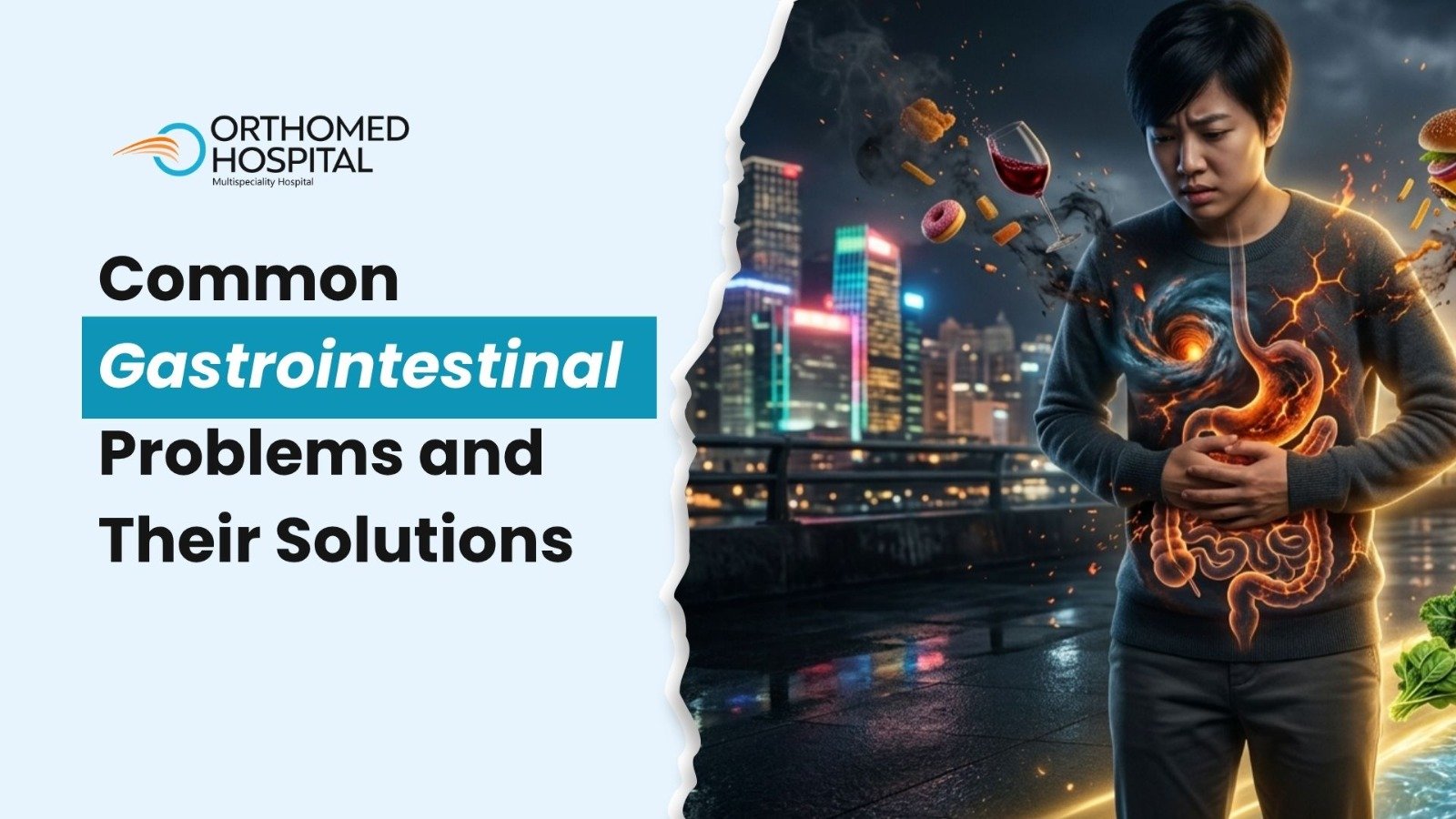
Gut Check: Common Gastrointestinal Problems and Their Solutions
Think about the last time you truly enjoyed a meal. Maybe it was a plate of hot, spicy food shared with family, or a simple comfort meal after a long, exhausting day. Food is one of life’s greatest joys, connecting us to our culture, our loved ones, and our daily energy. But when your digestive tract isn’t working properly, that joy can quickly turn into anxiety.
We don’t talk about gut issues as openly as we should. Society treats topics like gas, bloating, acid reflux, and irregular bowel habits as taboo or embarrassing. Because of this silence, millions of people quietly tolerate daily discomfort, assuming it is just their normal. They skip social gatherings, secretly unbutton their jeans after a modest meal, or carry an assortment of over-the-counter antacids in their bags, hoping to make it through the day.
Your digestive tract is far more than a simple food processor. It is a highly sensitive network that interacts constantly with your immune system, your hormones, and your brain. When it functions poorly, it impacts your mood, your sleep, and your overall health.
If you are tired of guessing what is causing your stomach issues, this guide will break down the most common gastrointestinal problems, explain what is happening inside your body, and provide practical paths to real relief.
The Landscape of Digestion: A Quick Tour
To understand how gastrointestinal disorders develop, it helps to see how the system works when things are running smoothly. Your digestive tract is a continuous pathway stretching from your mouth all the way through your body.
As food travels along this pathway, specific organs break down nutrients, absorb them into your bloodstream, and process the waste. The esophagus moves food down to the stomach, where strong acids begin heavy digestion. From there, the small intestine absorbs vital nutrients, and the large intestine processes the rest.
When any part of this coordinated process is thrown off, whether by stress, diet, or an underlying medical issue, you begin to experience symptoms. Let’s look at the specific conditions that frequently cause these disruptions.
1. Acid Reflux and GERD: The Internal Burn
Almost everyone has experienced that familiar, unpleasant burning sensation in the chest after eating a heavy, greasy meal or lying down too quickly after dinner. This is acid reflux. When it happens frequently, it progresses into Gastroesophageal Reflux Disease (GERD).
[Stomach Acid Production]
│
▼
[Weak Lower Esophageal Sphincter]
│
▼
[Acid Rises into the Esophagus] ➔ [Sensation of Heartburn]
What is Happening?
At the base of your esophagus sits a circular muscle called the lower esophageal sphincter (LES). Think of it as a one-way valve that opens to let food into your stomach and tightly closes to keep stomach acid from escaping upward. If this valve relaxes too often or fails to close completely, highly acidic stomach fluids splash up into the sensitive lining of your esophagus, causing irritation and inflammation.
The Solutions
- Adjust Your Positioning: Avoid lying flat for at least two to three hours after eating. Elevating the head of your bed by six inches can use gravity to keep acid down while you sleep.
- Identify Your Triggers: Pay attention to how your body reacts to common triggers like caffeine, carbonated drinks, citrus foods, tomatoes, chocolate, and heavy, fried items.
- Eat Smaller Meals: Overfilling your stomach puts direct physical pressure on the LES valve, forcing it open. Eating smaller, more frequent portions reduces this strain.
- Seek Medical Guidance: If you rely on over-the-counter antacids more than twice a week, you need a professional evaluation. Long-term, unmanaged acid exposure can damage the esophageal tissue. A doctor specializing in gastroenterology in Chennai can offer targeted treatments, such as acid suppressors, or perform a diagnostic endoscopy to check the health of your esophagus.
2. Chronic Bloating and Gas: The Feeling of Inflation
Feeling minor fullness after a massive feast is entirely normal. However, waking up with a flat stomach and ending the day looking and feeling like you have swallowed a balloon is a sign that your digestive system is struggling to process what you eat.
What is Happening?
Excessive bloating and gas typically stem from two primary sources: swallowing too much air, or the fermentation of undigested food by bacteria in your large intestine. When your digestion slows down, or when you have an imbalance in your natural gut bacteria, food sits in your system longer than it should. The bacteria feed on these remaining sugars and carbohydrates, producing gases that stretch the intestinal walls and cause physical pain.
The Solutions
- Slow Down Your Eating: When you eat too quickly, talk while chewing, or drink through straws, you swallow significant amounts of air that get trapped in your stomach.
- Evaluate Fiber Intakes: Fiber is excellent for your health, but introducing too much of it too quickly can overwhelm your digestive tract. Increase your fiber intake gradually over several weeks and drink plenty of water to help it move smoothly.
- Track Your Food: Many people have unrecognized sensitivities to dairy products (lactose intolerance) or specific carbohydrates found in foods like beans, onions, and wheat. Keeping a simple food diary can help you spot patterns.
- Consider Professional Care: Persistent bloating that doesn’t improve with basic dietary adjustments warrants a closer look. Specialized centers for gastro care in Chennai can test for underlying conditions like Small Intestinal Bacterial Overgrowth (SIBO) or food malabsorption issues to give you an accurate answer.
3. Irritable Bowel Syndrome (IBS): The Unpredictable Gut
Living with Irritable Bowel Syndrome (IBS) can feel like navigating an emotional and physical rollercoaster. One week you might contend with stubborn constipation, and the next, you are dealing with sudden, urgent bouts of diarrhea, often accompanied by painful abdominal cramps.
What is Happening?
IBS is classified as a functional gastrointestinal disorder. This means that while the structural tissue of your intestines looks perfectly healthy on standard scans, the way the muscles and nerves function is out of balance. The communication loop between your brain and your gut becomes overly sensitive. If the muscles in your intestines contract too quickly, food moves through too fast, leading to diarrhea. If the contractions slow down excessively, too much water is absorbed, resulting in constipation.
IBS Type | Primary Challenge | Primary Focus |
IBS-D | Frequent, urgent diarrhea and loose stools. | Identifying food triggers, calming intestinal spasms, and managing stress. |
IBS-C | Infrequent, hard bowel movements and straining. | Gradual fiber adjustment, optimal hydration, and promoting regular movement. |
IBS-M | Unpredictable alternation between diarrhea and constipation. | Balancing the gut microbiome and stabilizing overall digestive rhythms. |
The Solutions
- Manage Stress Levels: Because your brain and gut are deeply connected through the vagus nerve, emotional stress, anxiety, and fatigue can trigger physical spasms in your intestines. Incorporating daily stress-reduction practices like deep breathing or walking can calm your system.
- Explore the Low-FODMAP Approach: Many individuals find relief by temporarily reducing their intake of fermentable short-chain carbohydrates (FODMAPs). This eliminates highly fermentable foods for a few weeks before systematically reintroducing them to identify specific triggers.
- Seek an Expert Plan: Because IBS looks different for everyone, trying to self-treat can lead to unnecessary nutritional deficiencies. Partnering with a dedicated medical team atOrthomed Hospital allows you to access a personalized digestive treatment strategy tailored directly to your symptoms.
4. Chronic Constipation: Systemic Sluggishness
Infrequent bowel movements can leave you feeling heavy, sluggish, and intensely uncomfortable. If you are having fewer than three bowel movements a week, or if passing stool requires significant straining, you are dealing with chronic constipation.
What is Happening?
As waste moves through your colon, the colon absorbs water while forming stool. If waste moves too slowly through this area, the colon absorbs too much water, leaving the stool dry, hard, and difficult to pass. This sluggishness is frequently caused by a sedentary lifestyle, low fluid intake, lack of dietary fiber, or ignoring the natural urge to use the restroom.
The Solutions
- Drink More Fluid: Your digestive tract requires significant hydration to keep things moving. Aim to drink water consistently throughout the day, especially when increasing your physical activity.
- Incorporate Physical Activity: Regular movement stimulates the natural muscle contractions in your intestines, helping move waste through your system more efficiently. A simple 20-minute daily walk can make a meaningful difference.
- Establish a Routine: Your body thrives on predictability. Try sitting in the restroom at the same time every morning, ideally right after breakfast, to encourage your natural gastrocolic reflex.
- Avoid Overusing Laxatives: Relying heavily on over-the-counter stimulant laxatives can cause your bowel muscles to become dependent on them to function. If basic lifestyle changes do not resolve the issue, it is time to consult an expert for a sustainable solution.
When to Consult a Specialist: Understanding Warning Signs
While many digestive issues can be resolved with dietary changes and stress management, certain symptoms point to more serious health concerns that require immediate professional medical investigation.
Do not wait for things to clear up on their own if you experience any of the following warning signs:
- Blood in the Stool: Whether it appears bright red or dark and tarry, notice of blood in your bowel movements should always be evaluated by a medical professional to rule out ulcers, polyps, or inflammatory bowel diseases.
- Unexplained Weight Loss: Dropping significant weight without any changes to your diet or exercise habits is a sign that your body is failing to absorb nutrients properly or is dealing with a deeper underlying systemic issue.
- Persistent Difficulty Swallowing: If you feel like food is consistently getting stuck in your throat or chest, or if swallowing becomes physically painful, this requires prompt attention from a medical specialist.
- Severe, Unrelenting Abdominal Pain: Sudden, agonizing stomach pain that wakes you up at night or makes it impossible to sit comfortably requires immediate medical care.
The Value of Dedicated Gastroenterology Care
Trying to figure out your own stomach issues through internet searches can leave you feeling overwhelmed and confused. The symptoms of food intolerances, structural disorders, and functional imbalances look incredibly similar on the surface.
When you seek professional gastro care in Chennai, you move past guesswork. Specialized medical centers have access to diagnostic tools that can see exactly what is happening inside your digestive tract. These evaluations help identify the precise cause of your discomfort, whether it is a treatable infection, an inflammation pattern, or a functional issue.
At Orthomed Hospital, the medical team looks at digestive health through a practical, patient-centered lens. The primary goal is always to find the most direct, least disruptive path to long-term relief. For many patients, this involves simple dietary adjustments, targeted medications, and everyday habit changes. If advanced care is required, modern medical technology allows for highly precise, minimally invasive procedures that get you back to your regular life quickly.
Practical Daily Habits for a Happier Gut
You do not have to wait for your next major flare-up to start taking care of your digestive health. Incorporating a few simple habits into your daily routine can help keep your system balanced and resilient:
- Chew Your Food Thoroughly: Your stomach does not have teeth. Breaking food down completely in your mouth reduces the mechanical workload on the rest of your digestive tract and allows your digestive enzymes to work more effectively.
- Stay Mindful of Portions: Eating until you are comfortably satisfied rather than completely full prevents your stomach from stretching excessively, which reduces the likelihood of acid reflux and indigestion.
- Prioritize Regular Sleep: Your gut lining regenerates and repairs itself while you sleep. Chronic sleep deprivation can alter your gut microbiome and increase systemic inflammation, making your digestive tract more sensitive to pain.
- Keep a Simple Food Journal: Jot down what you eat and note any days you experience bloating, gas, or pain. Over time, you may find clear links to specific ingredients that you can easily minimize.
Conclusion: Reclaim Your Daily Comfort
Digestive issues do not just impact your stomach; they affect your energy, your social life, and your daily peace of mind. You do not have to live around your symptoms or accept daily pain as an unchangeable part of life.
Listen to your body when it sends you signals of distress. Whether you need help managing chronic acid reflux, finding an effective strategy for IBS, or obtaining an accurate diagnosis for persistent abdominal pain, professional support can help you find your way back to comfort.
Take a definitive step toward better health today. By combining mindful daily choices with the expertise of a trusted team specializing in gastroenterology in Chennai, you can find the relief you deserve and return to enjoying your meals, your activities, and your life with confidence.
Comments are closed